The Californians Powering America
A new exhibition spotlights the immigrants behind America’s economy, providing a lifeline to communities across the most crucial industries

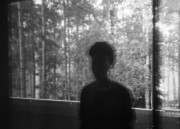
From agriculture and construction to fire recovery, food service and healthcare, immigrant communities power America’s economy, while often remaining unseen, underpaid and increasingly criminalized. The Californians Powering America, a new exhibition presented by The Economic Hardship Reporting Project, Magnum Photos and LA County Library, delves into the marginalized immigrant labor force fueling and sustaining the state. Featuring five distinct visual stories from Matt Black, Sabiha Çimen and Yael Martínez, the exhibition illustrates the humanity and aspirations of those who sought economic opportunities in America, while pointing to a central contradiction behind the mythologized American Dream: America depends on immigrant labor to thrive, even as it seeks to expel and punish the people who provide it.
Matt Black: California’s Agricultural Industry

Matt Black lives in Central Valley, California, where he has chronicled the lives of overlooked immigrant workers driving U.S. agriculture. In Black’s expansive shots, empty fields, abandoned crop rows and sites of agricultural materials make up the haunting filaments of the region’s deserted farmlands. Caught in the crosshairs of Trump’s immigration policies, agricultural workers fear detention or deportation; an estimated 90% of California’s 600,000 farm laborers are undocumented, and the nationwide crackdown has sent scores of them into hiding.

According to the Public Policy Institute of California, approximately 27% of the state’s population is foreign-born — the highest immigrant population in the nation — making it a target in recent months. The silent traces of undervalued labor in Black’s work are symbolic of a disquieting reality: federal deportation policies have threatened not only the state’s economy but livelihoods and entire communities.
Black’s project took him to rural towns such as Mendota, where over 40% of the population is estimated to be undocumented, and San Joaquin, where numbers reach 80%. If an agricultural worker is the primary earner of a household, their deportation can have severe effects on the entire family.


Employers face financial strain as well. “Following Border Patrol raids that targeted Central Valley farmworkers earlier in the month, many employers are concerned with having a sufficient workforce to plant and harvest crops. Agriculture remains one of California’s largest industries, generating over $50 billion each year,” he writes.

Sabiha Çimen: South Korean Nurses and Muslim Immigrants in Los Angeles

Sabiha Çimen’s intimate photographs and personal interviews with Korean nurses and Muslim workers explore not only the workers’ dedication, but how they live, the burdens they carry, and their resilience in the face of structural invisibility. Çimen, an immigrant herself, shows the fruits of both their economic and emotional labor in a racialized society. Quiet and essential modes of care, such as helping patients heal and sharing food, have become focal points of their American experience, while they often remain unseen and undervalued.

Yesol emigrated to the United States from South Korea when she was just 16 years old, without any knowledge of English. Determined to get an education, she pursued a nursing career. It wasn’t easy, she says, to overcome the deep-rooted racism she faced and to adjust to American culture while keeping the spirit of her Korean heritage alive. Now, at 38, she is raising four children and encourages other Asian nurses to pursue higher education.

At the heart of this group of nurses stands Sarah, the president of the Korean American Nurses Association of Southern California, an organization founded by 40 immigrant nurses in 1969. Ko embodies the spirit of this support system — mentoring nursing students, feeding and clothing them, and buoying their endeavors to help them achieve their career goals.


Los Angeles is home to more than half a million Muslims, the second largest Muslim population in the United States, according to the Pew Research Center. Searching for economic stability in America, Muslim immigrants from around the world have overcome language barriers and cultural divides in pursuit of enriching their own lives and the lives of others. Portraying restaurateurs and shop managers, waiters and car rental business owners, Çimen documents the vital contributions Muslim immigrants make to Los Angeles, and how they have sustained communities across California and beyond.

After the Six-Day War broke out in 1967, Waikato left her home country of Palestine and emigrated to Brazil, where she obtained a Masters degree in business administration. Now, she runs eight stores across Southern California which participate in the Women, Infants, and Children program, providing food assistance to low-income women and children under five.

Malik, who immigrated from Pakistan when he was 17, arrived in America with no money and no knowledge of English. He has since earned two bachelor’s degrees and runs a Halal restaurant and a luxury transportation company, despite the heightened racism he faced in the post-9/11 climate. He continues to believe that compassion should not be limited to race, religion, or background, and everyday he feeds not only patrons of his restaurant but also homeless people in the area.

Yael Martínez: El Cajon: My Family’s Immigration Story and Fire Recovery Efforts in Los Angeles

Yael Martínez’s lifelong photographic project focuses on the economic and racial violence that immigrants face in the U.S., despite their essential contributions to its economy and cultural diversity. In a profoundly personal photo essay, Martínez shares the story of his Mexican family in El Cajon, San Diego county, where they now live and work.

In 2007, Martínez first traveled from his native Mexico to El Cajon in San Diego County. A 21-year-old immigrant with dreams of earning enough money to buy a camera, he came to work for his uncle, José Manuel Martínez, in the construction industry. For a year and a half, he built lasting ties with his family and an experience of manual labor.

In August 2025, nearly a year after President Trump began his second term and drastically tightened immigration policies, Martínez revisited El Cajon. Things had changed; his uncle had moved house and some people had left, but the essence of family and community remained a binding force.
Martínez documented his family’s personal journeys and their essential yet unrecognized labor, from the older generation — who arrived in California decades ago — to their children, some of whom followed in their parents’ footsteps.

“I would like all the faces hidden from view to be visible to the horizon that we have not yet glimpsed,” Martínez writes. “May these images reveal what is hidden to our bodies, our souls, the spaces we inhabit, and the salt and blood spilled across the borders that divide us. May all the words we utter emerge as a song of struggle to illuminate the deserted, scorched territory that has blinded us.”
“The structures crumble, they collapse when the universe shakes. Only silence remains […],” he adds.

In the wake of California’s devastating wildfires in January 2025, Central and South American immigrants provided crucial aid in the clean up and rebuilding efforts. Martínez photographs them wearing masks and protective gear as they work to restore Californians’ charred and smoke-damaged homes.

Martínez’s images evoke the solidarity among migrant workers from different backgrounds while their presence in America is under threat. Examining the precarity that many face amid job loss and mass deportation, he explores a jarring contradiction: those who help rescue a devastated city are themselves denied support and security.


This visual cartography of immigrant journeys across California maps the sacrifice, investment, and culture of giving back, while persecution, criminalization and racial targeting have threatened their very existence in the United States.
These five stories are currently on view at the San Fernando and La Cañada Flintridge libraries in Los Angeles, California.
The Californians Powering America
October 16 – December 31, 2025
San Fernando Library and La Cañada Flintridge Library
Los Angeles, California