Signature Drop #004: Mikhael Subotzky
Mikhael Subotzky on the process and inspiration behind his original artwork Kole | Subotzky, 1967–2025
“I’m primarily interested in trying to break images open,” says Magnum photographer Mikhael Subotzky in his studio as he shares the process behind his time-limited, hand-finished print for the fourth edition of Signature Drop.
Following original releases from Newsha Tavokolian, Jim Goldberg and Sohrab Hura, Subotzky has produced a unique piece for the Signature Drop, a format allowing the participating artist to create a poster or print that extends the photographic practice using drawings, notations or personalized additions, each hand-signed.
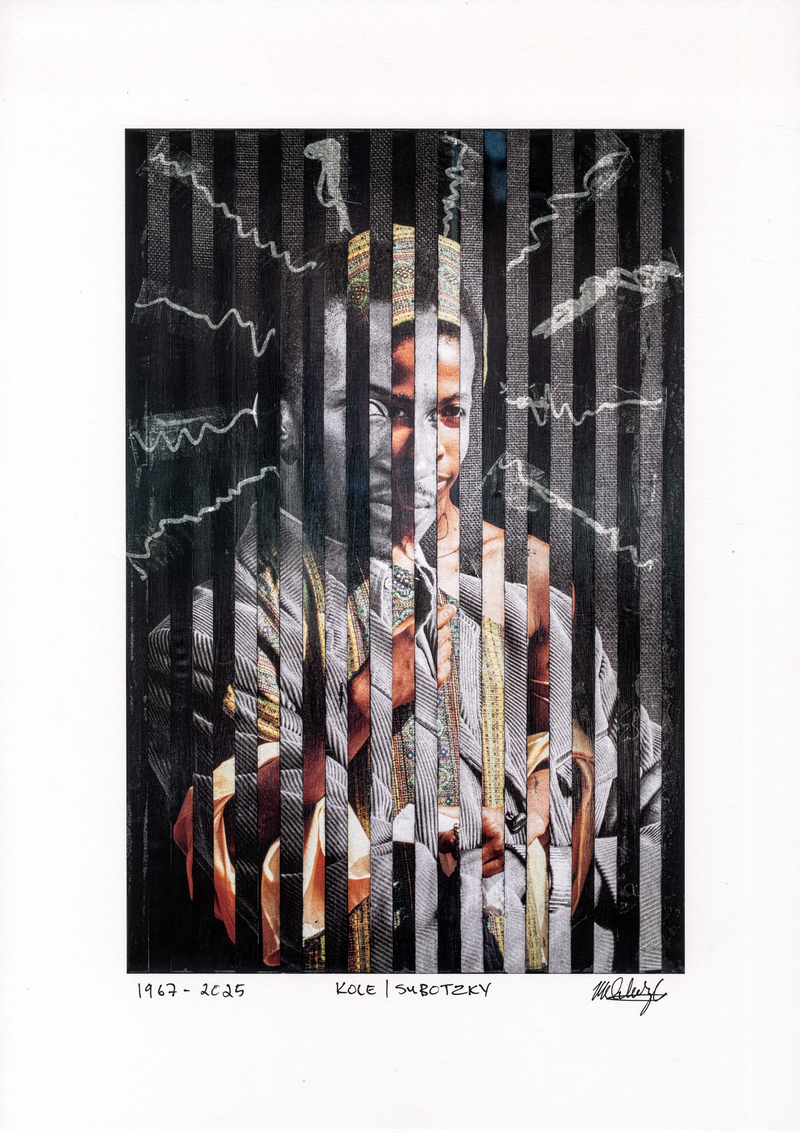
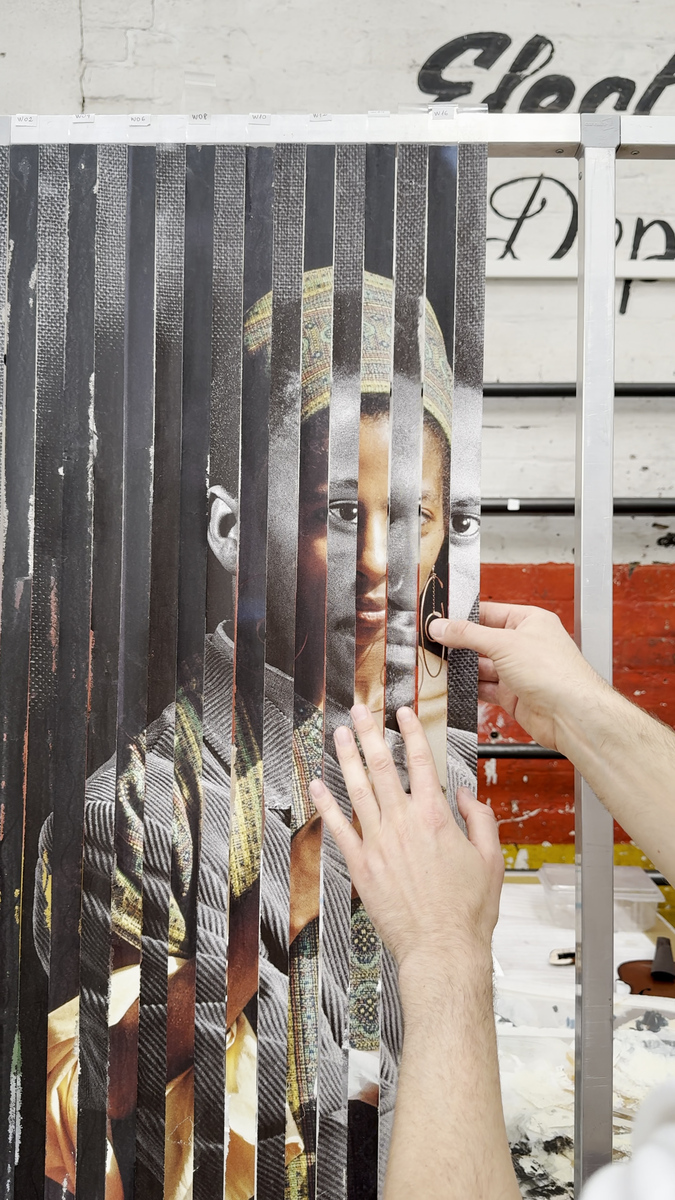
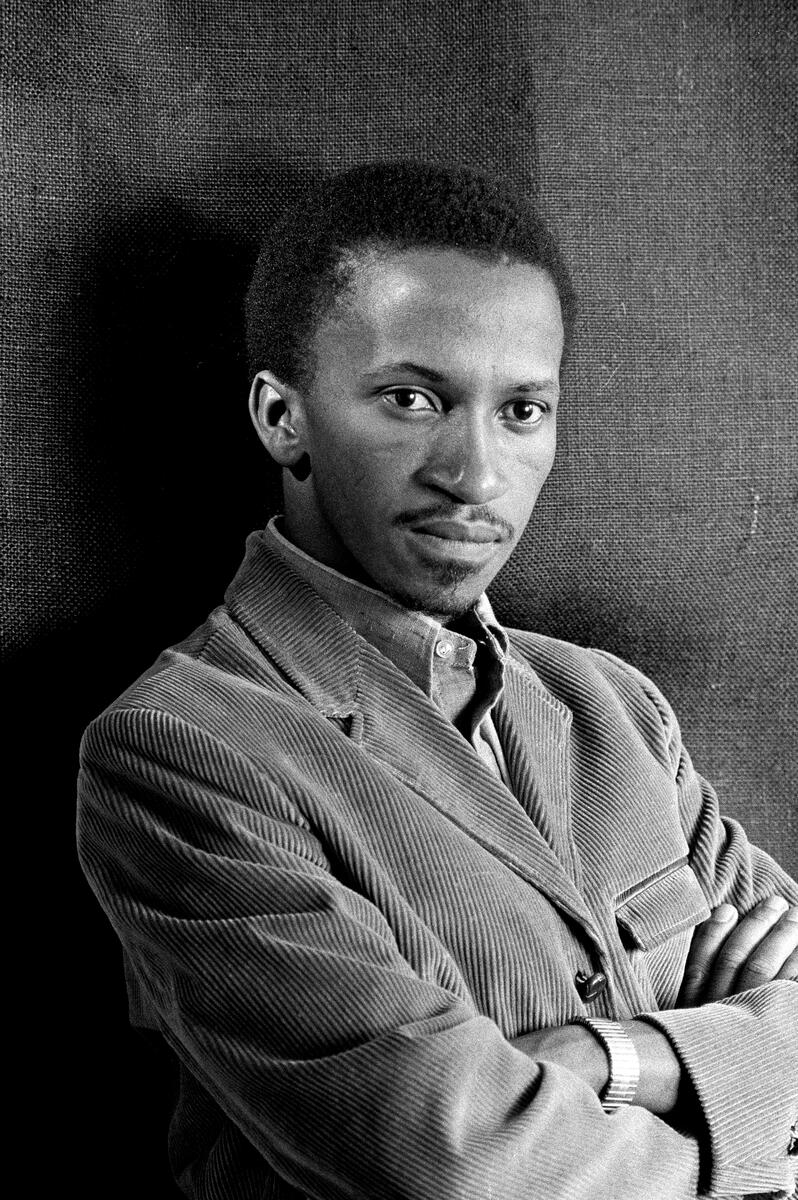
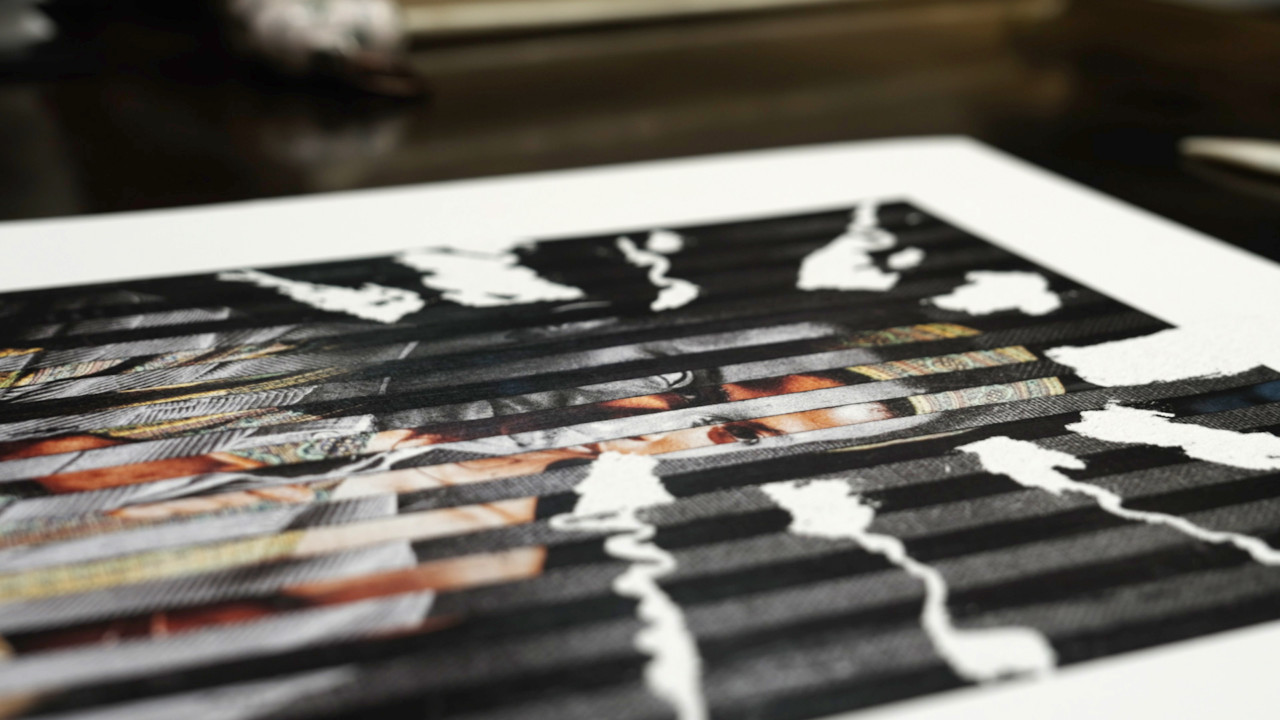
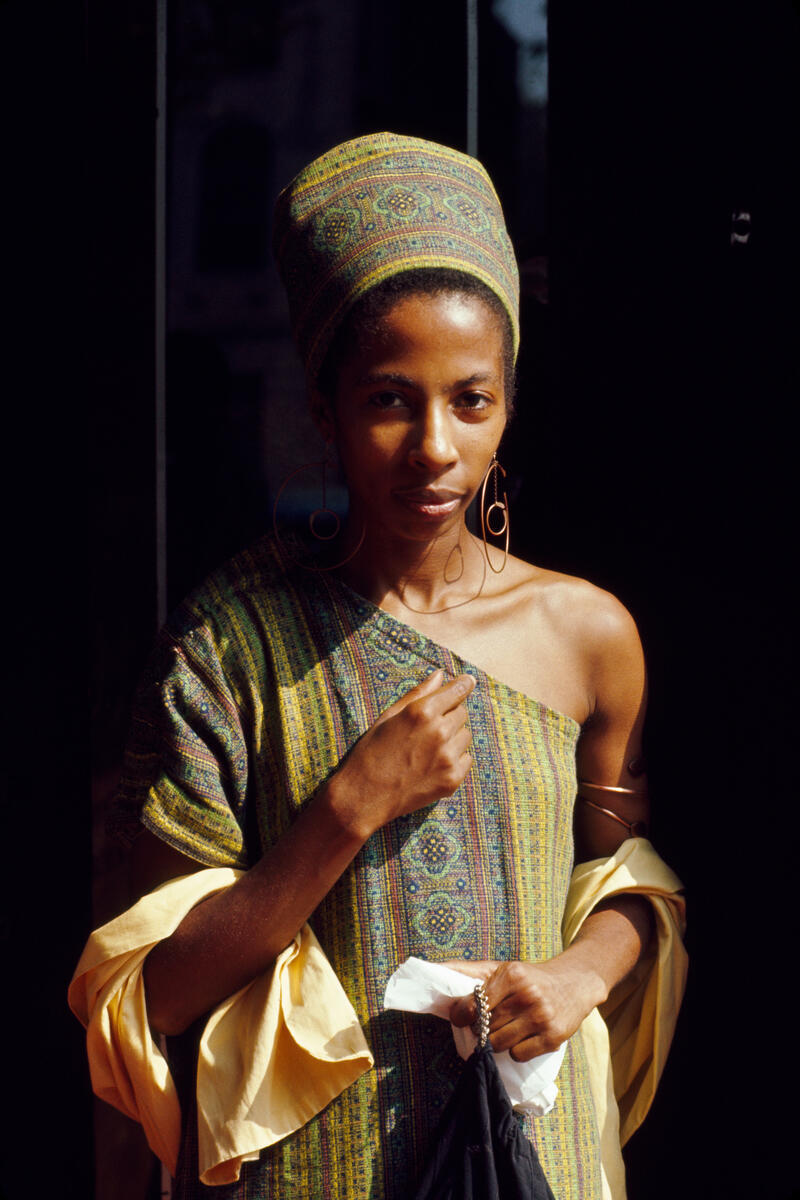
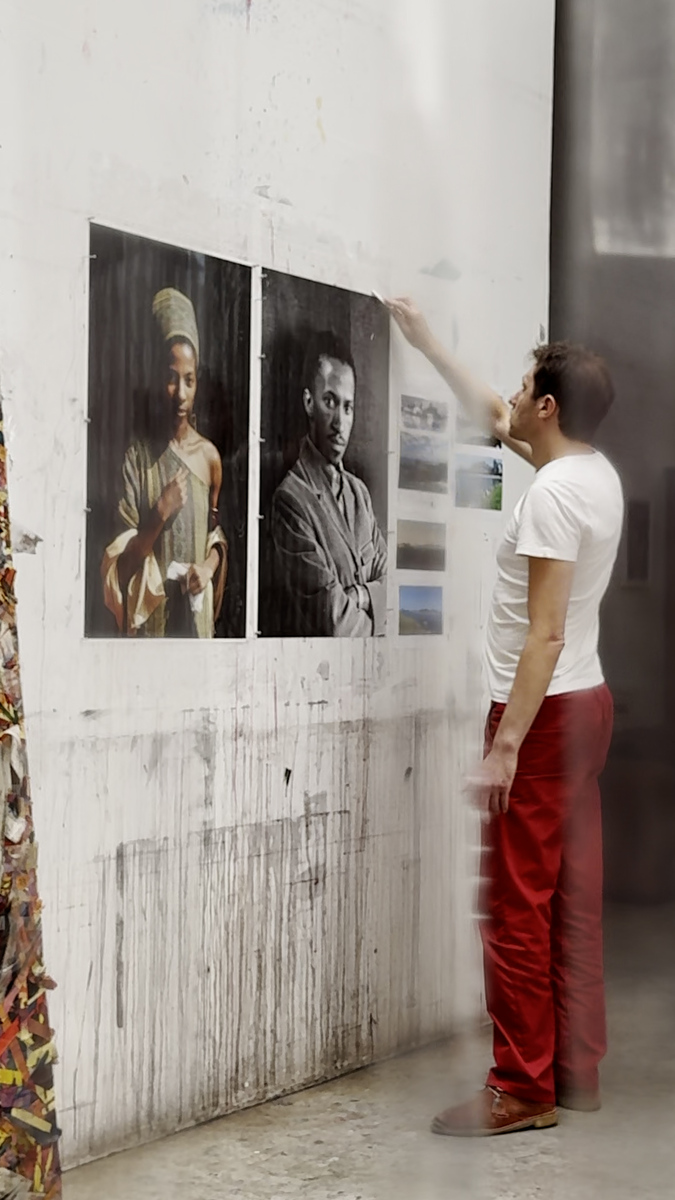
In collaboration with the Ernest Cole Family Trust, Subotzky presents Kole | Subotzky, 1967–2025, a tribute to the late photographer and fellow South African. In this new iteration of his sticky-tape transfer work, Subotzky deconstructs and reassembles two of Cole’s photographs — a rare 1967 self-portrait and a 1971 portrait of a woman in New York City, one of the 60,000 lost negatives from Cole’s time in exile in the United States, rediscovered in a vault in Switzerland in 2017.
Subotzky has known Cole’s nephew and chairperson of the estate, Leslie Matlaisane, for years, so when Magnum proposed to work in collaboration with an estate, the choice seemed natural. “I’d like to think that I’m collaborating with Cole himself, because when I look at his images, they seem so alive and relevant,” Subotzky says.
While there is a tendency to perceive photographs as finished, fixed or frozen in time, Subotzky envisions opportunities to “climb inside them,” a way of telling alternative stories and digging for untapped meanings.
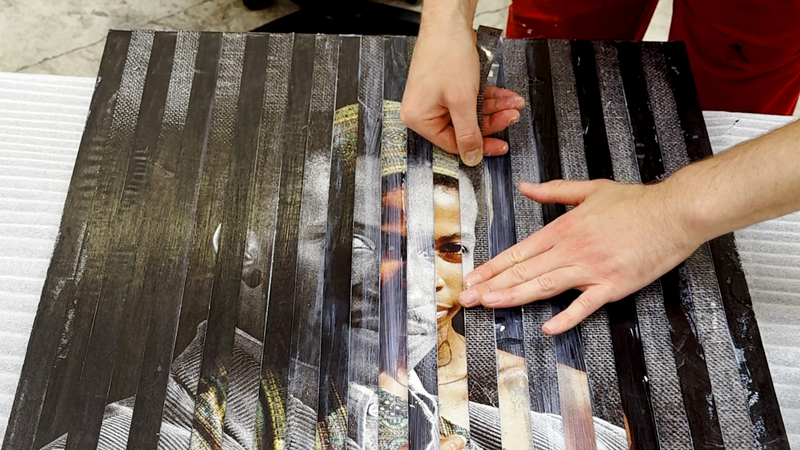
“I feel that by opening up an image, picking it apart, and trying to understand it, I can then reassemble it in new and interesting ways that for me feel more honest, and help me understand how it works on a variety of different levels, from the aesthetic and formal to the representational to the social and political,” he adds.
Often, the process also loosens an image from its chronological context, revealing how our contemporary experiences are woven into historical narratives.
"I’d like to think that I’m collaborating with Cole himself, because when I look at his images, they seem so alive and relevant."
- Mikhael Subotzky
Born in 1940, Cole witnessed and was subject to the racism and violence of South African apartheid. His first photobook House of Bondage, which was banned in South Africa, documents the way Black South Africans were treated under the horrors of colonial oppression, and was the first photobook, as Hamish Crooks notes, that “brought apartheid into the public visual consciousness.”
Cole’s photographic practice could only exist within the realms of circumvention. During the making of House of Bondage, he changed the spelling of his name from “Kole” to “Cole,” which allowed him to avoid being followed too closely. He also managed to persuade the Race Classification Board to reclassify him as “colored,” which offered him more freedom than the label “native” or Black.
Even the presence of the camera itself required discretion. “[…] Cole describes how he hid his camera in a bag under sandwiches in order to get it into the mine compound. He’s lying in order to tell the truth […],” said Subotzky in conversation with Magnum photographer Lindokuhle Sobekwa.
After smuggling his negatives out of the country, the 26-year-old quickly fled to Paris, London, then New York, where he turned his lens to the Black American experience.
“In my personal engagement with his work as one of my artistic heroes, I was really moved by the work he did in New York,” Subotzky says. “It’s both beautiful in his discovery of a different type of world, but also quite tragic in that his experience there was deeply inflected by American racism in the time of the civil rights protests and then during American apartheid,” says Subotzky.
"It’s something that is special and touched by the hand of whoever made it."
- Mikhael Subotzky
Among Cole’s extensive reportage of Black life in America, collected in the book The True America, published by Aperture in 2024, Subotzky was drawn to a radiant portrait of a woman in New York City, looking directly at the camera.
“What really drew me to it was the way she’s returning his gaze and his real sensitivity to that. I was interested in what would happen if I combined the quality of that looking at the subject and looking back, with his looking at himself,” says Subotzky.
Now, almost 60 years after Cole’s self-portrait, Subotzky’s Signature Drop piece carves out a new space through this merged gaze: the photographer sees himself in the woman he portrays, the woman sees herself in the photographer, and the viewer returns their gaze decades later.
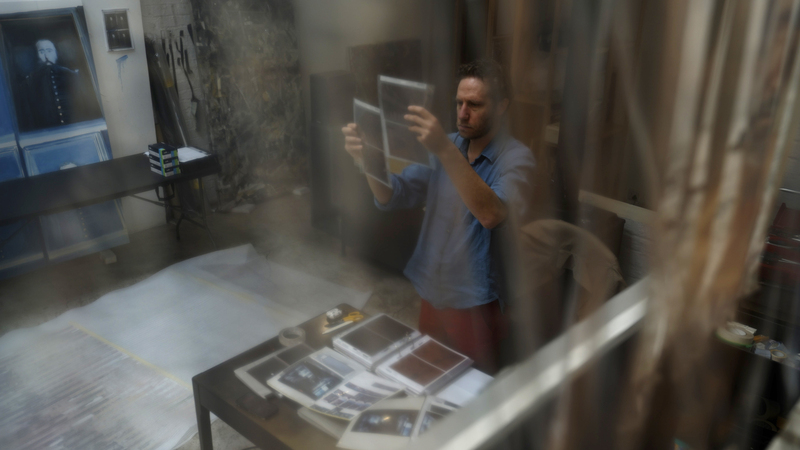
Subotzy’s sticky-tape transfer process has taken many forms over the years — such as the fluid, suspended structure Untitled (Michelle, Pasvang / Pasvang, Michelle) I, 2023, displayed at the 2023 Magnum exhibition Ukuzilanda, Homegoing — and it keeps evolving. The act is physical; his instinctive desire to pull images apart and revive them challenges the idea that a photograph must be stagnant.
“I had this moment maybe 15, 16, 17 years ago. I was sticking a work print of mine to the wall, just using a piece of sticky tape, and I pulled it off the wall and was amazed to see how the ink had separated from the surface of the paper and was […] still coherent but it had this transparency. So ever since then, I’ve been exploring different ways of using the process,” he says.
In Kole | Subotzky, 1967–2025, this transparency breathes a new life into the photographs — a way to acknowledge Cole once again, despite the majority of his work being unseen for many years.
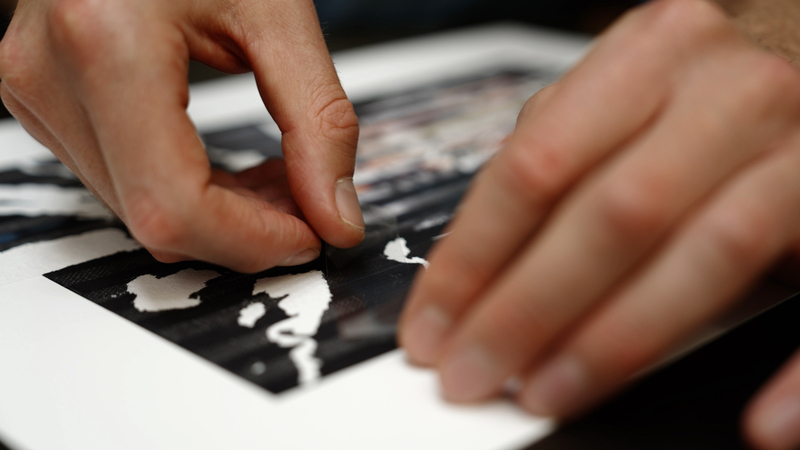
The finished collage of strips is placed onto a canvas, then transferred into a print on Hahnemuhle Cotton Rag paper, giving the image a tactile accessibility so that the viewer feels “welcomed in,” Subotzy notes. The final touch of the piece is the artist’s intuitive designs accentuating the portrait, applied to each print by hand.
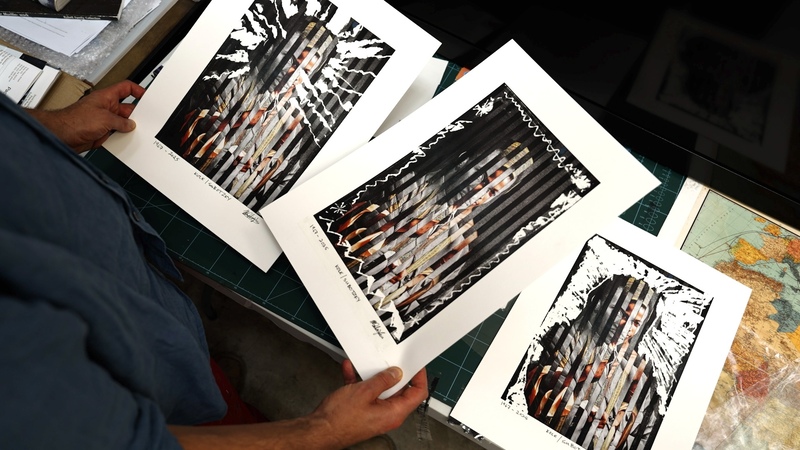
“I wanted to take it back into the space of what a sticky-tape transfer is, which is making an image open. […] So the work that I’m going to do with sticky-tape transfer onto each of the images that we print for Signature Drop both brings the original process back into the thing that we’re sending out into the world, but also allows each individual print to be completely unique, which I think fits with the ethos of the Signature Drop, where it’s something that is special and touched by the hand of whoever made it,” Subotzky explains.
Available for only 72 hours, this signed print is both an homage to Cole’s artistic vision and a reflection of Subotzky’s profound admiration for his work.
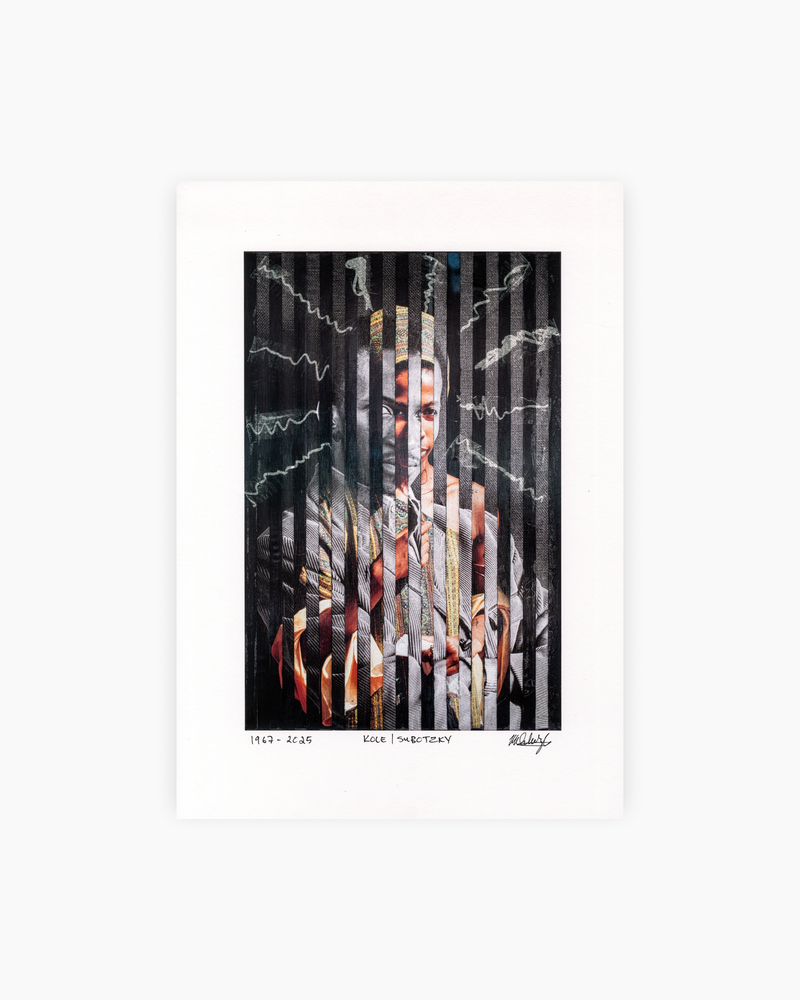
Shop Subotzky’s exclusive, time-limited Signature Drop print online at the Magnum Store, available to collect before 10am EST on April 27.