In Dialogue: Magnum Learn Lab’s Tania Bohórquez and Ania Nałęcka-Milach
Magnum Learn’s Education Manager Sofia Abechir sits down with two of the mentors for the recently announced Magnum Learn Lab
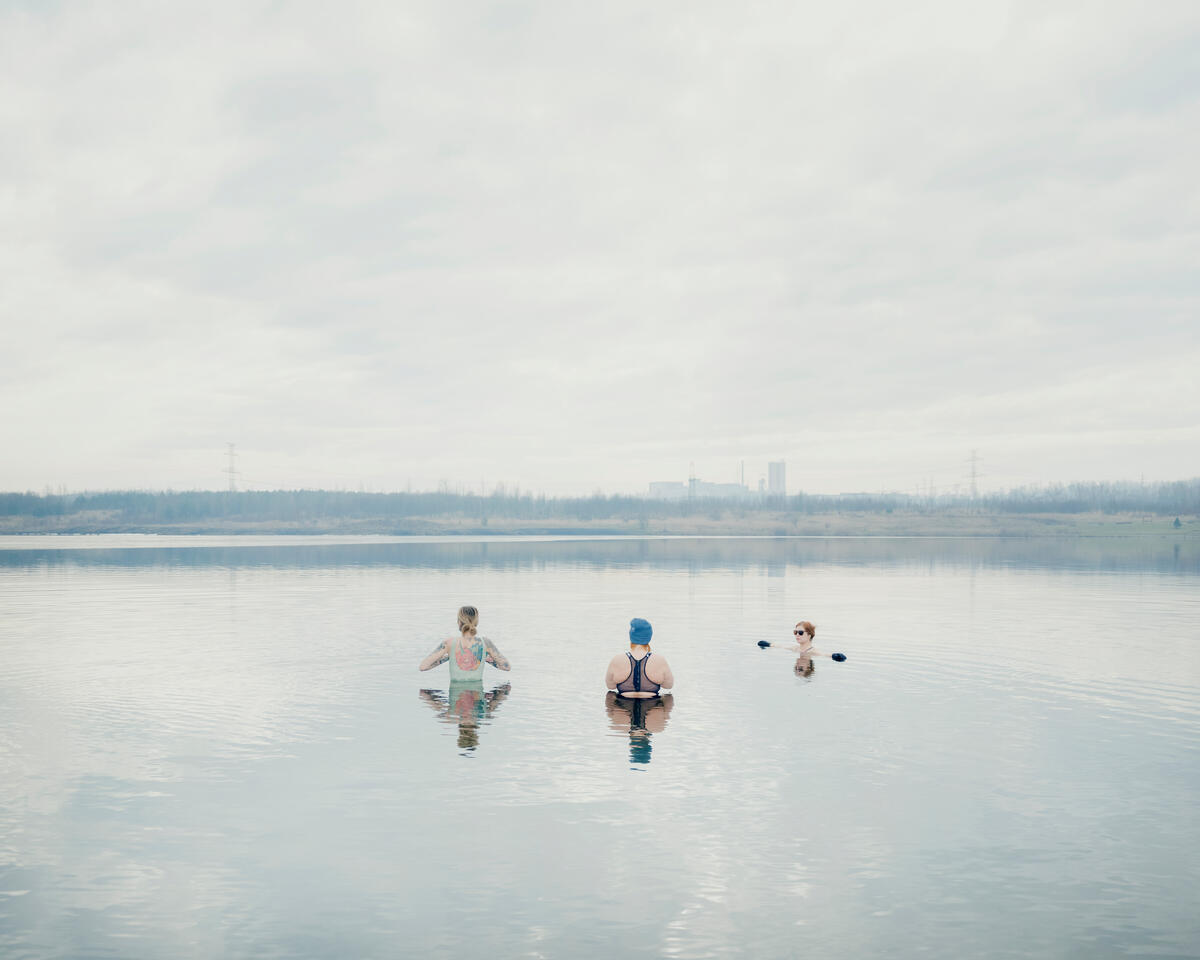
Magnum Learn has recently announced their latest offering: Magnum Learn Lab, a ten-month international mentorship program from January to November 2027, designed to support 20 emerging photographers.
Featuring immersive, in-person residencies, long-term mentorship from Magnum photographers Newsha Tavakolian, Antoine d’Agata and Rafał Milach, alongside artist Tania Bohórquez and designer Ania Nalecka-Milach, and professional guidance industry experts, the Learn Lab is centered on elevating each participant’s practice with more purpose, direction, and meaning. At the end of the course, each photographer will create a book dummy, and participate in an opening event during Paris Photo.
Magnum Learn’s Education Manager Sofia Abechir joins collaborators Tania and Ania in conversation about their roles over the course of the Lab, how they accompany artists, and what they hope to transmit to participants.
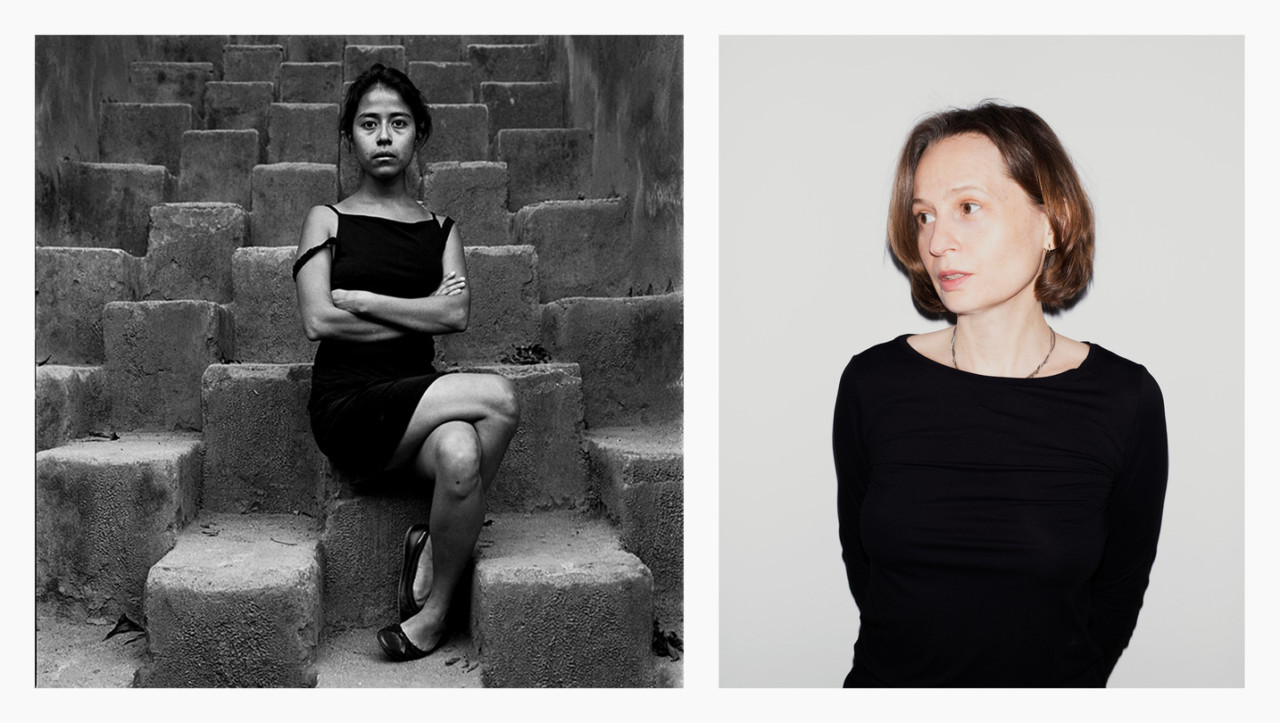
Ania is an award-winning photobook designer whose practice spans visual arts, printmaking, advertising, and graphic design. She has worked with photographers and institutions from all over the world, and her total project count exceeds 100 books. Her work has been recognized in competitions such as Les Rencontres de la Photographie Book Award, Paris Photo / Aperture Foundation Photobook Award, Henri Cartier-Bresson Foundation and others.
Tania is a visual artist, editor, and educator working at the intersection of art and politics. She has developed long-term educational programs, collaborating with institutions to create spaces for critical and collective artistic formation. As an artistic director, she is an interlocutor in editorial processes and in accompanying artists in creative processes. She is interested in the representations of trauma and resilience in contexts of violence.
Sofia: Your practices are very different, yet both are deeply rooted in dialogue, accompaniment, and long-term engagement. How would you define your role today when working with photographers?
Tania: It is important to understand a photographer as an artist, someone capable of engaging in an intense and demanding creative process. My role is to work alongside them throughout their long-term visual research, to be an interlocutor, from the Latin interloqui (to speak between) — a position of mediation: someone who stands between the artist and the world, supporting an ongoing dialogue between inner experience and its external form. In this sense, the interlocutor does not impose meaning, but helps to reveal it, accompanying the artist in articulating their process, their position, and their relationship to the social field.
This role reflects in the praxis of artists who are politically aware, critically engaged, exploring different techniques and attentive to the complexity of images within a media-saturated world, who are able to create projects that are not simply series or visual essays, but complex investigations where image, context, history, politics, poetry and lived experience are deeply intertwined.
In that sense, technical skill and aesthetics are not enough. It’s essential that artists develop methodological tools that allow them to articulate and structure their process. I work with them to bring more clarity and direction to their vision, and to help situate their work within a broader contemporary context..
It’s not only about producing images, but about understanding what is being produced and from which position, whether it be historical, political, or ethical. It’s important that the artist is aware of their own standpoint. My role is to support that process of awareness and help them articulate a clear position within both the artistic (personal) and social field.
Ania: I have a very concrete role, because in the end there has to be a book. It is both a functional and a technical task. At the same time, I might be one of the first people someone chooses to share their story with.
I sometimes use the metaphor that I am like a wall onto which someone projects their vision for the first time. The story is already there, but I help shape how it will be told — through editing, sequencing, and the form itself: the design.
At the same time, I am also a companion in the process. It is, after all, a human relationship and an exchange. I value being honest with the photographer. I am there to support them, but that can also mean being the first person to say, “Maybe this isn’t working,” or “Let’s try something else.”
It is both beautiful and challenging, because it spans a whole range of experiences that need to be rooted in mutual trust.
"A strong narrative cannot emerge without an understanding of one’s own story and position."
- Tania Bohórquez
Sofia: What does it really mean to accompany an artist?
Tania: For me, accompanying an artist means working through dialogue — sustained, open dialogue. I often draw from maieutics, the Socratic method of asking questions, as well as active listening. I try not to impose a fixed methodology, but rather to offer tools that allow each artist to discover and develop their own way of working and understanding themselves.
Each project requires a specific approach, both technically and personally. At the beginning, I create a space for an in-depth conversation; an intense, individual interview. Not a portfolio review, and not even strictly about photography, but a deeper exploration of the person behind the work and what drives them.
I’m interested in where their ideas come from, how they position themselves, and where they stand in their lives. Their emotional frameworks, what moves them, and what they are trying to express. This process is intimate, but also political, because their internal understanding of their sociopolitical perspective should be quite clear. A strong narrative cannot emerge without an understanding of one’s own story and position. At the beginning, the process often requires going deeply inward.
It’s important to recognize how this emotional dimension shapes the way artists relate to the world and to their subjects, to understand their fears and limitations, because the personal directly affects how they work in the field. It was very clear in the workshop in Hanoi 2025 (with Magnum Learn and Antoine d’Agata) how that influences artists when choosing their stories, and developing human connections. So I start by understanding and exploring why they want to tell a story, and how their biography is connected to their visual decisions.
Ania: This is why I truly believe our roles complement each other. Before moving forward with the development of a book, it is important for the photographer to reflect on their ideas — where they come from and what matters most to them.
Sofia: Do you feel that sometimes the process of making the book can be affected if they haven’t gone through this process?
Ania: Yes, definitely. I also begin the process — like Tania — by asking questions. At the same time, I try to connect in a less rational way, to understand emotionally what the photographer truly wants to express. What lies underneath, what the story is really about.
I believe that the relationship between the story and the book works both ways — they help to crystallize each other. The process of making a book can reveal nuances in the story that might not emerge in a dry run. The same applies to the people you collaborate with.
Tania: I completely agree, and this is why working as a team with Newsha, Rafal, Antoine and Ania is essential. In my long-term workshops, we focus strongly on context, especially political context. When participants move into the book-making phase, they are invited to return to the core questions: Who is this book for? What does it mean in my life? What kind of relationship do I want to create with the audience?
The book is not just an object — it’s a device. It activates something within the artist’s process and within their life.
Sofia: You’ve said that a book is not an object but an experience. At what point in a photographic project does that experience begin for you?
Ania: I meant this more in relation to how the book is perceived in its final form — how it is “read” within the context of visual narration. It’s not about designing a passive object, but rather about creating something active and interactive. Like a performance, it requires both space (its physical form) and time (the time for “reading” it). With a photobook, you don’t have to decode letters to access the story. Visual narration is faster and more multisensory. It is also more open, leaving space for metaphor and individual interpretation.
"It’s not about designing a passive object, but rather about creating something active and interactive."
- Ania Nałęcka-Milach
Sofia: In a long-term course, time becomes a material in itself. What does working over a long period provide — for both photographers and for those who accompany them — that short formats rarely allow?
Tania: I wouldn’t say that short workshops are less valuable, they simply operate with a different level of energy intensity. In a long-term program, time becomes a material in itself. It allows not only the production of images, but the development of thought — writing, analysis, and research. If a project engages with historical or social contexts, time is essential to conduct meaningful research. It also allows artists to move more deeply into both practice and theory, to test their intuition, and to gradually understand the structure their project is taking and their own creative process. There is space for experimentation, for moments of uncertainty, even chaos — and then finding a form of order within that process.
Ania: I absolutely agree. The format of the long-term course, in which the photographer works on their own prior to each residency, also gives the instructor space to have a fresh eye or to test something in between, and in reconvening you both have a new perspective. It can be very fruitful.
Sofia: Long-term processes often involve doubt, exhaustion, or moments of rupture. How do you work with photographers through periods of uncertainty or resistance?
Ania: It depends on the person, as different things motivate or discourage people. I think this is also part of being a creative person — learning how to work with yourself. You are the first person who has to remind yourself why you’re doing this.
In that sense, this is also part of how we guide photographers: acknowledging that everyone has uncertainties, and finding ways to work through them. We can also draw on our own experience of struggling with doubt.
Tania : Ania mentioned something very important, the moment when the artist asks: “Maybe this isn’t working,” or “Let’s try something else.” It’s essential that artists encounter doubt and moments of rupture. These are part of the process. The question is also how to be an artist within a specific context, for example, in a country marked by violence, like Mexico, life is bigger than art, art is not more than life.
Because I work closely with personal and often vulnerable material, I try to create an ethical space grounded in care. A space where artists can be vulnerable, while receiving honest and respectful yet rigorous feedback. This approach is informed by what we might call ethics of care: being attentive, responsible, and precise in how we engage with each person’s process. Part of my role is to help untangle where the artist stands, what they want to do, and what is actually possible.
There is also a political dimension: understanding their position in relation to the world and how to reflect in the most honest way before shooting a project, whether it be documentary, human rights, fiction or something else. This can be complex and sometimes contradictory, but it’s important to confront those tensions together.
Ania: If you don’t have doubts, you never evolve. But if you — as Tania said — work through them, you can come out the other side with a deeper, more honest vision.
What helps me is returning to the “story.” I call it a story; Tania calls it political presence. But when someone feels that a story needs to be told, it means there is something in it worth fighting for.
Sofia: If there is one tool, method, or posture you consistently transmit to photographers you work with, what would it be?
Tania: For me, the most important element is the human one — human connection over aesthetics. The main tool to access this connection is active listening: being fully present with the other, without projecting expectations or judgment. Suspending judgment is essential — not only in others, but not judging your own process, because comparison can easily block development. At the same time, in the intuitive process of listening and understanding the project, it’s important to develop structure. Without some form of organization, it’s easy to get lost. Learning how to structure a process is part of the discipline of being an artist.
Ania: I think it’s about the ability to juxtapose what the photographer wants to show and tell with what we actually see in the images — because sometimes it’s not that obvious. This helps you identify if anything is missing.
In the midst of all the complexity, I try not to lose sight of the individual who will sit down with the book in their hands. There is a certain responsibility in asking for someone’s focus and time.
Sofia: Beyond technical or formal knowledge, what do you think your presence can offer photographers participating in the Magnum Learn Lab?
Tania: My role is building a bridge between artistic production and the political position of art and life. To create a place where the Magnum Learn Lab participants understand that their practice has an impact, so that they can ask: where am I in the world? Even if they don’t find an answer, they’ll have opened up this question during the year and that will reconfigurate their narratives, tensions, discourses and the way they understand the world.
Ania: I’m there to help make a book real. I can share my experience — from developing a concept in its early stages to navigating deadlines and the many hurdles that can arise.
The benefits of this kind of deep exchange go both ways: I learn from the participants as much as they learn from me. The beauty of the course, especially in a long-term mentorship like this, is that participants not only work closely with the mentoring team, but also connect with one another.
Hopefully, they begin to build a supportive community that stays with them beyond the duration of the course.
Tania: Also, it’s not just one of us, it’s all the tutors. It’s something we build collectively as a team. The Lab creates a space where participants and mentors form a temporary community. For me, this is essential. It’s through these forms of connection that both life and artistic practice gain meaning. We have to hold each other as a community, it’s important to move away from competitive dynamics and instead create a space where vulnerability is possible. That kind of environment allows for deeper and more honest work to emerge. So as Ania mentioned, creating this connection and community for the photographers, both with us and between themselves, will be a powerful thing.
Sofia: If you could express one wish for photographers embarking on the Magnum Learn Lab, what would it be?
Ania: Some potential participants might think, “I’m not prepared — maybe my project isn’t ready yet.” But I would encourage them to come as they are, with whatever they have, without feeling the need to fit into specific expectations or to create the most beautiful dummy ever made.
That kind of pressure can be paralyzing — it takes away the joy.
I often tell others what I remind myself: not to lose that sense of joy, and to stay open. Of course, it helps to have an idea, a feeling, or a topic you are drawn to. But you shouldn’t worry about not being ready — because those who feel they aren’t ready usually are.
Tania: My wish is that participants fully embrace the depth and complexity of their own visual research. What matters most is not whether the work is “good” in external terms of approbation (to be good enough for others), but whether they are able to encounter something meaningful within their own life, because the artist and the life of the artist are the same, life is bigger than art.
Beyond creating a project or an interesting book (which they will do) is the experience, the process they will go through over those ten months. We can find nice images everywhere, but real experience, human experience and the courage to engage with fundamental questions, is something else. To be able to turn to the big questions of life is beautiful and a privilege. So I would encourage and invite them to stay open, to remain vulnerable, to allow something true to emerge both in their work and in themselves, something between art and life.
Discover more about Magnum Learn Lab and apply here.