The Theater: Paolo Pellegrin and James Verini in Ukraine
Paolo Pellegrin and James Verini on the survivors of the Mariupol Theater bombing and their documentation of the war in Ukraine
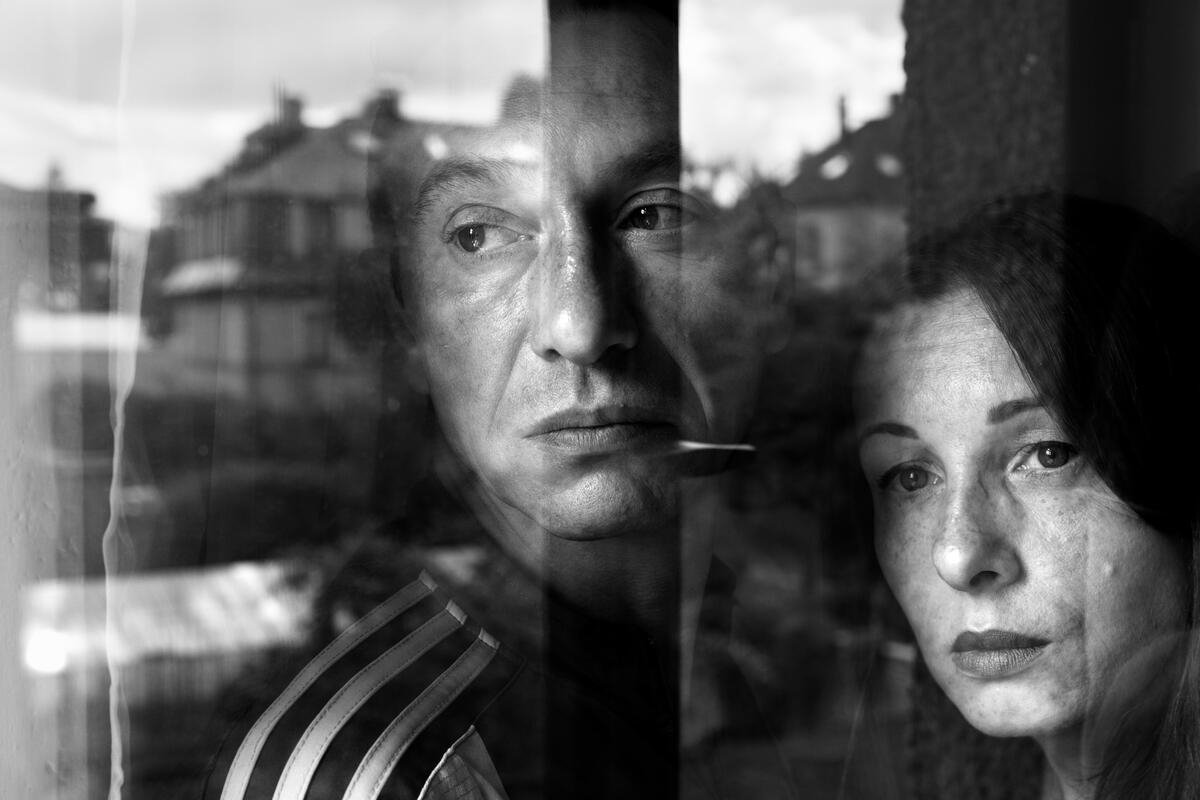
With over a decade of experience working alongside each other in high-conflict zones, Paolo Pellegrin and James Verini have been documenting the stories of civilians affected by the Russian invasion of Ukraine since 2021.
Verini’s latest book, THE THEATER: Courage and Survival in the Defining Atrocity of the Ukraine War, published by Simon & Schuster, is now available to buy here.
In the morning of March 16, 2022, just over three weeks after Russia invaded Ukraine, a Russian warplane dropped two 500kg bombs on the Mariupol Theater, the largest place of refuge during the siege of Mariupol, an industrial city 40 kilometers from the Russian border. At the time of the bombing, hundreds of everyday citizens had been working tirelessly inside the city walls to keep each other alive.
It is uncertain how many people were killed. Survivors’ estimates range from 60 to 200, while the Associated Press estimates that it could be up to 600.
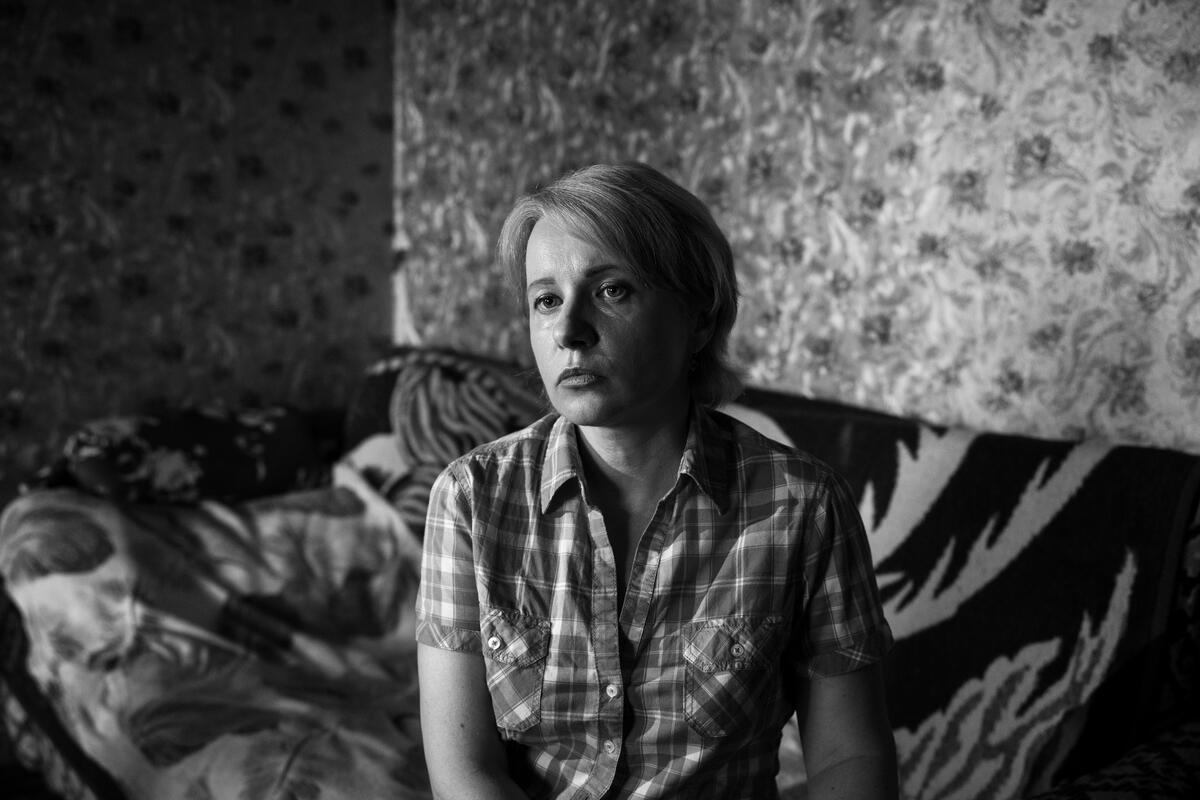
"These people did remarkable things [...], facing the destruction of their lives with courage and resourcefulness, while also remaining very human."
- James Verini
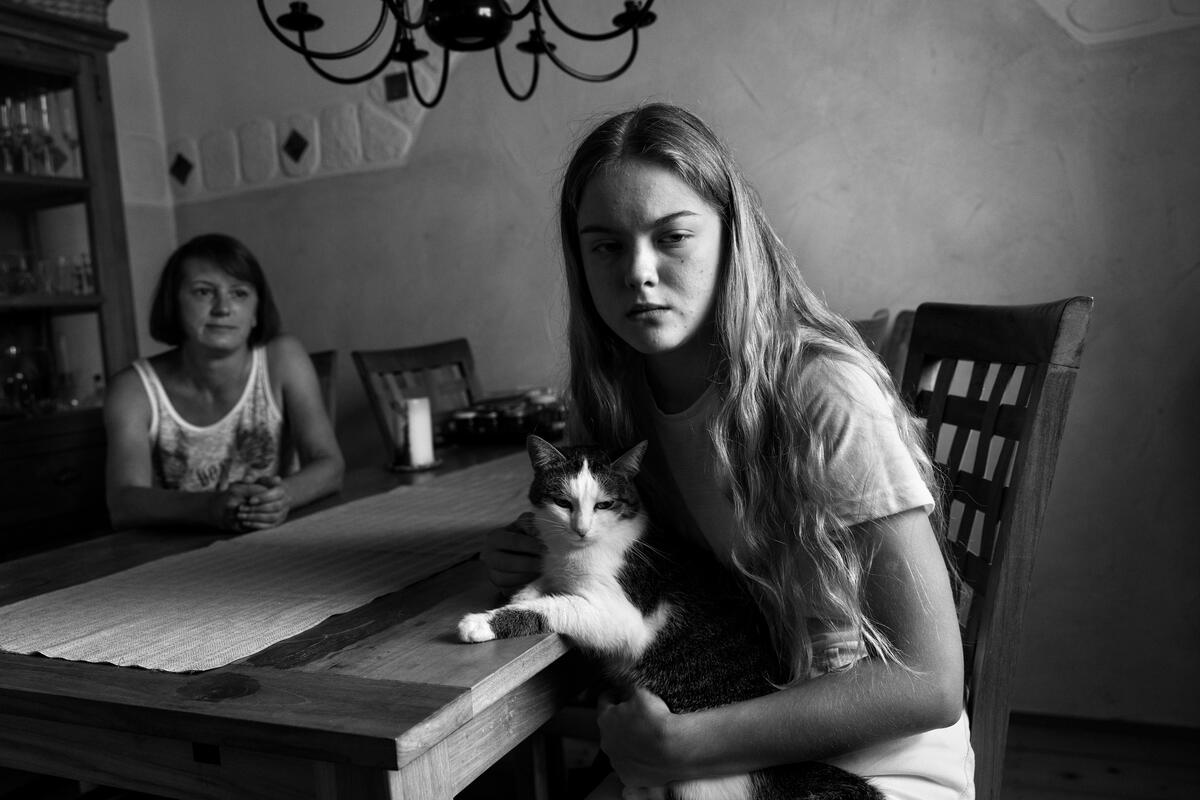
Magnum photographer Paolo Pellegrin, who has documented Ukraine extensively since 2021, worked alongside New York Times correspondent James Verini on documenting the survivors of the bombing.
Expanding on their report published on September 1, 2022, in The New York Times, and with the support of the Pulitzer Center, Verini’s new book The Theater recounts the stories of the citizens who, with sparse resources and no running water, created a shelter for up to 1,500 people. “What stood out for me most,” Verini says, “was that these people did remarkable things, building this shelter, saving so many of their countrypeople, facing the destruction of their lives with courage and resourcefulness, while also remaining very human.”
The Survivors
Pellegrin and Verini first worked together while documenting the tunnels of Gaza in 2011, and again in 2016, on the battle in Mosul, Iraq — a reportage that led to Verini’s book They Will Have to Die Now, which charts the violent siege of Mosul within Iraq’s historical context. They first traveled to Ukraine together in the summer of 2021 to document the widely forgotten, deadlocked war in Donbas between Ukraine and the Russian-backed Donetsk People’s Republic.
“By that summer, it was obvious an invasion was a possibility, though few people we met thought Putin would be so irrational as to try to conquer all of Ukraine,” says Verini.
"With the war, the world learned it had to begin taking Putin at his word."
- James Verini
In the years leading up to the Russian invasion, Putin continuously denied Ukraine’s existence and wrote of the impossibility of separating Ukrainian and Russian history, culture and language in a lengthy essay entitled “On the Historical Unity of Russians and Ukrainians,” a precursor of the invasion.
“Putin’s war is as much against the Ukrainian populace and Ukrainian culture as it is against the Ukrainian state,” Verini says. “With the war, the world learned it had to begin taking Putin at his word. And I’d like to think that Paolo and I showed the proof of his sincerity in our work, documenting the destruction of civilian structures, infrastructure, cultural institutions, churches, universities…and the ruination of countless civilian lives.”
"I've never interviewed anyone as intensely, and at such length, as I interviewed the theater survivors."
- James Verini
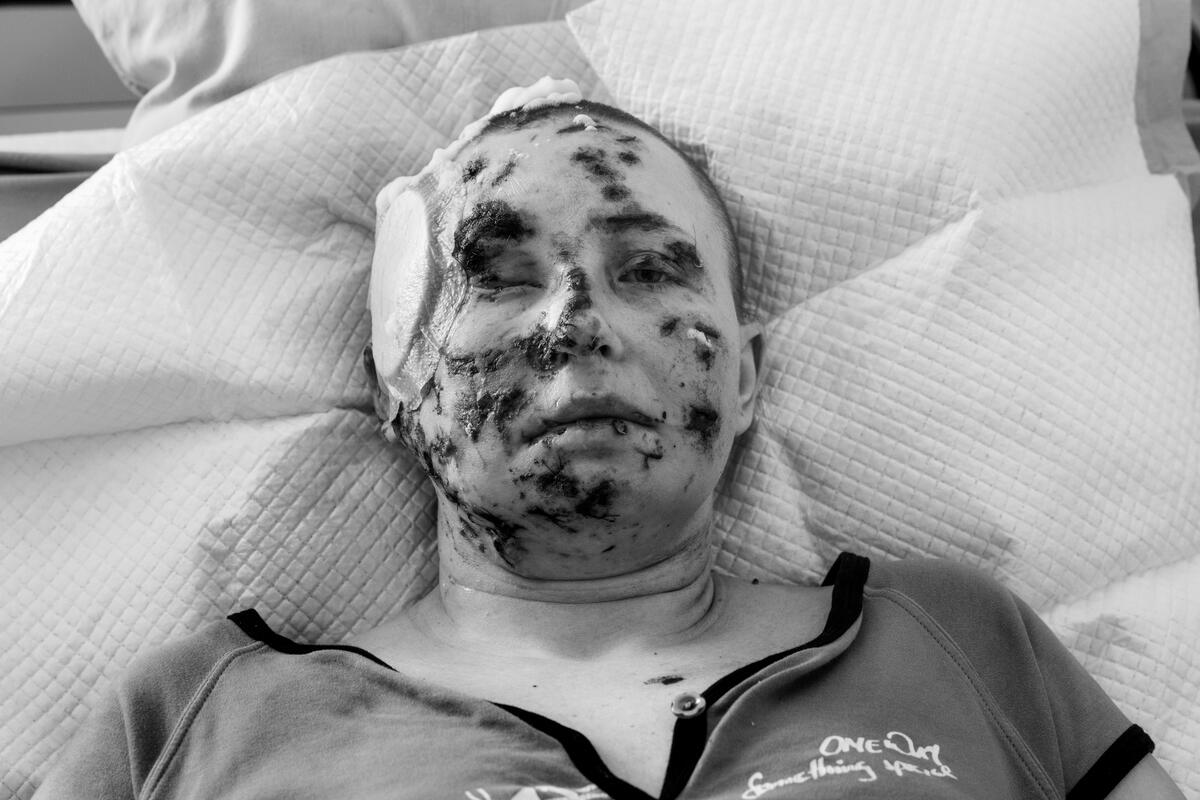
Before it was destroyed, the Mariupol Theater had become “a symbol of resistance and hope,” Verini writes in his book. After seeing the image of the blast radius of the bombing on their phones, and with no way to get to Mariupol, Pellegrin and Verini quickly went to hospitals in Zaporizhzhia, knowing that the survivors from the theater might be there. That’s where they met a young woman named Olga and her mother, Natalia.
“Natalia was nearly dead — a portion of the theater ceiling had collapsed onto her. Olga had dragged her mother out of the building. Olga’s boyfriend died in the theater. Olga herself was near hysterical, but cogent enough to talk to me. Her descriptions of life in the theater were so remarkable, I decided I had to write about the episode,” Verini says.
“Over the course of the next several months [in 2023-2024], I tracked down other survivors, around Ukraine and Europe. Paolo then went to their homes and shot their portraits. I’ve never interviewed anyone as intensely, and at such length, as I interviewed the theater survivors.”
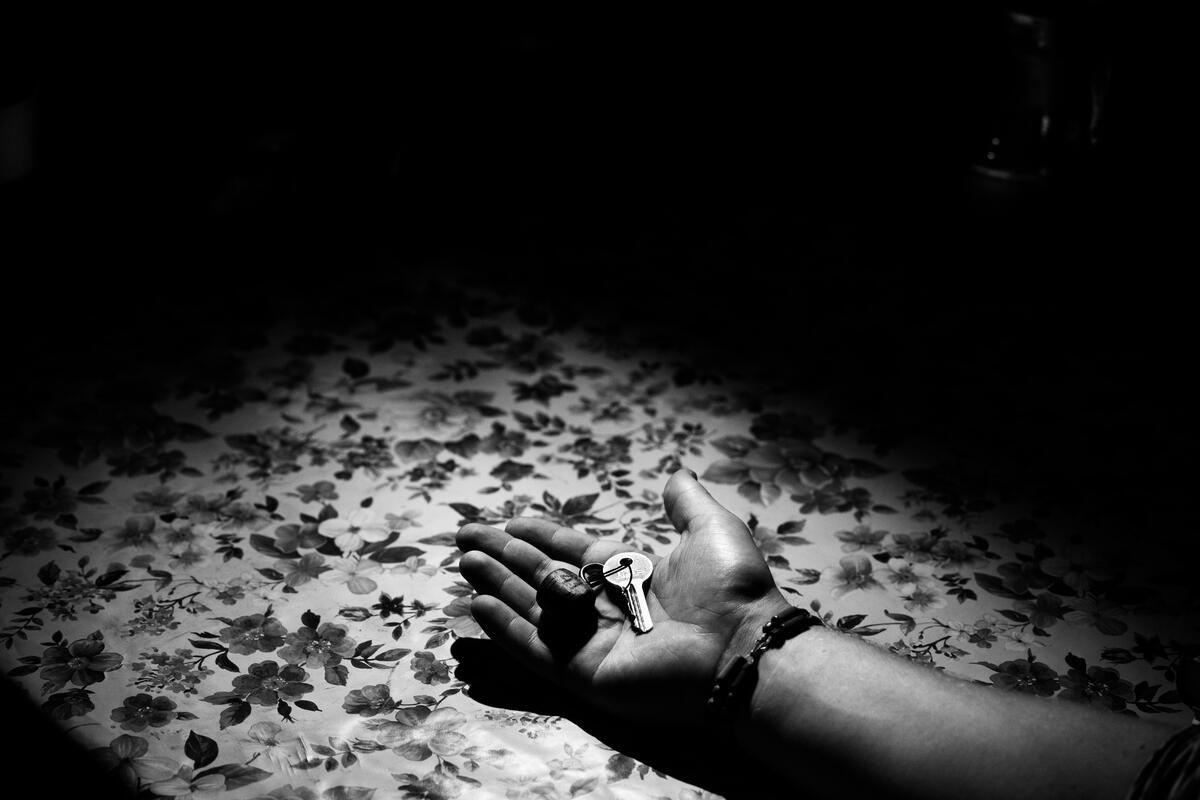
Photographing Vulnerability
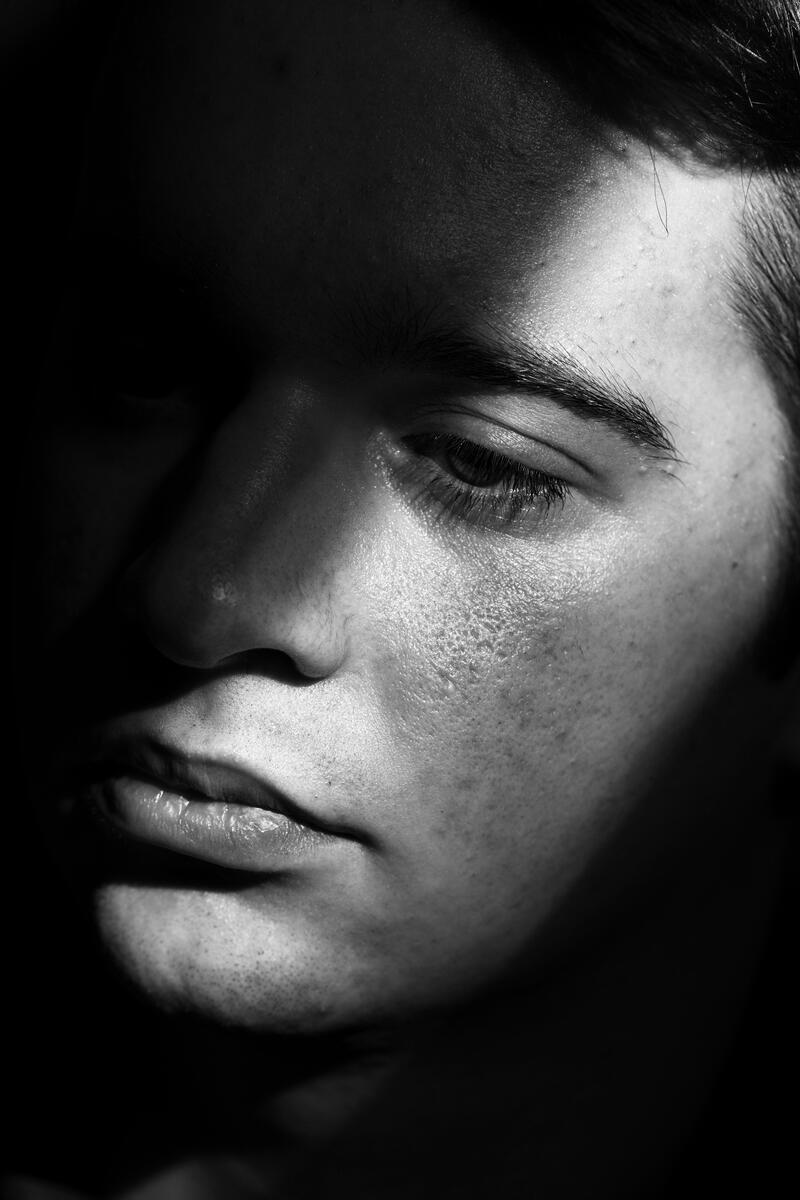
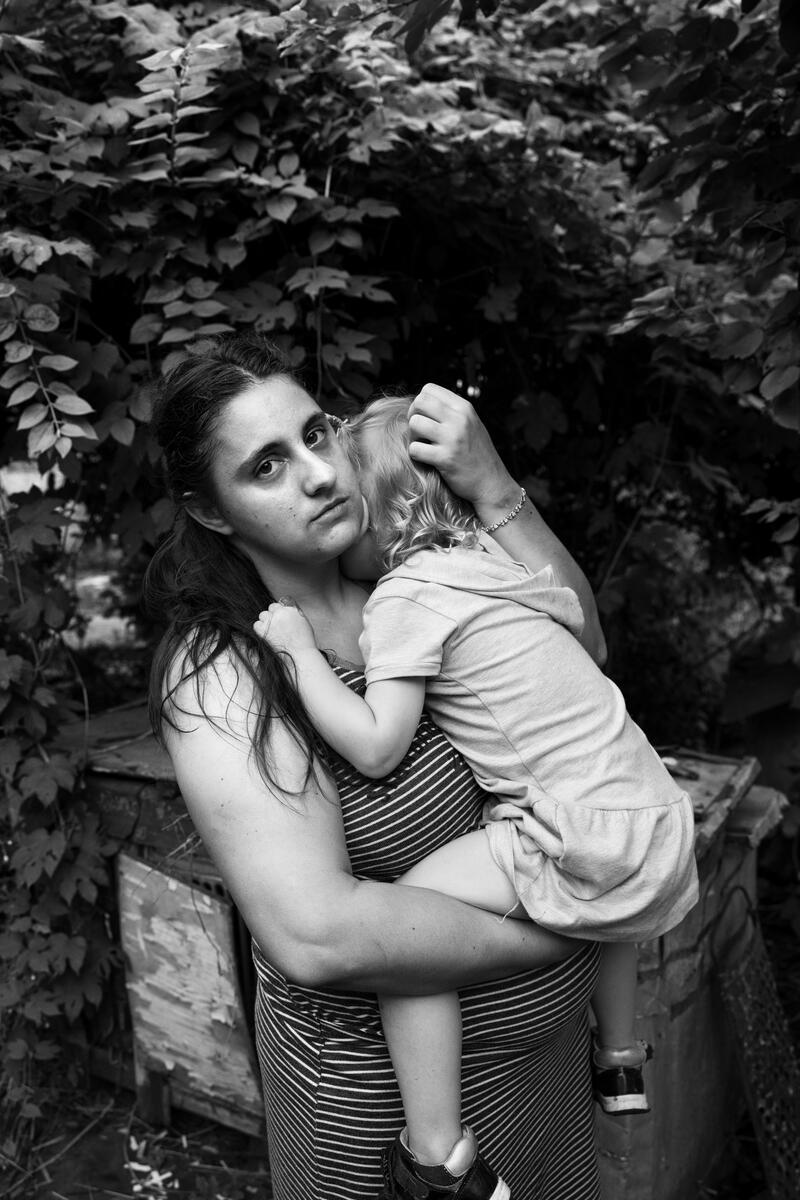
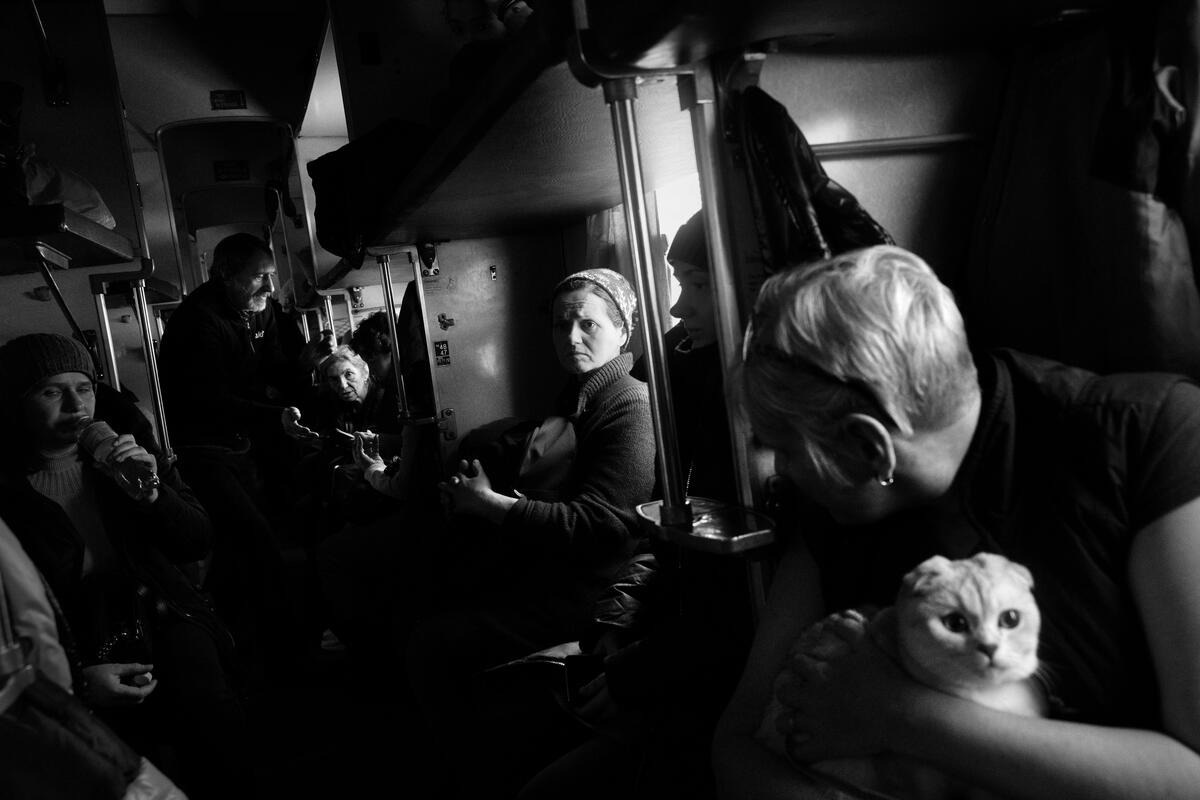
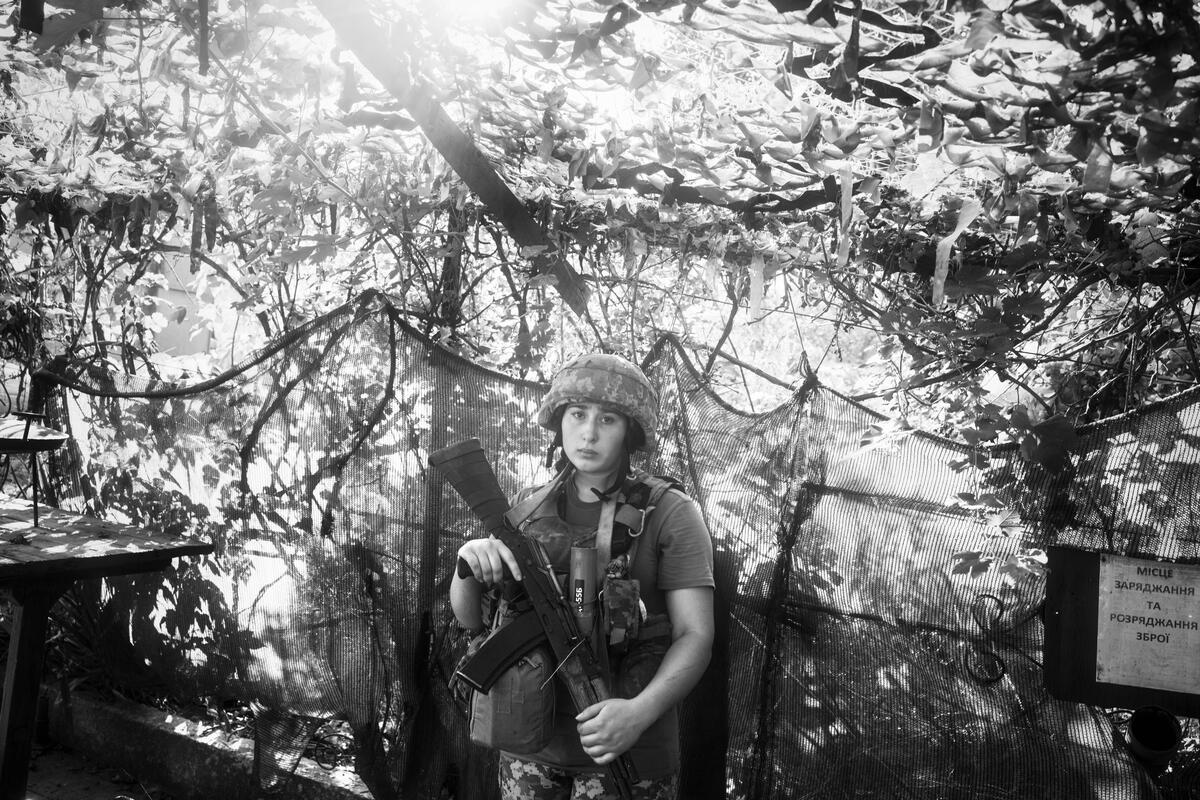
Pellegrin’s portraits of survivors in Ukraine — whether of the Mariupol victims, civilians uprooted by war, or soldiers on the front lines — evoke not only the atrocities themselves, but speak to broader manifestations of hardship, and how it is endured.
“I’m interested in photography where the specific somehow coincides with the universal, and thus becomes a metaphor,” he says. “It can be the representation of an exact moment, but it can also contain an echo to a larger condition. For example, a picture of a refugee fleeing their home is a picture of that specific person that day, but it can also evoke the idea of their condition, of what it means to have to leave. At times, photography has this capacity, and when that happens, I think it speaks with a more profound language.”
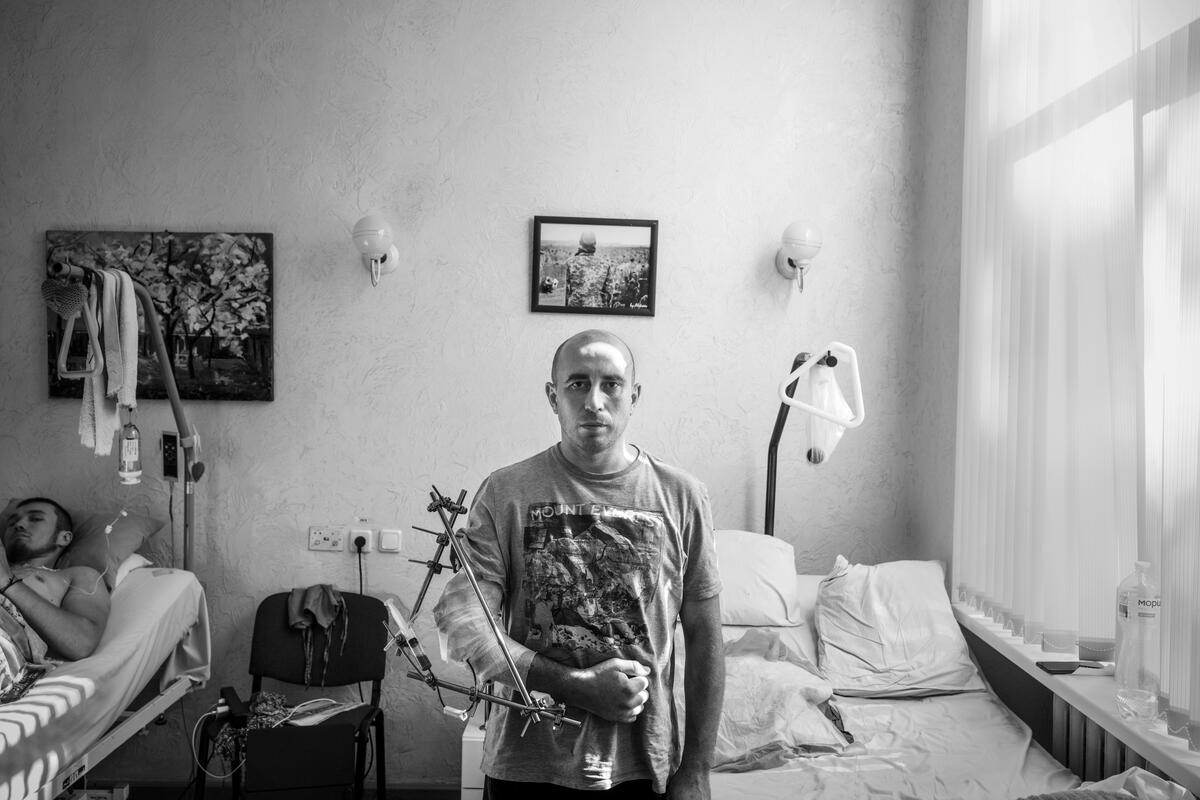
"I’m interested in photography where the specific somehow coincides with the universal, and when it becomes a metaphor."
- Paolo Pellegrin
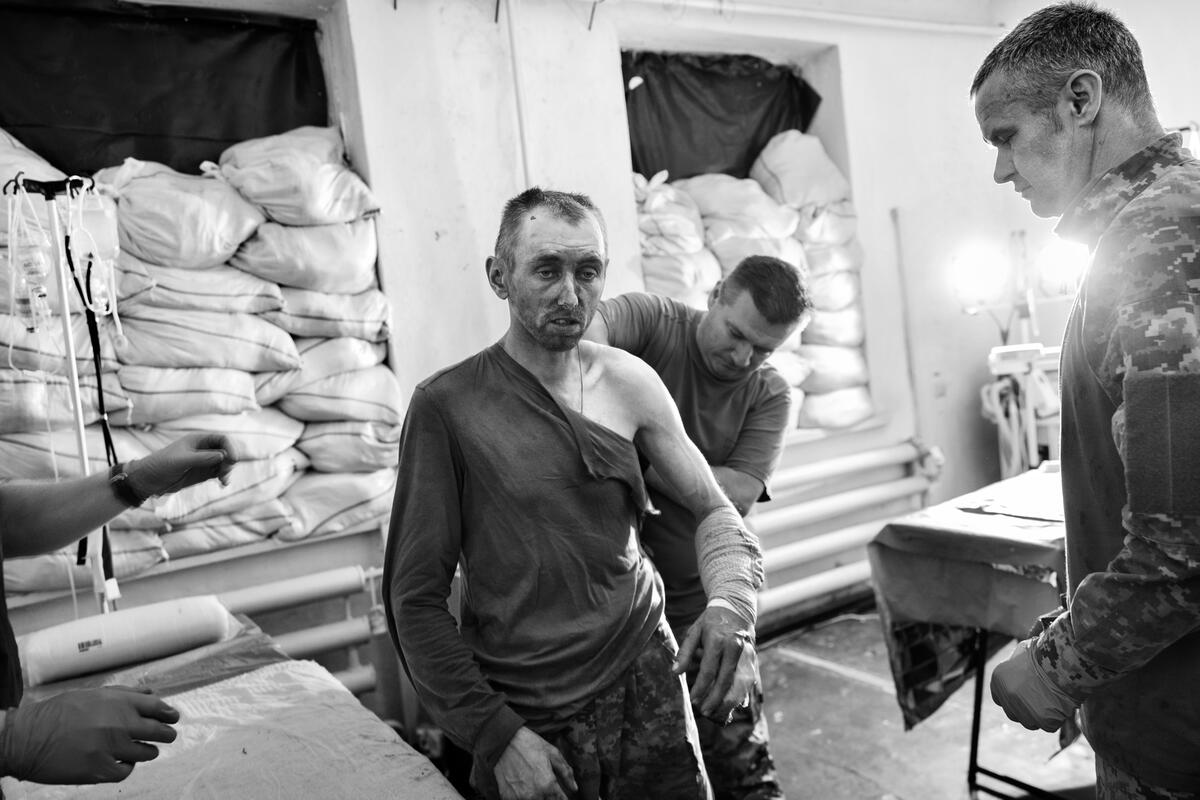
In order to access this deeper dialogue, Pellegrin treads carefully. He consciously engages in a sense of pudore — an Italian word he elicits that most closely resembles modesty — when faced with emotional exposure on this scale.
“It’s not obvious to enter a space where the person in front of you is in a state of vulnerability or suffering. It’s a very delicate, human space which photographers have the possibility of entering, and I try as best I can to enter the space with attention and awareness — and in the most respectful way — with the notion that this is very vulnerable, very fragile. It’s somehow sacred, in the sense that you’re dealing with the essential questions of life and death,” he adds.
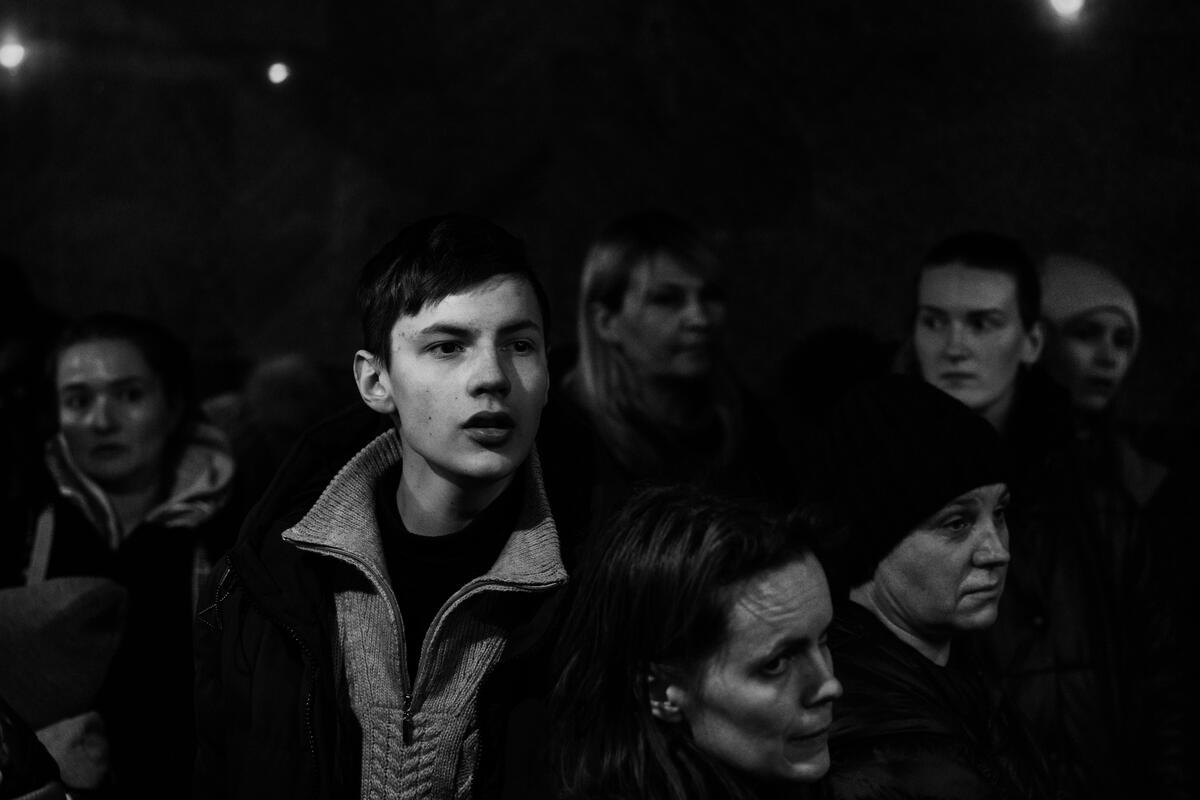
"It’s somehow sacred, in the sense that you’re dealing with the essential questions of life and death."
- Paolo Pellegrin
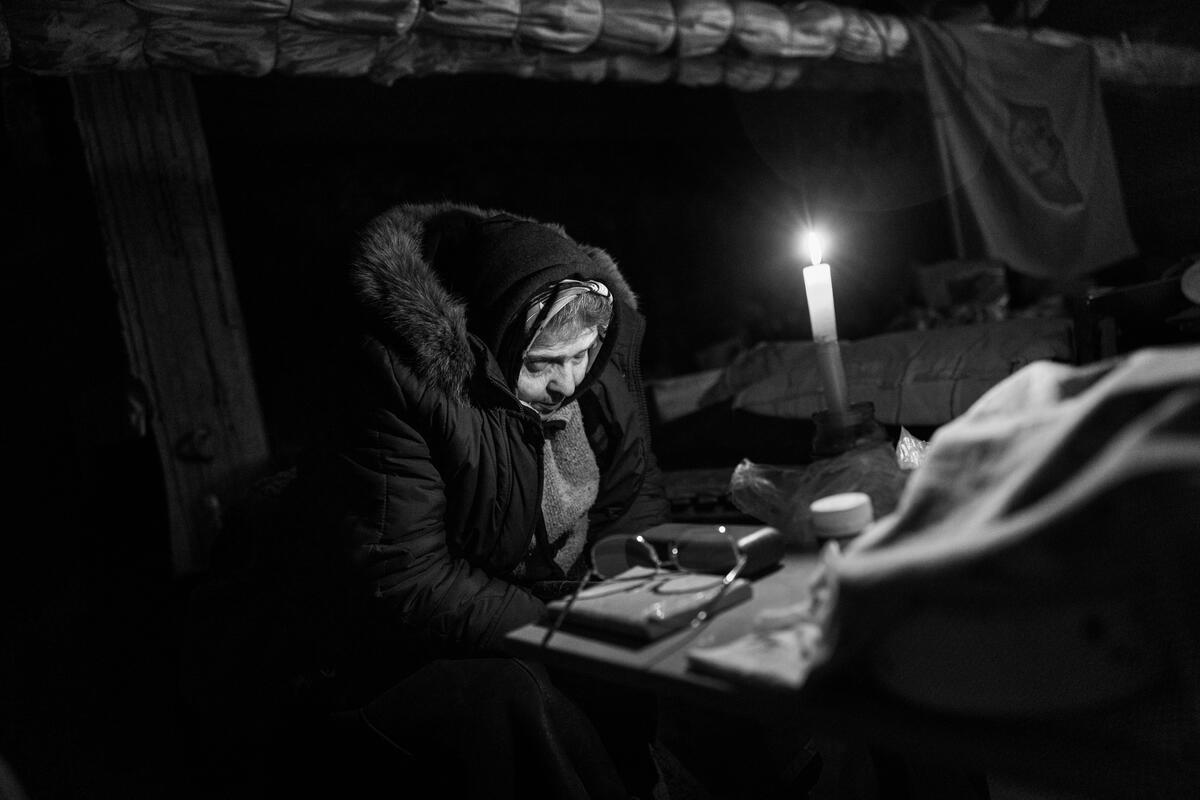
Over the course of almost 40 years, Pellegrin has developed this “fine-tuning” of his attention to others, which we often encounter in his close-range images: we can read the emotions in the subjects’ eyes, gauge their fear by the tilt of their head, or the wounds inflicted on them. His proximity seems to affect an emotional barometer, captured in faces and gestures.
“I always try to be as close as I can, but that isn’t only a physical notion,” he says. “There is also an emotional, psychological, or narrative distance. There is no formula to calibrate the exact distance. The point is to try to find the moment where the photographer can ideally be a canvas for the subject, so that the subject, and hence the larger story, can reflect upon you.”
When this moment is achieved, Pellegrin says, an image acquires a life of its own. “I’m attached to the idea that photography is like a seed. Once an image enters the world, it exists in multiple media and carries questions and doubts. I’m interested in an image that doesn’t necessarily tell me everything, that invites the viewer to begin their own journey of understanding. There’s the notion that the image is finished or closed by the gaze of the viewer.”
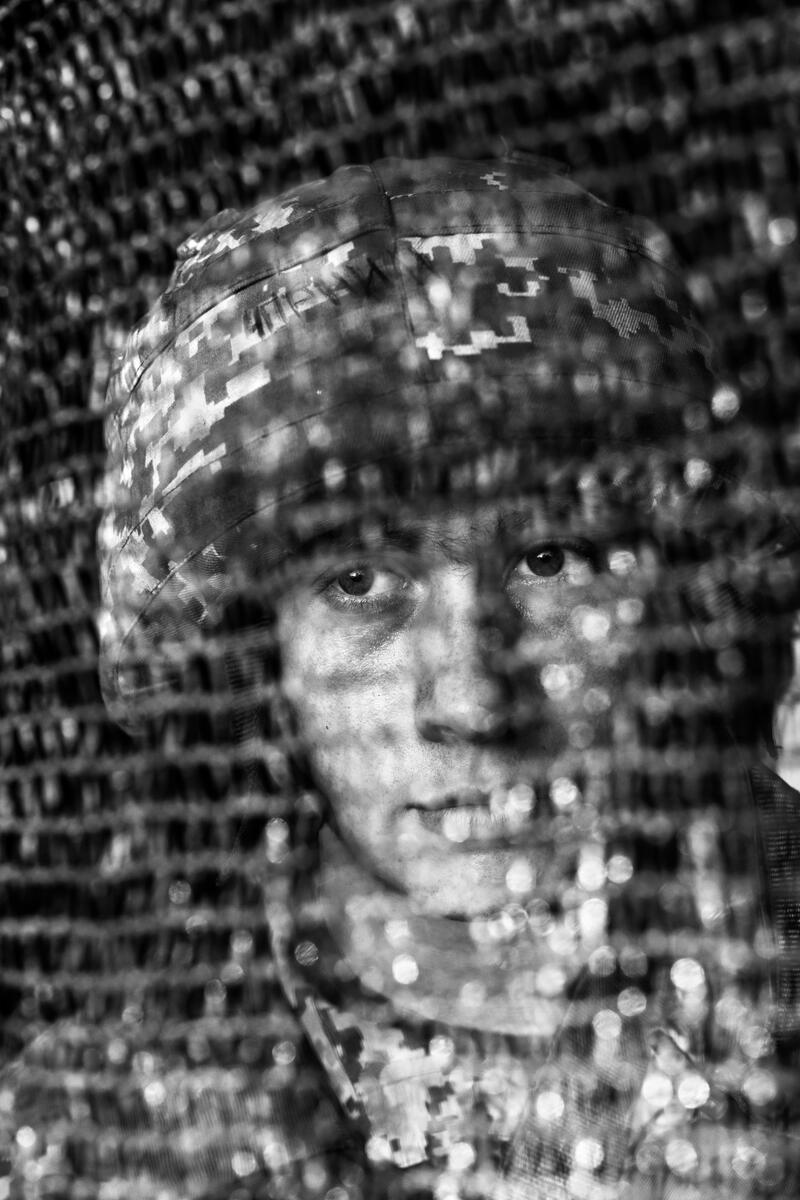
"Photography is like a seed. Once an image enters the world, it exists in multiple media and carries questions and doubts."
- Paolo Pellegrin
The Right to Record
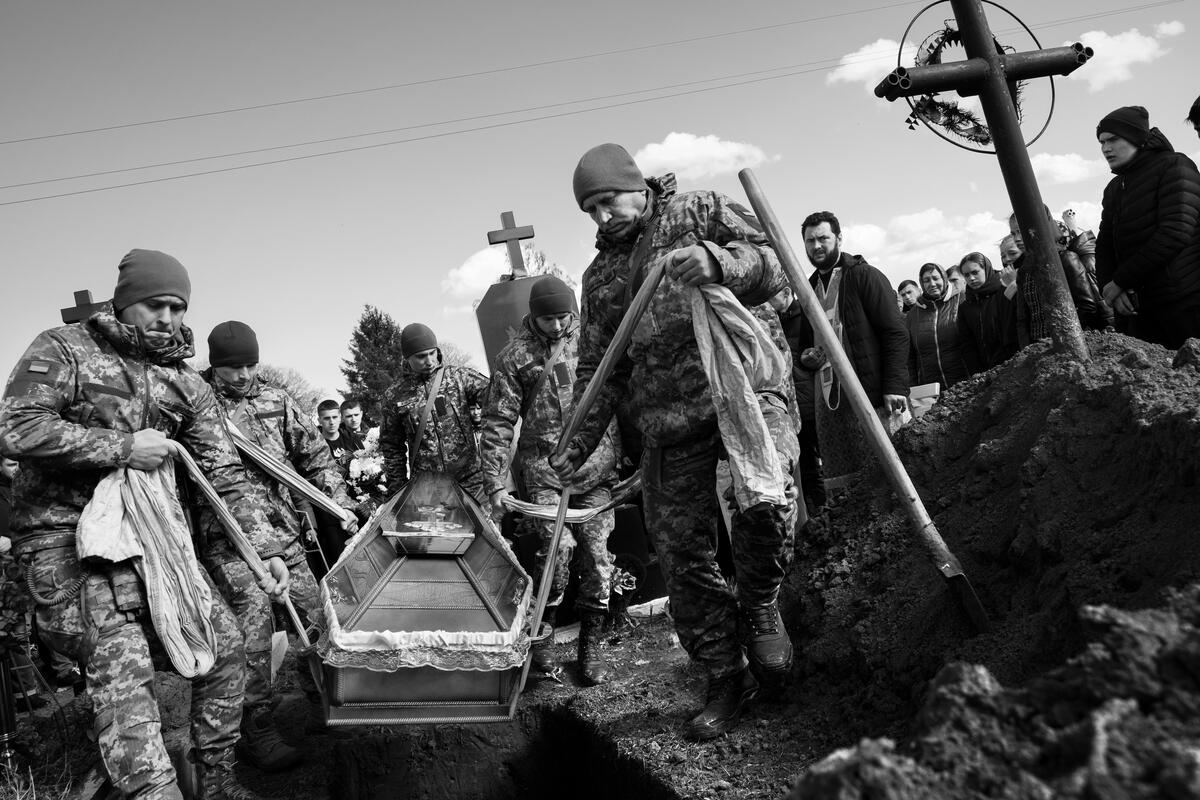
In March and April of 2022, after the Mariupol Theater attack, Pellegrin journeyed for 4,000 miles throughout Ukraine. He witnessed the aftermath of unprecedented shelling, thousands of families trying to flee to Poland, and the survivors in Kharkiv, where the road leading out of the city was “littered with destroyed cars, abandoned Russian tanks, and corpses,” Pellegrin writes.
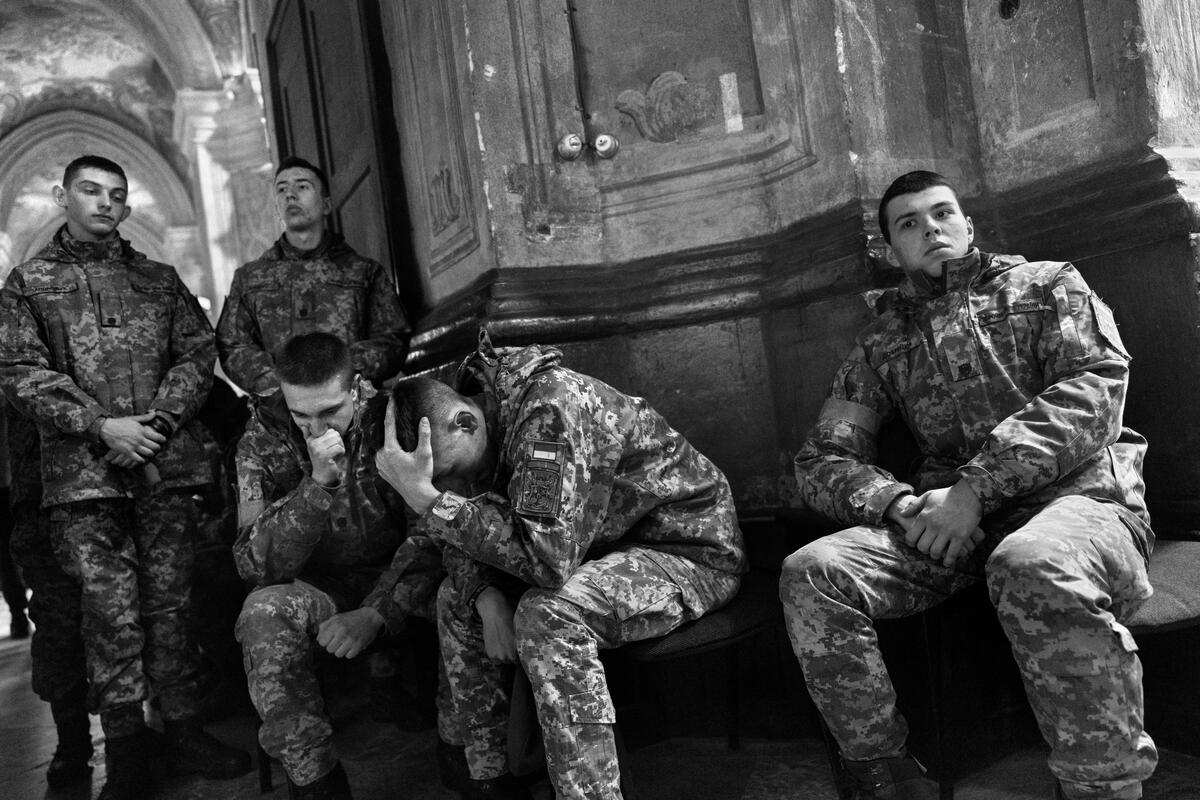
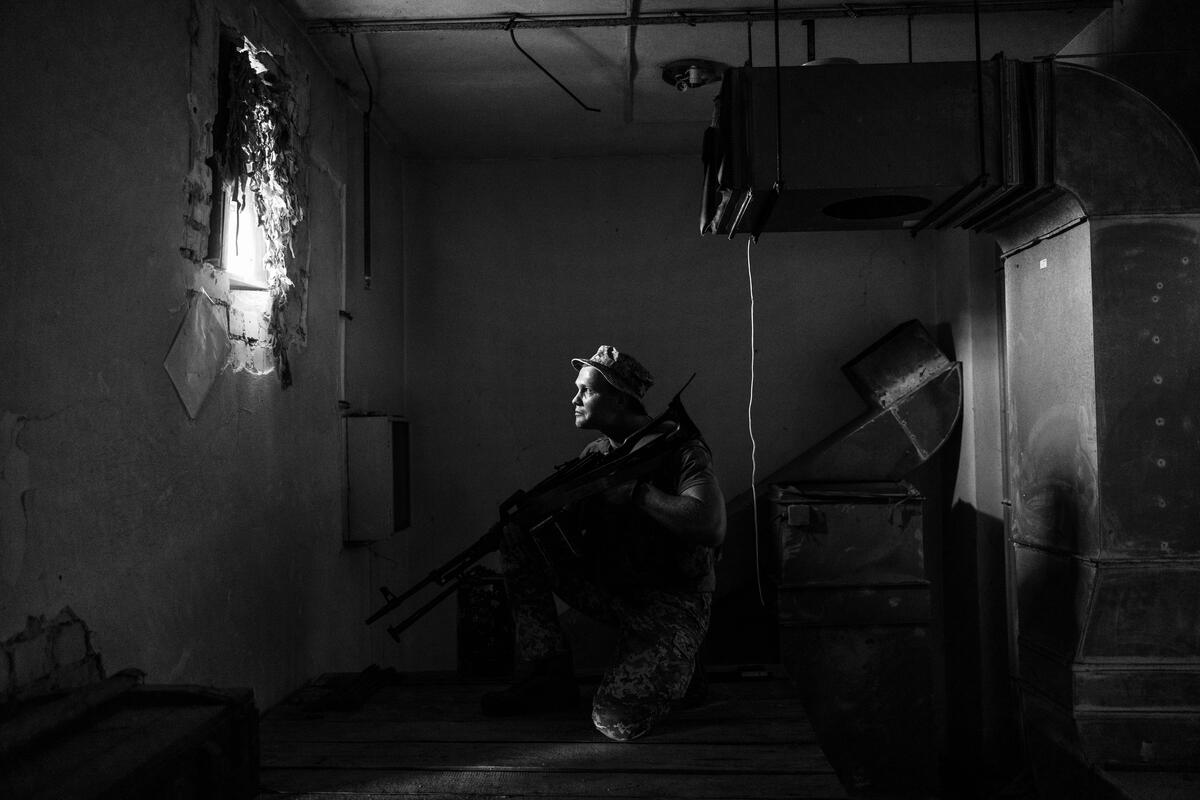
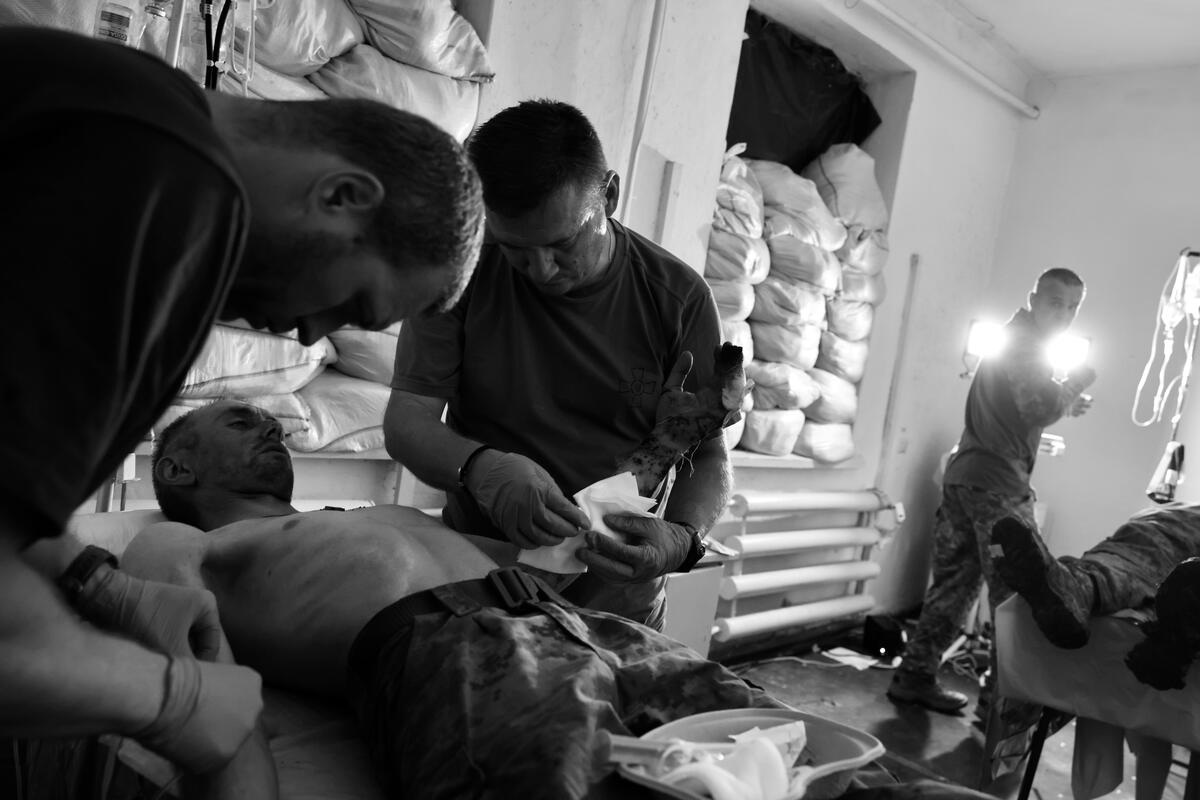
He also embedded with Ukrainian forces on the front line, and an undisclosed location in the Kharkiv Oblast, where soldiers with post-traumatic stress disorder undergo rehabilitation and therapy before returning to war.
“Ukraine is the largest war in Europe since World War II,” Pellegrin says. “Russia has invaded, it’s the aggressor, but de facto it’s also a war against Russia, fought by the West using Ukraine as a proxy. In a sense, we are in this moment in time when one can nearly start talking of a Third World War, fought with different modalities in different places around the world. It’s a very dangerous moment.”

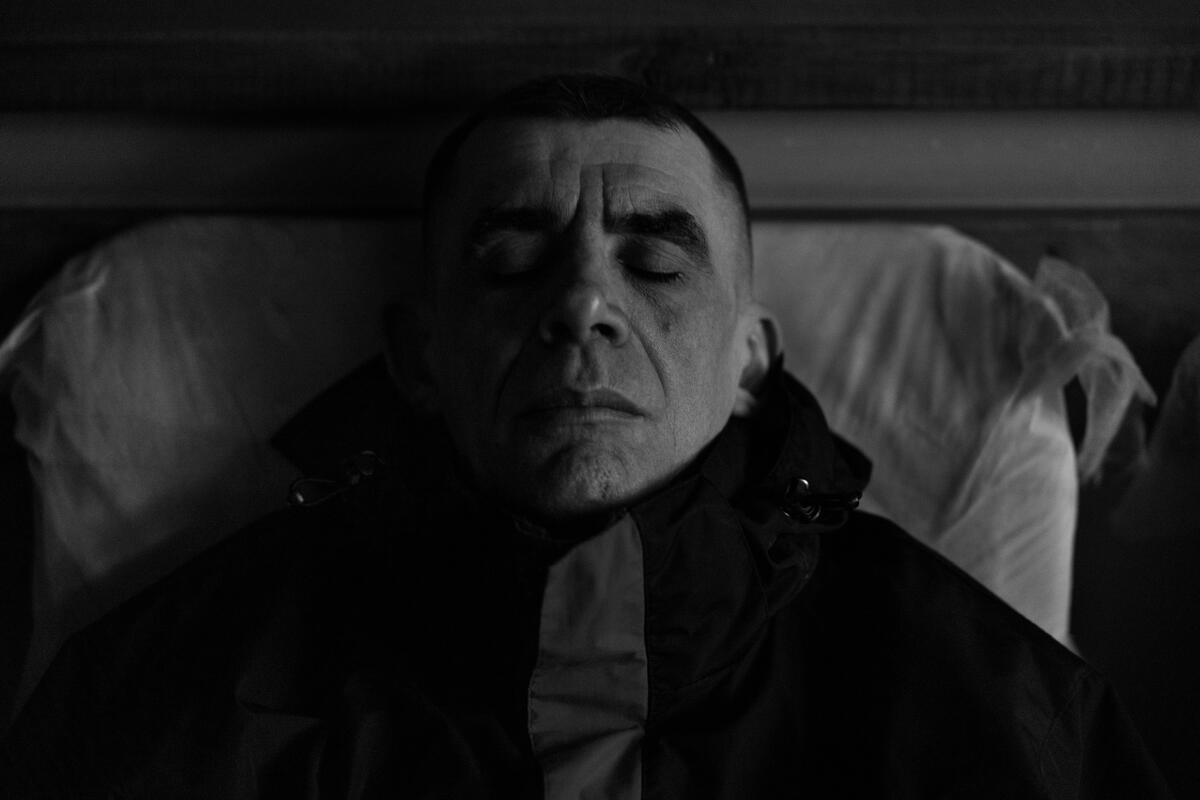
"I think it’s important that we go out into the world and document what we do to each other."
- Paolo Pellegrin
And for Pellegrin, it must be documented. He believes photography is essentially a record. While it might not necessarily affect immediate change or infiltrate public discourse, it provides evidence and bears witness. “A photograph is a record of history, of memory; it can be used for accountability down the line,” Pellegrin says. “We can’t say ‘we didn’t know.’ I think it’s important that we go out into the world and document what we do to each other.”
“I would be scared of a world with no pictures,” he adds. “The case in point is Gaza; the international media has not been able to enter Gaza for three years now. Israel blocks entry, so that we can’t see, and simultaneously, the credibility of local journalists is questioned by Israel, and then they are targeted and assassinated. It’s a terrifying reality, not to mention a crime.”
“There is a certain Gazafication of warfare; wars are becoming more and more difficult to cover. Gaza is the ultimate expression, but also in Ukraine, it is increasingly more difficult. There’s contrasting propaganda. I think it’s something we will see more of, a will to shut down voices.”
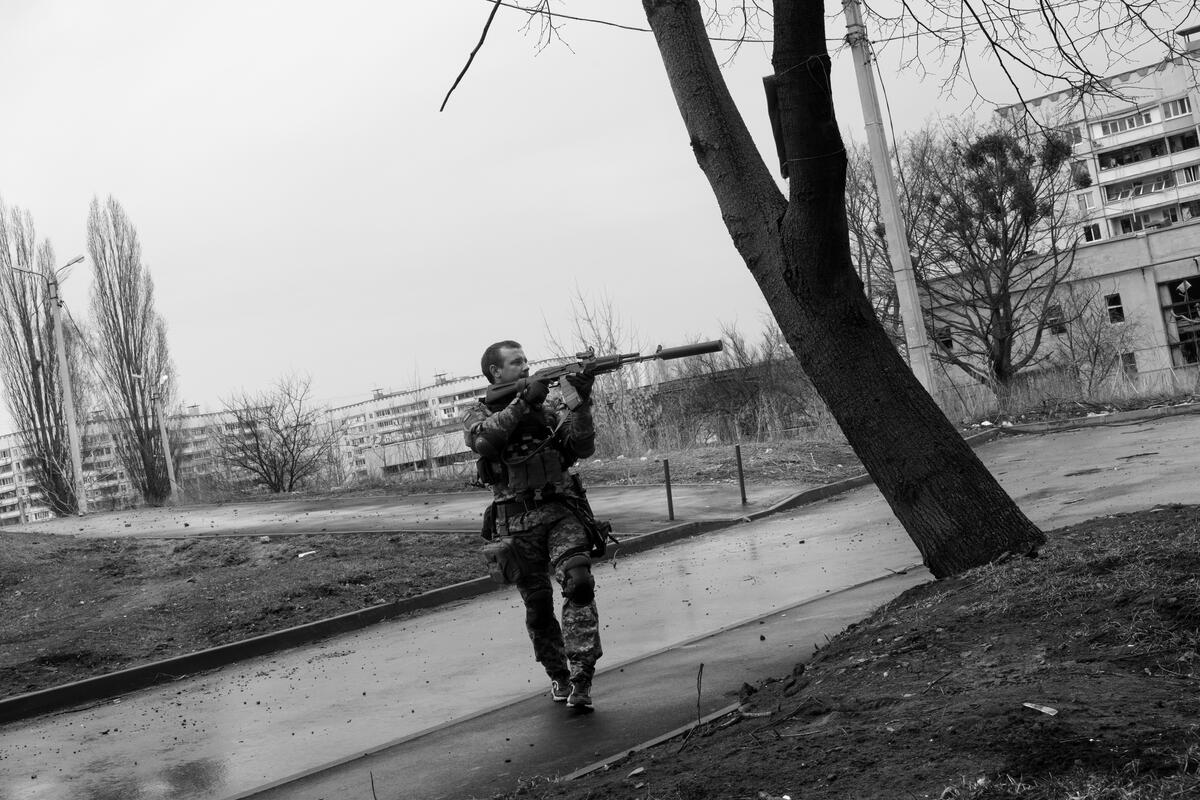
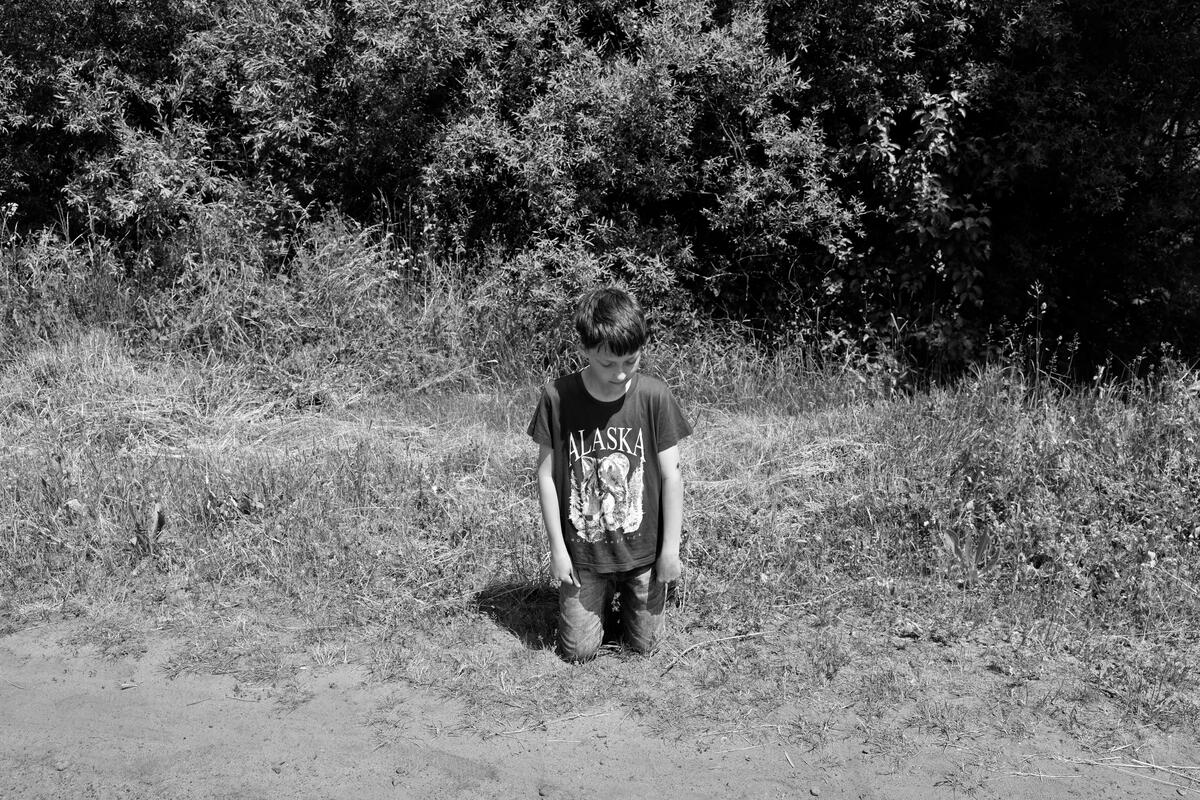
Eliminating the right to record not only prevents journalists from reporting on who was killed, but also relaying the stories of those who survived. Pellegrin’s visual storytelling and Verini’s written accounts provide an aperture for understanding how war upends the lives of everyday people.
“Ordinary Ukrainians such as those who built the refugee shelter in the theater often become faceless statistics in the coverage of war,” Verini says. “My aim with the book, and with most of my reporting in Ukraine, was to put faces and stories on those numbers.”
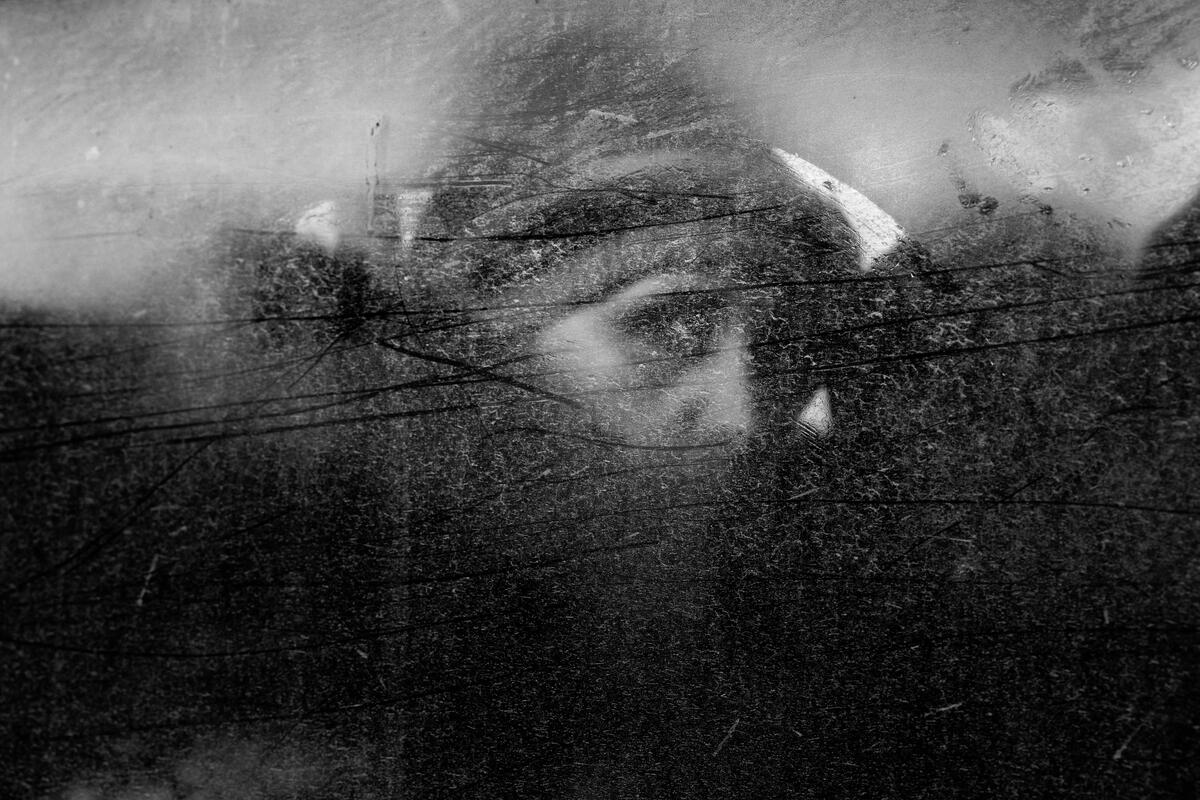
As collaborators for years in high-conflict zones, Pellegrin and Verini have seen how the other navigates situations of tension and engages with their surroundings.
“Two things I’ve always admired about Paolo’s work are its patience and its humility. This may be another way of saying its humanity. He spends weeks, months, years in a place, getting to know the people, and coming to care about them. He comes to care about their history, about the smallest aspects of their lives. This humanity comes through indelibly in his images.”
Life After War
In December, 2025, Russia reported that it had restored the Mariupol Theater and reopened its doors with a performance of a Russian fairy tale.
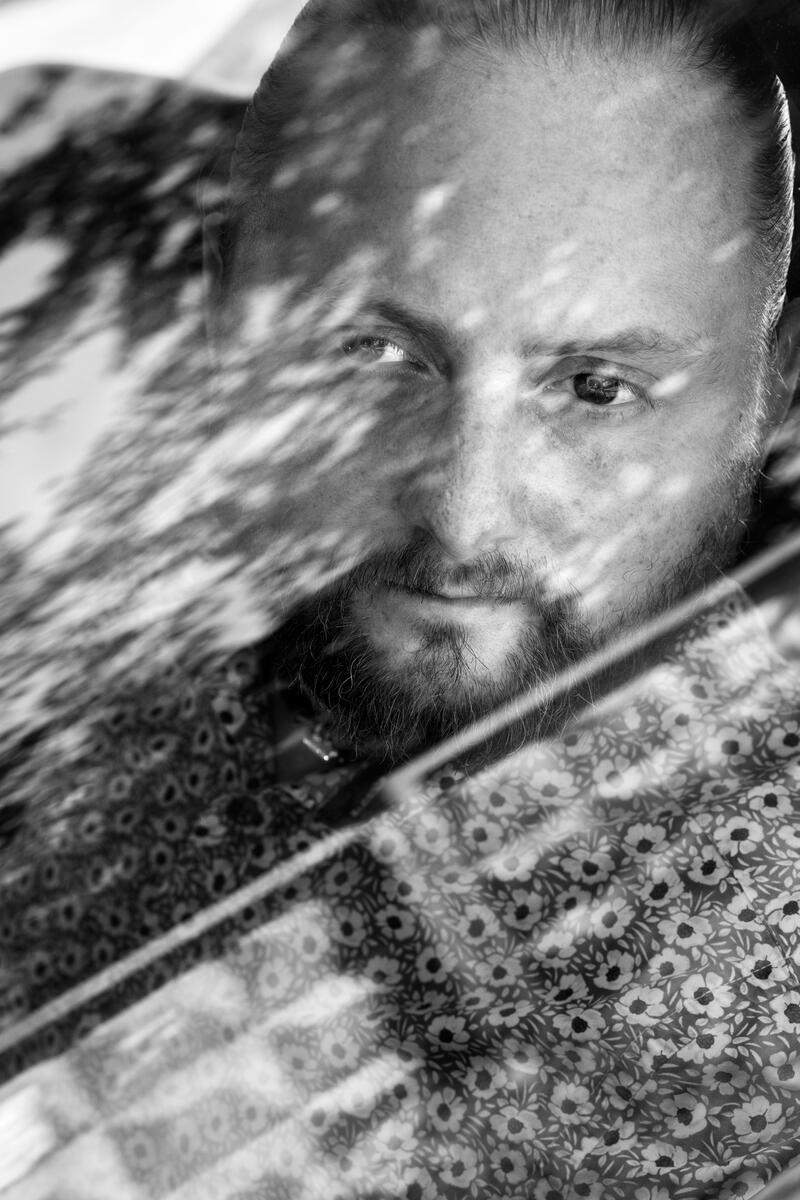
“Having entertainment, songs and dances on top of all the bones? I have the feeling that the souls of the people who died there won’t let them perform well there,” Vira Lebedynska, a survivor of the bombing, photographed by Pellegrin, told The Guardian.
"Images will always be there, they will have a long life."
- Paolo Pellegrin
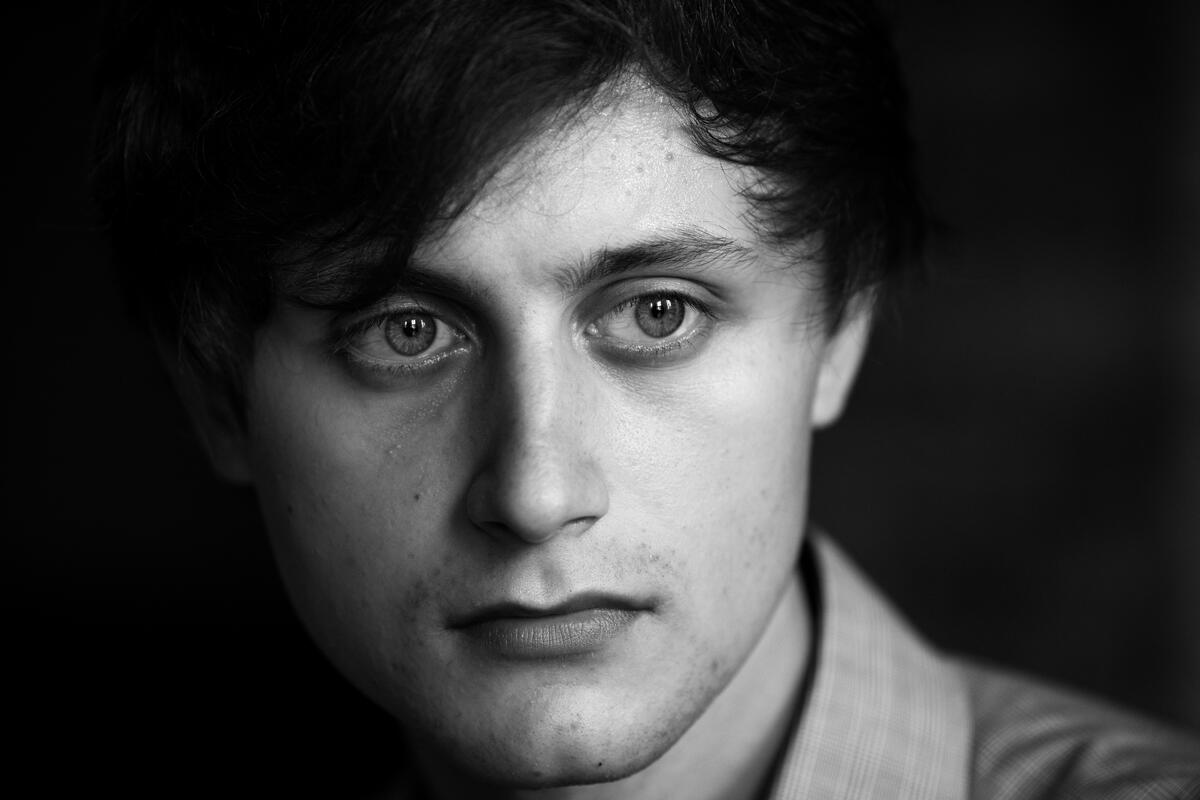
Lebedynska and Dmytro Murantsev, also photographed by Pellegrin, relocated to Uzhhorod in western Ukraine at the base of the Carpathian mountains. With a small group of former Mariupol actors, they formed a theater-in-exile and perform a piece across free Ukraine and Europe based on the theater bombing, called “Mariupol Drama.”
“For me, this is an illustration of why we as humans need art, whether it be photography or prose or theater,” says Verini. “It is through art that we find meaning in experience, and it is only with that meaning that we properly live.”
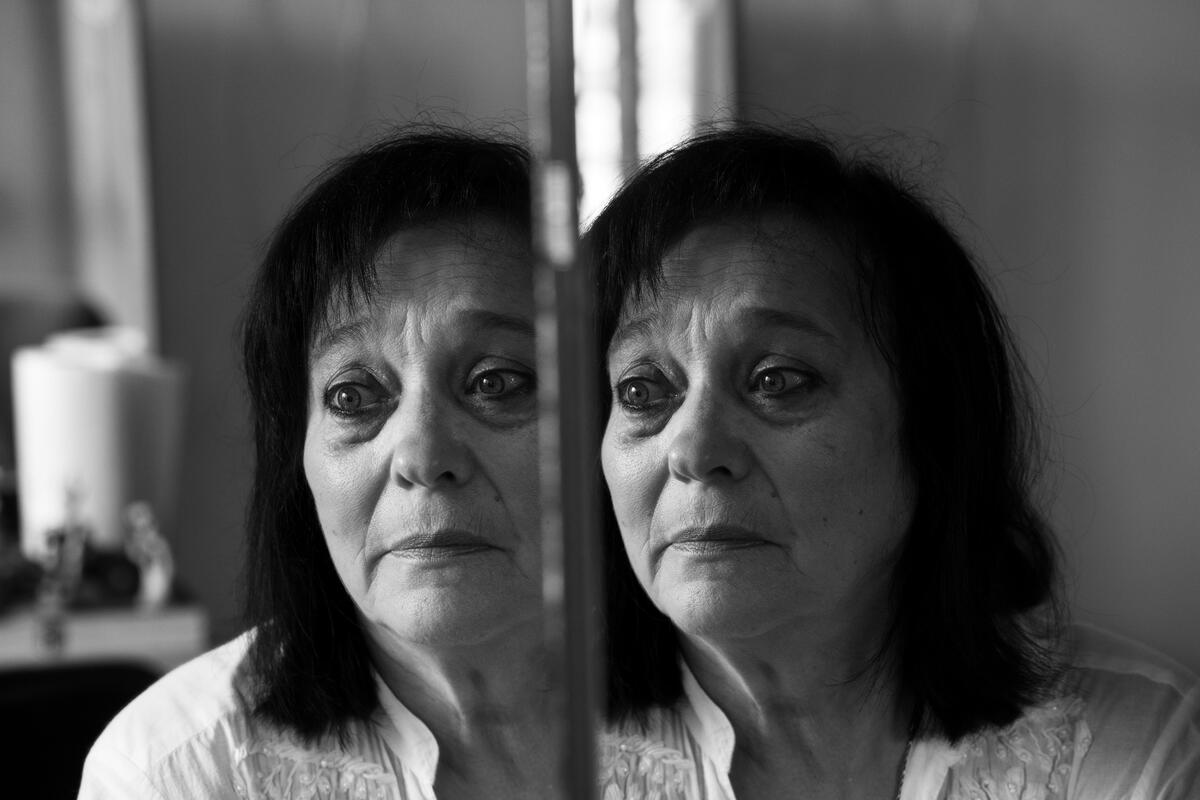
The meaning of an image, when stripped down to its bare essence, as Pellegrin says, lies in its testimony. “I think it’s important that this visual language and these testimonies exist, to spread these open questions in the public discourse,” he says.
“Images work in mysterious, alchemic ways. Sometimes they resurface during encounters in your lifetime and they move through you. They’re like seeds — they exist in the world. Images will always be there, they will have a long life, and that is not nothing.”
THE THEATER: Courage and Survival in the Defining Atrocity of the Ukraine War, published by Simon & Schuster, is now available to buy here.
Learn more about Paolo Pellegrin’s coverage of Ukraine in his 2024 photo essay here.