Generation Z: Cristina De Middel in Bahia, Brazil
For the second edition of Magnum Chronicles, the cooperative’s photographers work collaboratively with young people around the world to paint a global portrait of Generation Z
This year, Magnum photographers are collaborating with young people around the world to capture the zeitgeist of Generation Z for the second edition of Magnum Chronicles, an annual publication by the cooperative that explores and interrogates contemporary global issues through independent documentary photography. Pre-order and support the publication here.
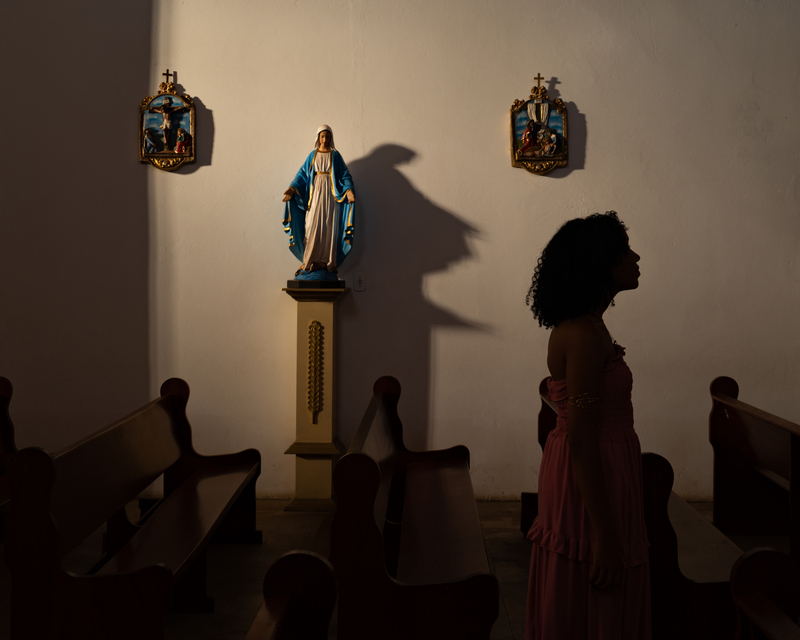
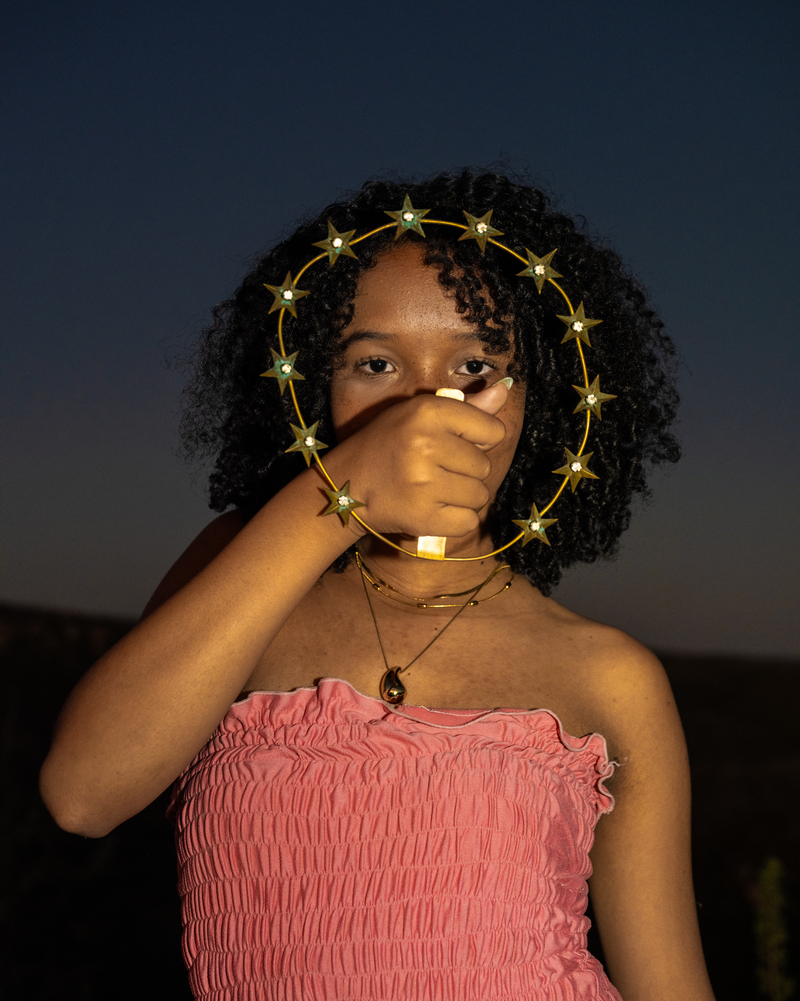
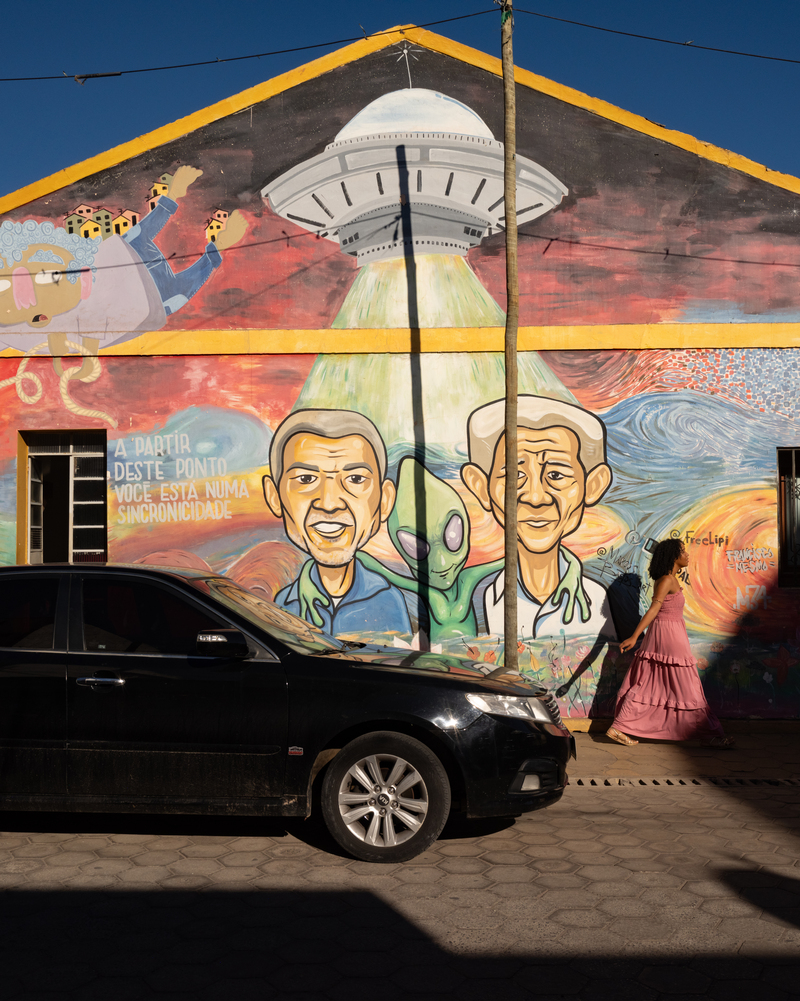
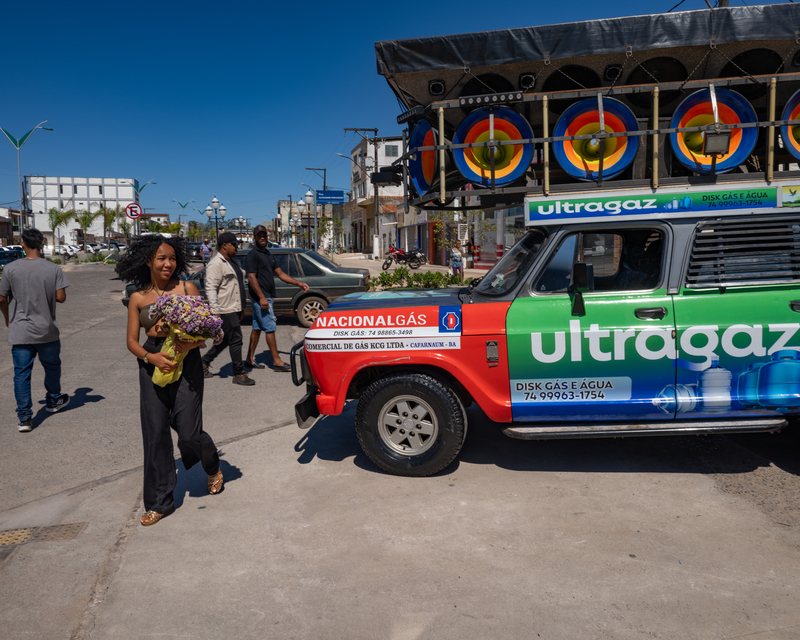
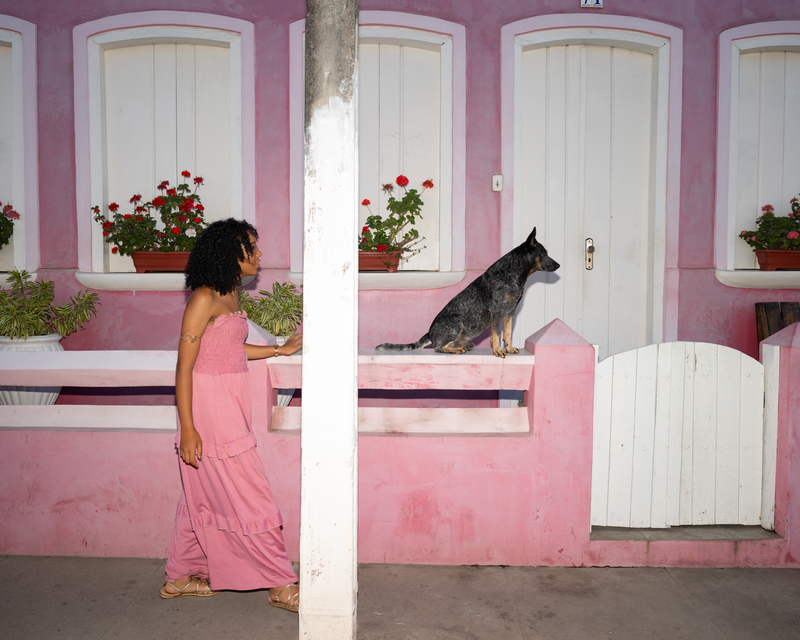
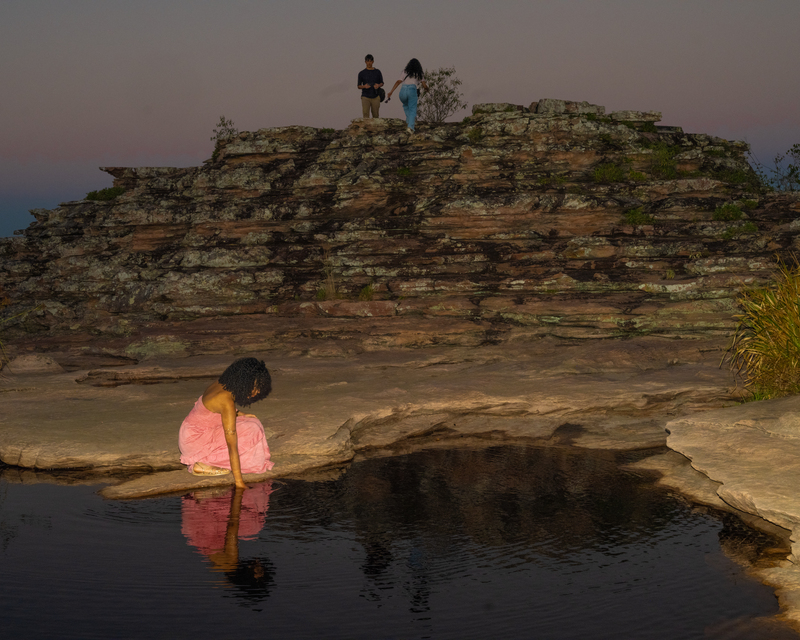
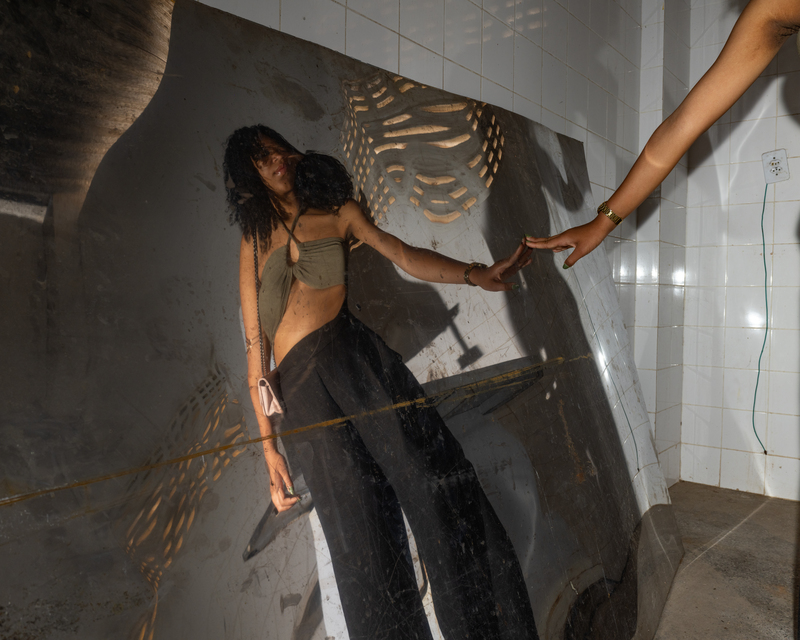
Morro do Chapéu, a town surrounded by the plateaus and waterfalls of Chapada Diamantina, Brazil, is an enclave of spiritual beliefs. Condamblé, Evangelical movements, Catholicism, and extraterrestrial visitations all coexist and sometimes intermix. Exploring the town for her series in Magnum Chronicles: GenZ, Cristina De Middel, interested in how religion shapes Gen Z youth, met Ranielly, a young woman who seeks refuge in writing, theater, and spirituality to navigate the pressures of her generation.
Here, De Middel shares the details about their collaboration and what she discovered while working on the series.
Where and how did you meet Ranielly? How open was she to working on the project?
I wanted to work in a part of Brazil that is rarely represented and far removed from the usual clichés. The countryside of Bahia felt like the perfect place: genuine, deeply rooted in its traditions, and shaped by a striking natural landscape. Morro do Chapéu is a small town surrounded by national parks, where young people’s lives are strongly influenced by the territory and a certain degree of isolation, even though their aspirations are often the same as those of young people anywhere else.
I asked friends who had worked in the region for recommendations, and one of them suggested getting in touch with a contact at the Comissão Pastoral da Terra, as I was interested in exploring questions of spirituality. My contact, Cláudio, introduced me to Ranielly. From the moment we met, I was struck by her ambition, determination and commitment.
She was immediately enthusiastic about taking part in the project. I think she was excited by the idea of being involved in an international project and by the possibility of having her voice and opinions become part of a broader conversation with other young people from different parts of the world.
"Her education and her faith are not only sources of hope, but also the foundations on which she has built her ambitions in an increasingly uncertain world."
- Cristina De Middel
What was the collaborative approach like?
The collaboration began with a questionnaire, which I sent to Ranielly with complete freedom to answer whichever questions she felt comfortable with. I was particularly intrigued by the role that faith and the Catholic Church played in her life. For my generation — or perhaps just for me — that kind of relationship with religion feels quite unusual.
I also asked her to write a letter to her future self. I was struck by how mature and determined she seemed, although at first everything felt almost too perfect.
It wasn’t until I traveled to Morro do Chapéu and spent a couple of days with her that I understood the full picture. I met her family and friends and saw both the beauty of her environment and the pressure she carries. I realized that her education and her faith are not only sources of hope, but also the foundations on which she has built her ambitions in an increasingly uncertain world.
What did you learn from her story, and what could you empathize with?
Ranielly reminded me that success is a very relative concept, and that it can be measured in ways that have little to do with career or material achievement. She has a clear plan for her life, one that combines both spiritual and practical aspirations, and she already seems at peace with that path — or at least she consciously reminds herself that she is.
It made me think about myself at her age. I had no clear plan, and I wasn’t spiritual at all, but I somehow assumed that things would work out. I belonged to a generation that grew up with a certain optimism about the future. I don’t think that’s the case anymore.
Many young people today seem to understand that much of their future is beyond their control. Rather than resisting that uncertainty head-on, they find different ways of living with it, adapting to it, or quietly pushing back against it. I found that both moving and revealing.
"I belonged to a generation that grew up with a certain optimism about the future. I don't think that's the case anymore."
- Cristina De Middel
Why is it important to document and amplify the voices of the younger generations?
We all spend our lives caught between two frustrations: first, believing that the generation before us is doing things the wrong way, and later, struggling to accept that the generation after us no longer wants to do things our way. It’s a cycle that repeats itself over and over.
That’s why it’s so important to keep listening to younger voices. Not because they are necessarily right, but because every generation develops its own ways of responding to the world it inherits. Staying curious about those changes is a matter of survival. Otherwise, we risk becoming convinced that our own perspective is the only valid one while the world continues to evolve.
I believe this is true not only on an individual level, but also for society as a whole.
"Every generation develops its own ways of responding to the world it inherits. Staying curious about those changes is a matter of survival."
- Cristina De Middel
What were your hopes and fears for this generation, and did they change after working on the series?
I was afraid of a generation that might be superficial or disconnected from the world around them. I worried they would become easy victims of the polarization and simplification that my generation — and those before mine — have helped to create. Part of me still worries that a lack of critical thinking could take us to places that are difficult to come back from.
But working on this series also made me realize that, in many ways, we are already there. The world these young people have inherited wasn’t created by them. If anything, it made me think that perhaps I should be more concerned with changing what has already been established than fearing what they might become.
I can’t say I came away feeling overwhelmingly hopeful, but neither did I become more pessimistic. Every generation contains both reasons for concern and reasons for optimism. What this project reminded me is that the future is never built by one generation alone. It is always the result of an ongoing conversation between those who inherit the world and those who are willing to let it change.
GenZ Spotlight:
Ranielly: A Letter to My Future Self
De Middel and Ranielly’s collaboration began with a questionnaire inspired by Magnum’s collaborative Generation X project in the 1950s, and Ranielly writing a letter to her future self:
“If you’re reading this, it means time has passed — and somehow, I managed to survive. […] I have a thirst within me — not for successes or certainties — but for experience. An almost desperate desire to live everything: to understand love and suffering, sound and silence, laughter and emptiness. I don’t know who you’ve become, Rani, but I hope you continue to be curious about the world and about people. […] That you lived so intensely that time itself, for a moment, doubted its own passing.”
To read the full selection of stories and support the publication of Magnum Chronicles this year, click here.