9/11: Stories from Magnum Photographers
Magnum photographers recall how they documented the attacks on the World Trade Center on September 11, 25 years ago
“It was such a beautiful morning. There was no cloud in the sky, and suddenly everything went dark,” said Steve McCurry, recounting the moment he watched the smoke erupting from the World Trade Center from the roof of his home in Washington Square Park, after one of the four coordinated attacks by al-Qaeda on September 11, 2001.
The night before, he had returned to New York from China, where he had been shooting for six weeks. The next morning, he got a call that the World Trade Center was on fire.
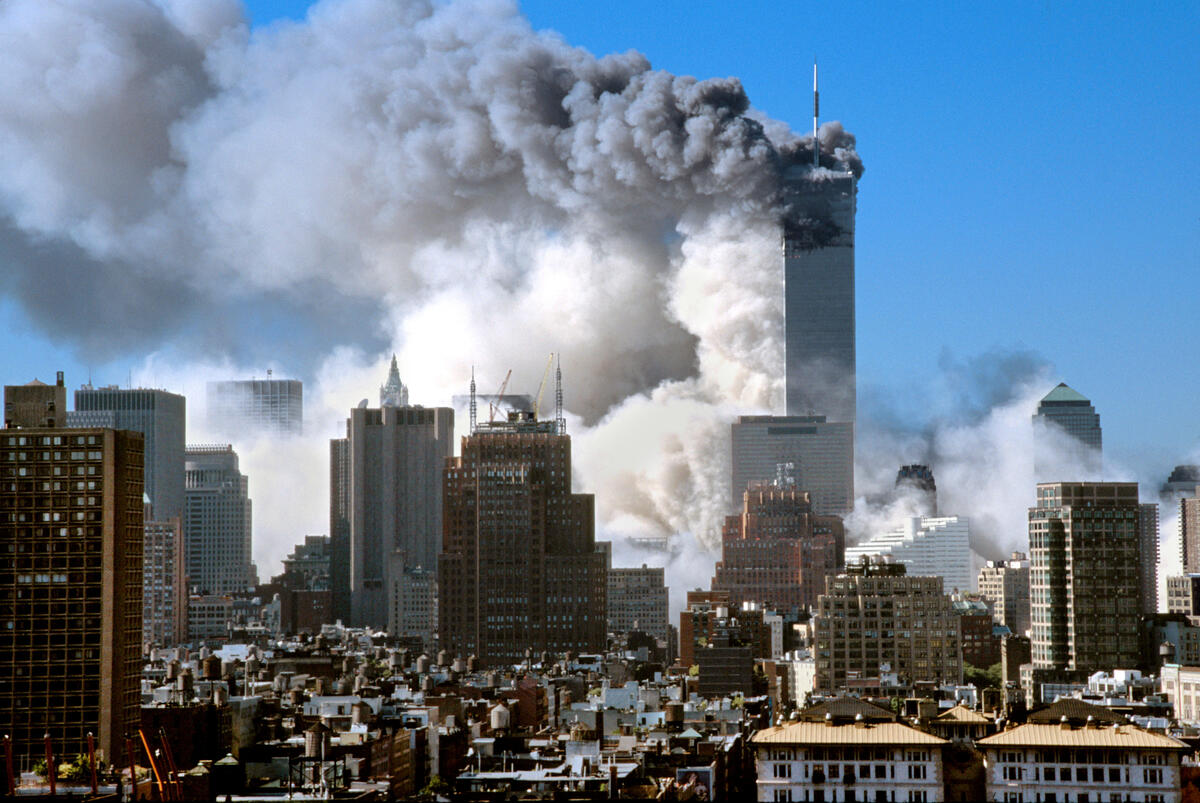
“I raced up on the roof, and started photographing. I thought, ‘this can’t be happening. This is unreal,’” he told Sky Arte. He witnessed the second tower collapsing at 10:28am.
“I couldn’t hear the World Trade Center collapse, but I could hear all these screams from the park below. It’s a surreal, nightmarish memory I have of that morning,” he said.
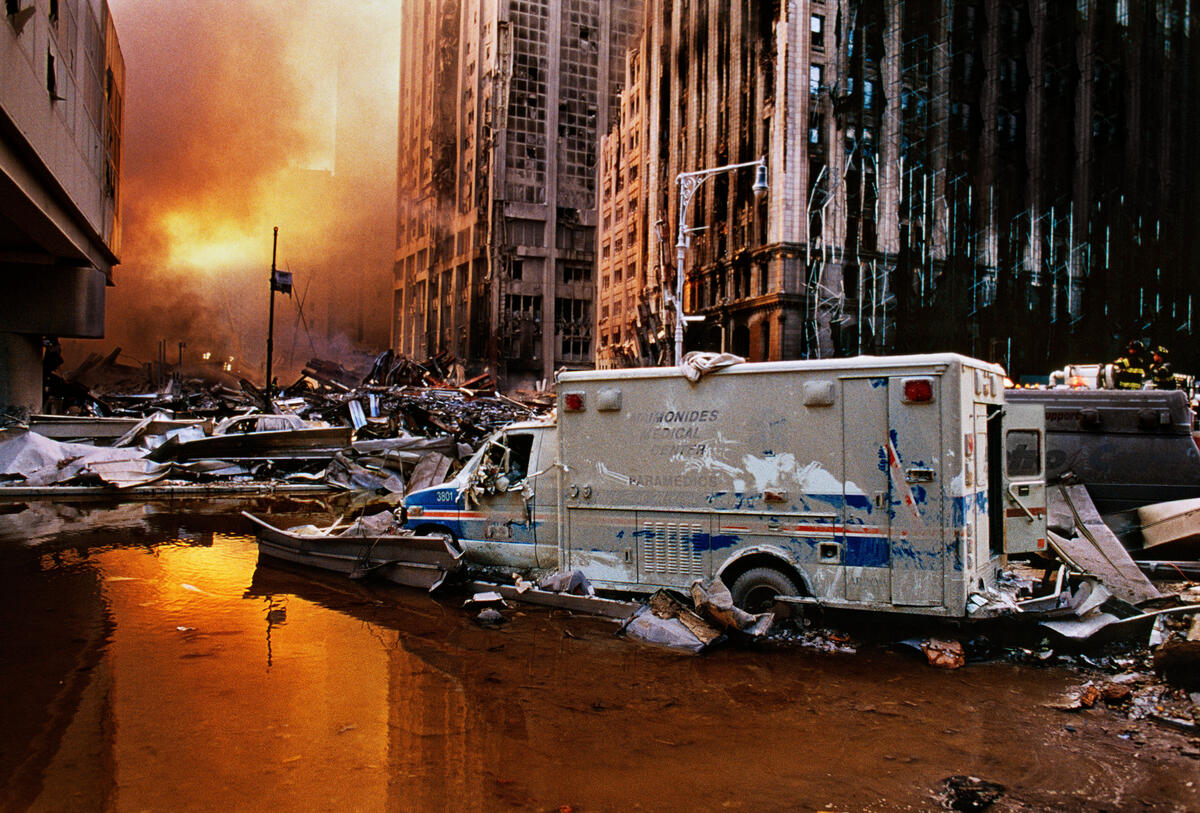
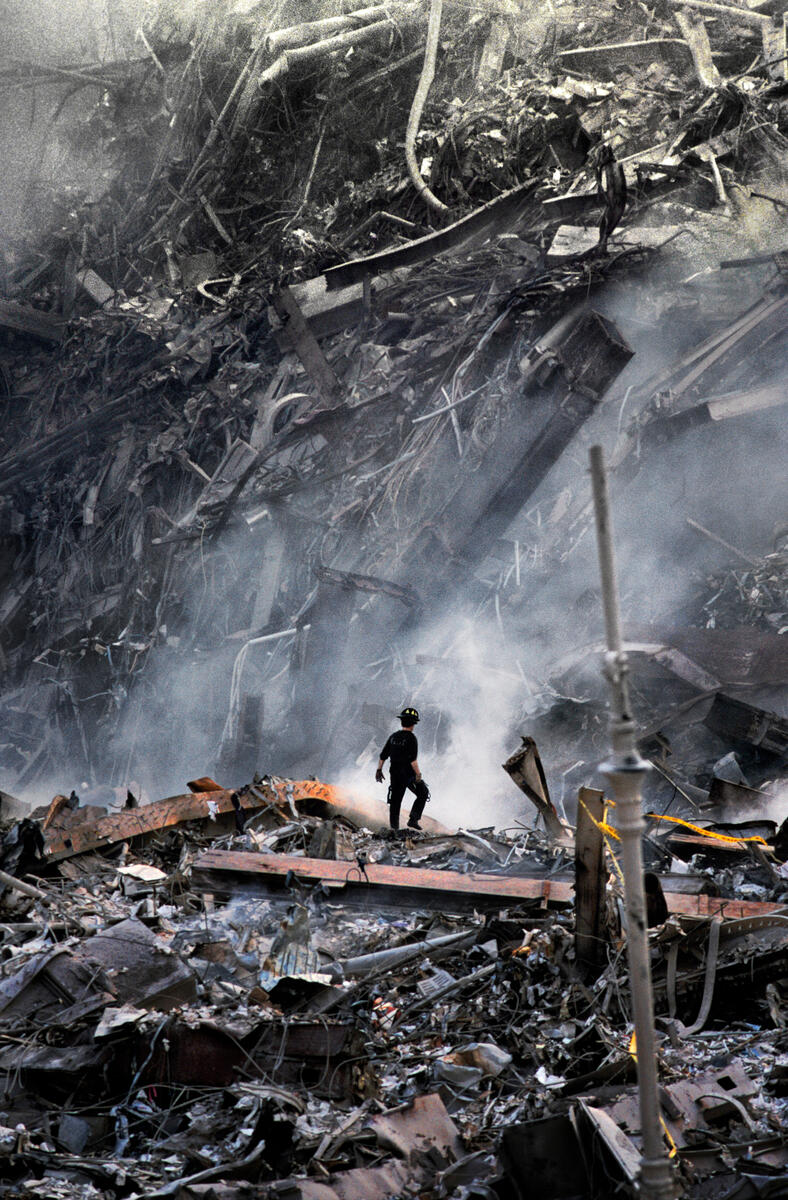
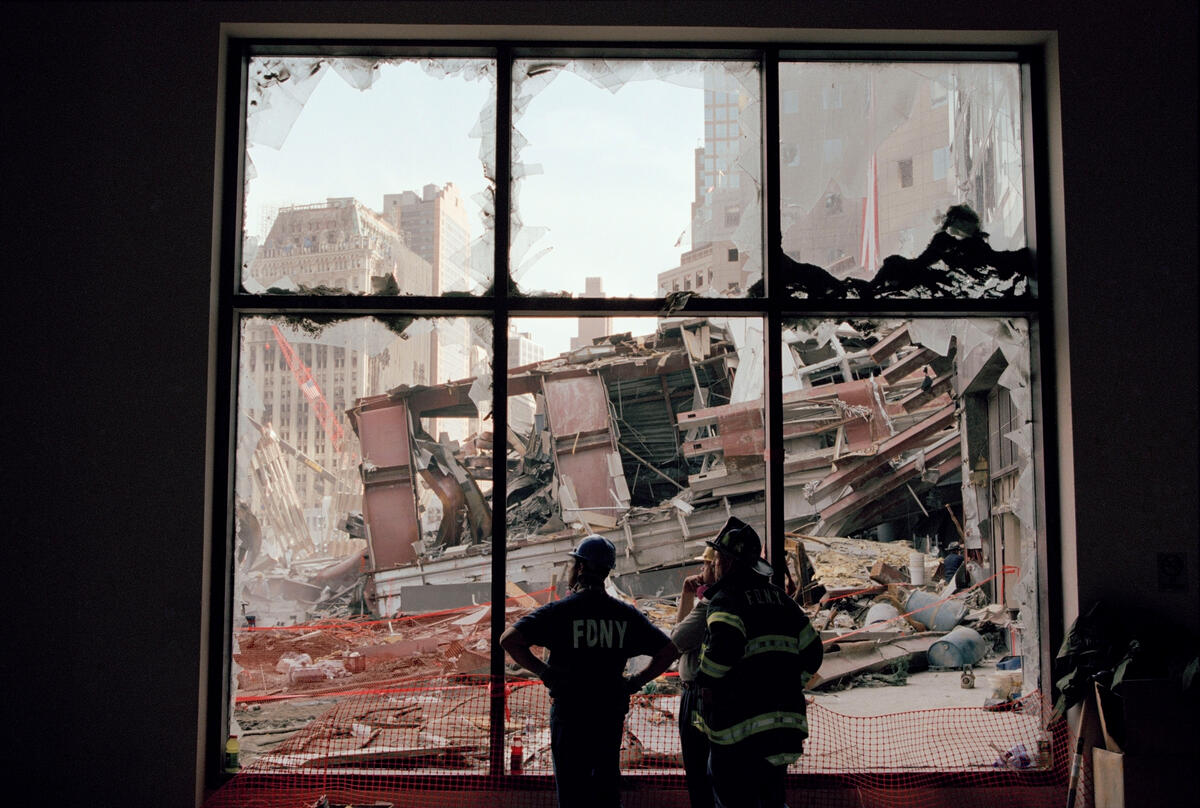
Without hesitation, he went to Ground Zero. What he saw was an “enormous field of destruction, and these tiny little humans, these firemen and relief workers trying to find survivors. It was futile, it was a task that was impossible.”
While McCurry was traveling back from China the day before, Magnum members had gathered for a meeting in New York. Among them was Susan Meiselas. The next morning, someone called her, believing, like so many at first, that the attack was an accident.
Meiselas, who had photographed high-conflict zones in El Salvador and Nicaragua, said, “New York is a place to retreat to, so what changed here was…there it was. It was here.”
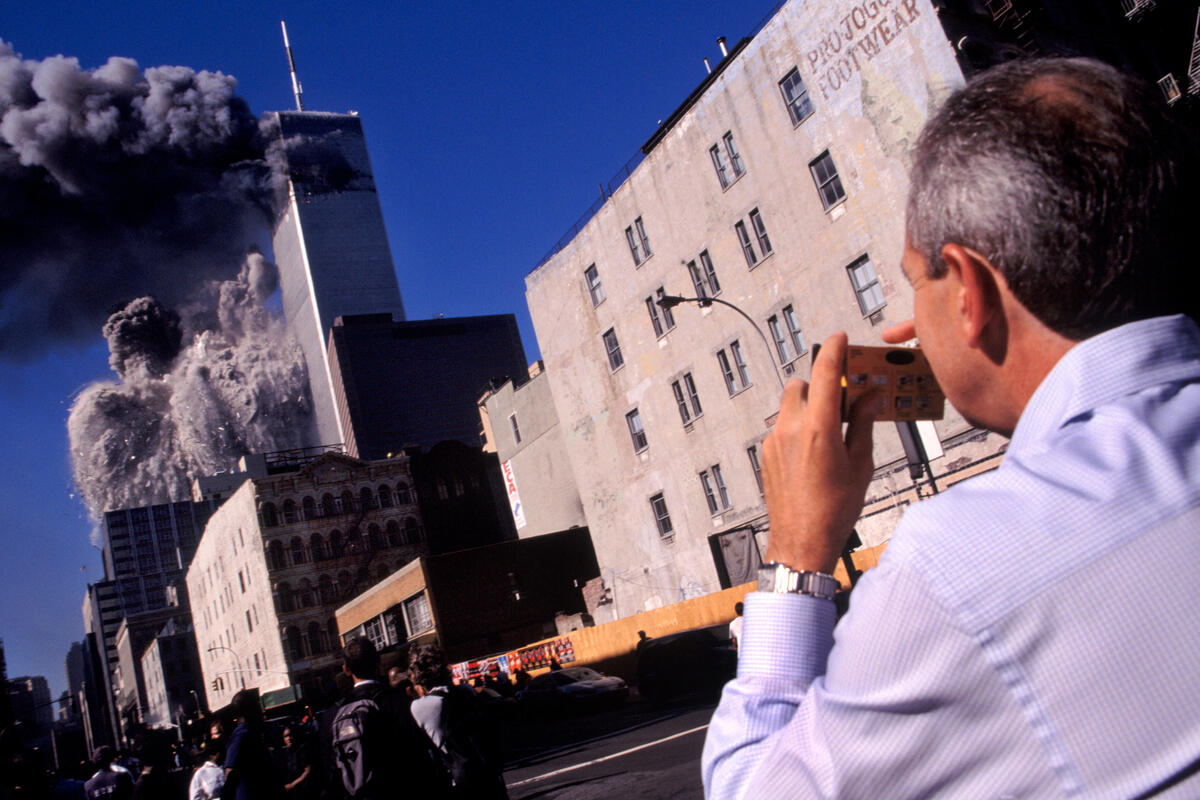
She left the diner where she was having breakfast and jumped on her bike, getting as close to the site as possible. “There were people on every corner watching and taking photographs, it was a strange spectacle. Everyone felt helpless watching.”
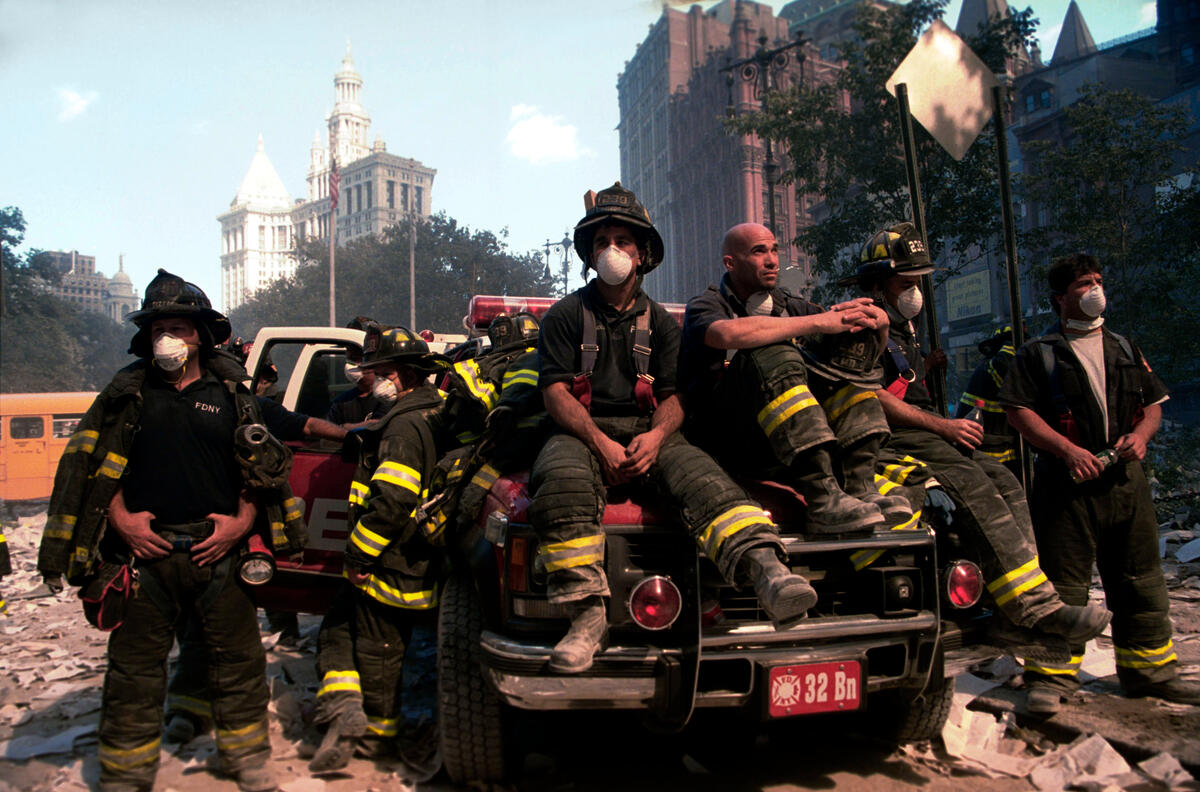
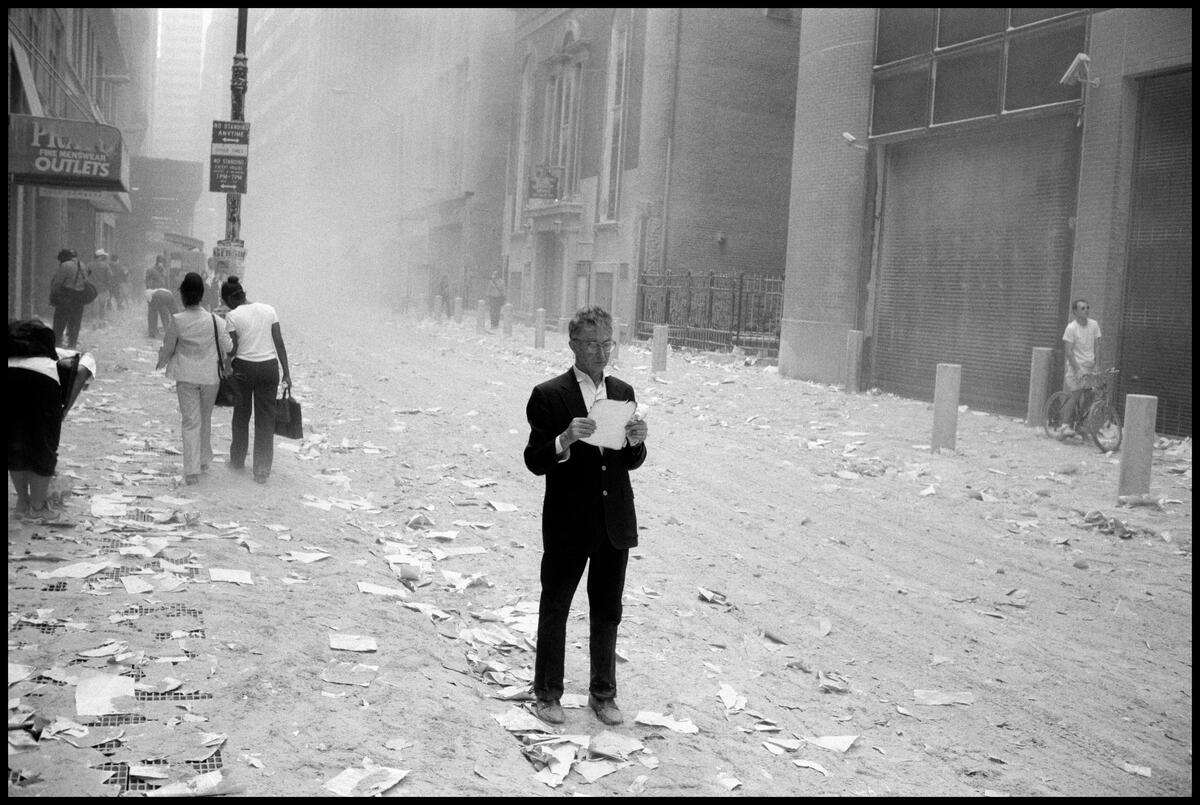
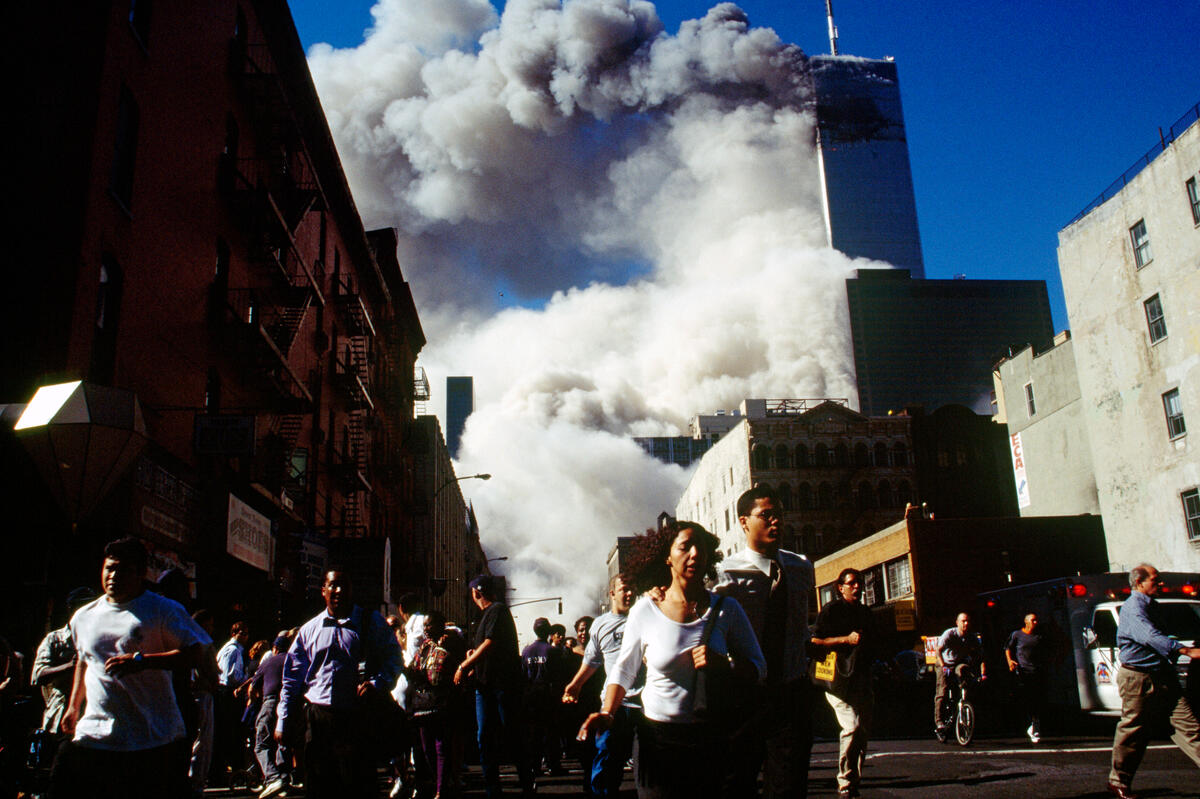
Through her lens, Meiselas saw pedestrians fleeing from the falling debris as the South Tower collapsed, exhausted firefighters pausing in silence, and the sculpture in Liberty Plaza, entitled Double Check, of a businessman with an open briefcase on his lap, almost camouflaged in the ashen landscape and rubble, a sea of papers and debris piled around him.
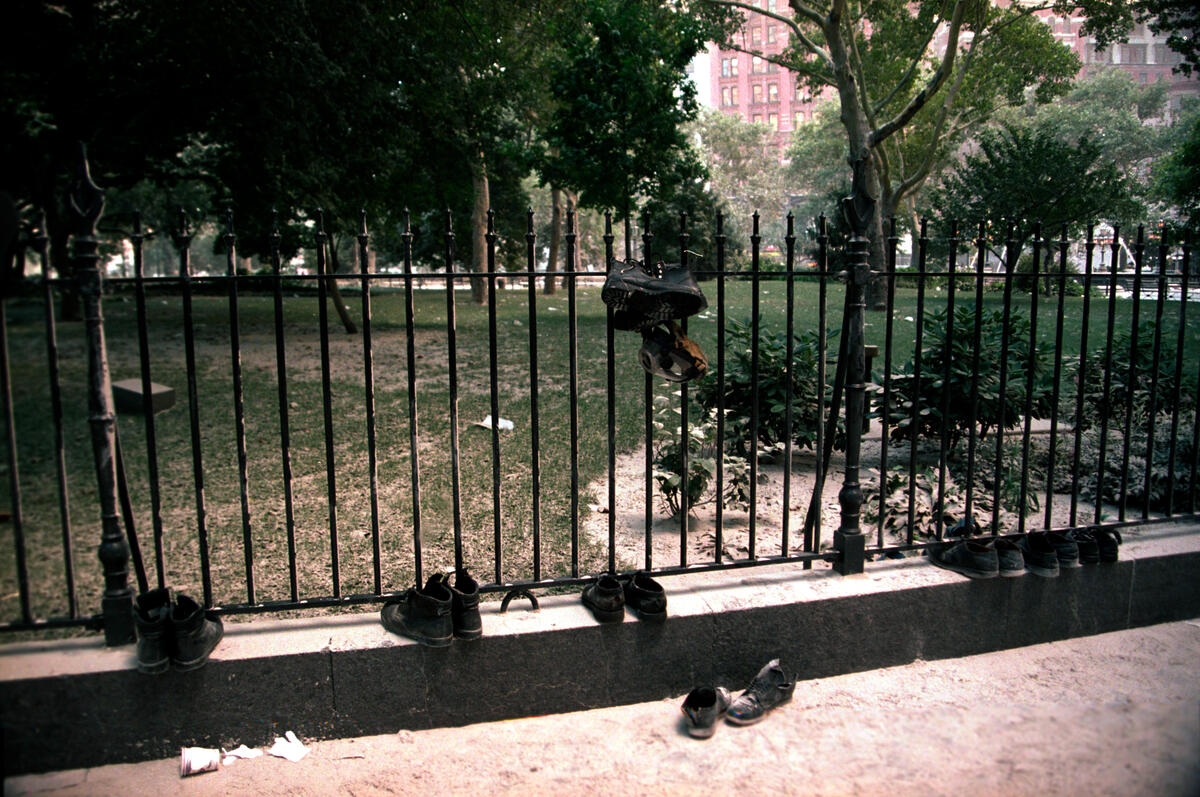
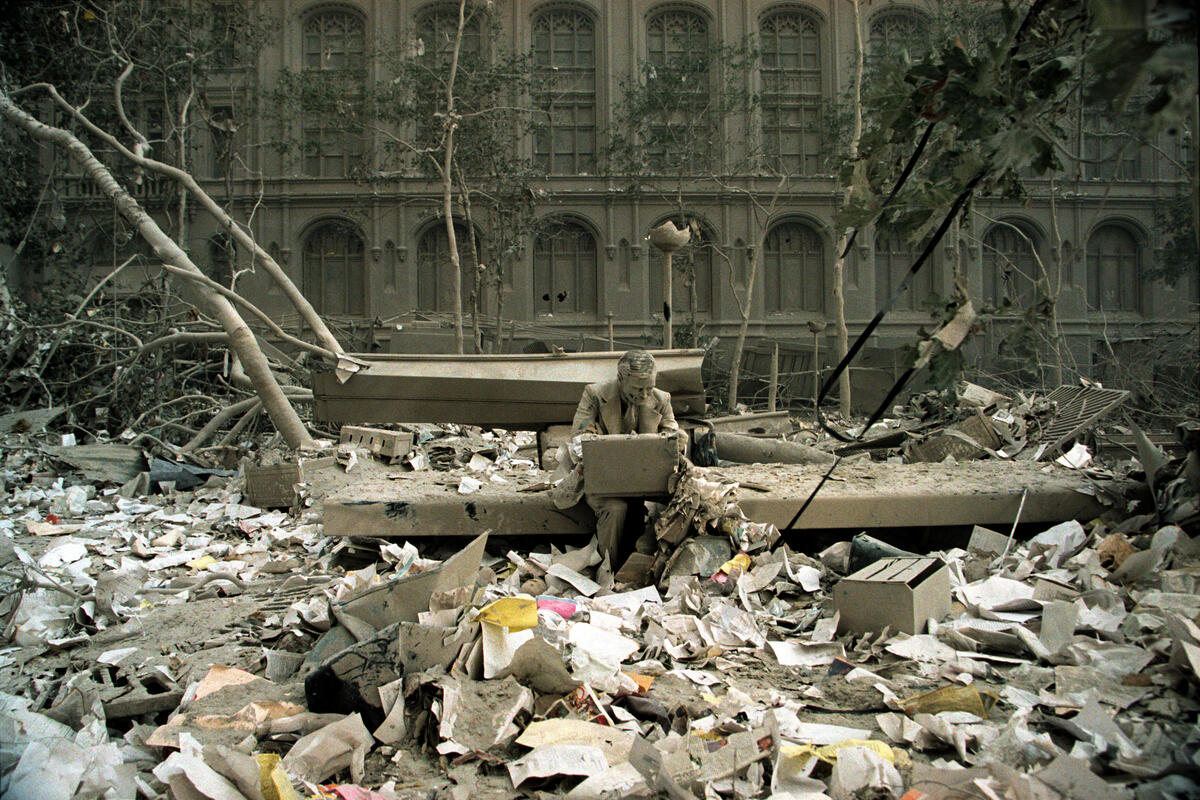
At first glance, the statue appears to be another survivor of the attack — in the same shock as the dazed survivors in Larry Towell’s images, covered in ash amongst the plumes of smoke.
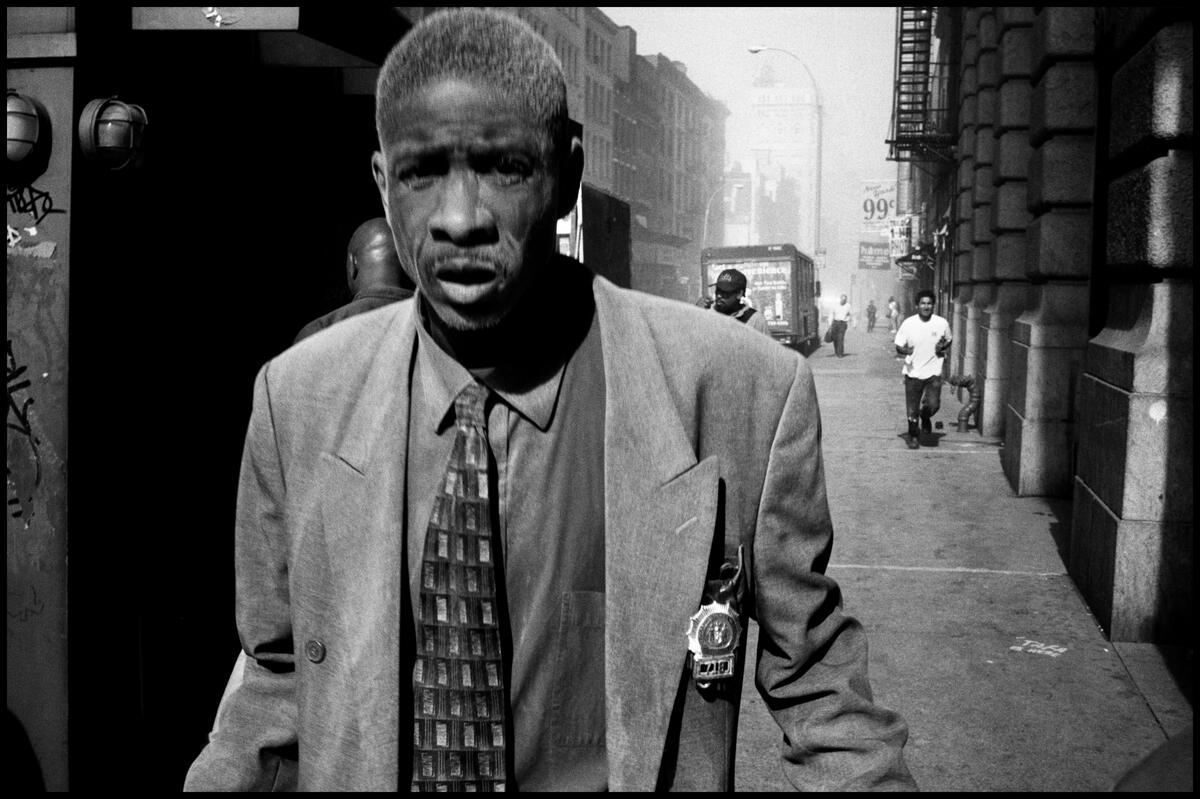


After getting a call from his studio manager at his home in Brooklyn, Gilles Peress turned on the TV. He watched in real time after the first plane, American Airlines Flight 11, crashed into the World Trade Center’s North Tower.
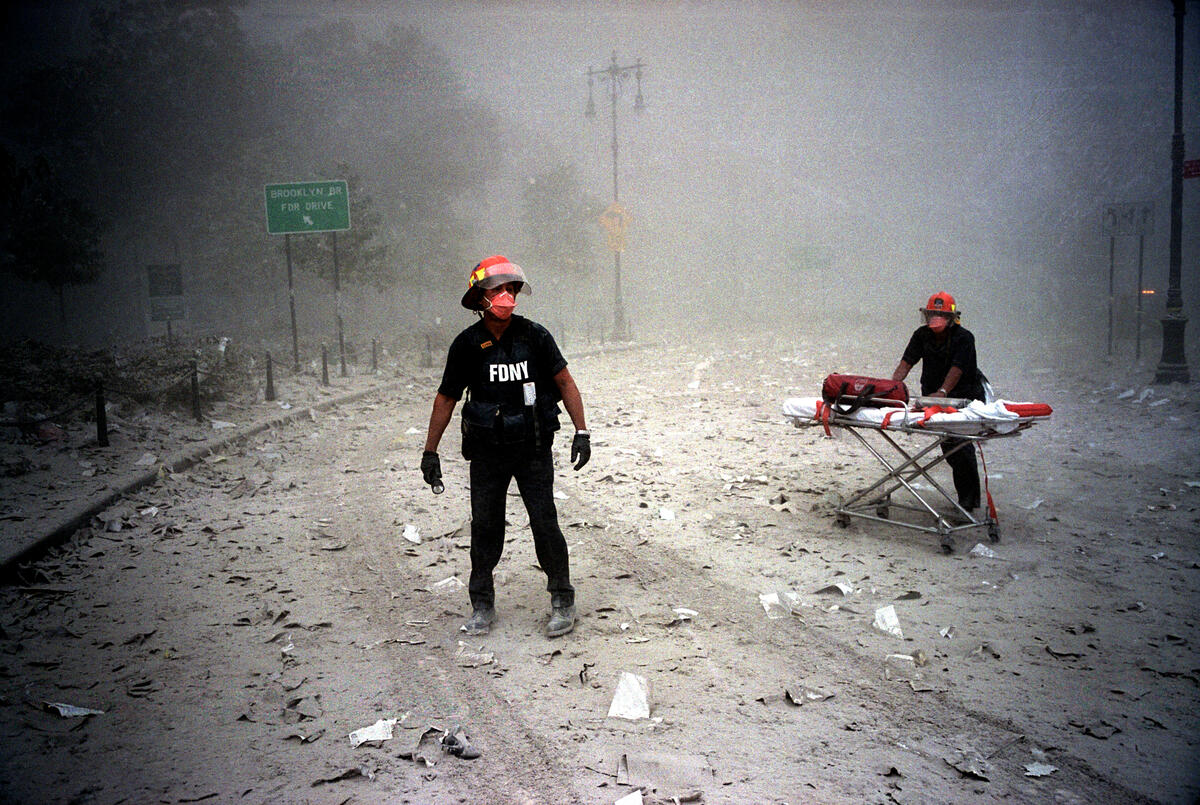
“I drove to the Brooklyn Bridge—there was no way to get across by car,” he told The New Yorker. “I parked the car and walked across against the traffic of people fleeing lower Manhattan. I got to the other side as the second plane was hitting the second tower, and I continued toward the scene. A cop tried to stop me. He said, ‘You’re crazy, you’re going to die,’ and I said, ‘O.K.,’ and I bypassed him. I arrived as the second tower was falling. There were very few people there.” Among them “were a group of about six firemen, who were trying to do the impossible.”


A week after the attacks, Peress assembled a project called “Here Is New York,” inviting both amateur and professional photographers to send in their own photos of the day of the attacks and the direct aftermath. Encapsulating a moment that triggered not only America’s traumatic wars in Iraq and Afghanistan but a historical geopolitical shift, Peress’ project touches on what he calls the sublime, which “evokes something that is awful, but at the same time you can’t take your eyes away from it.”
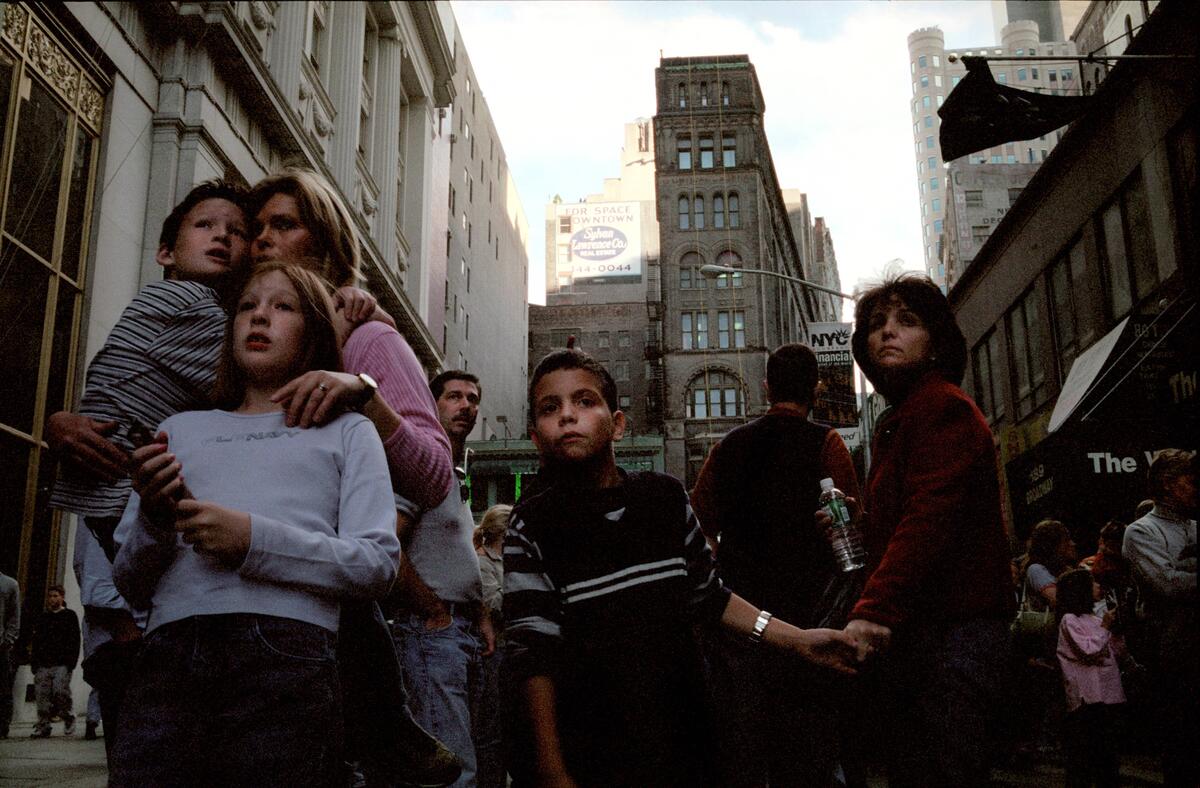
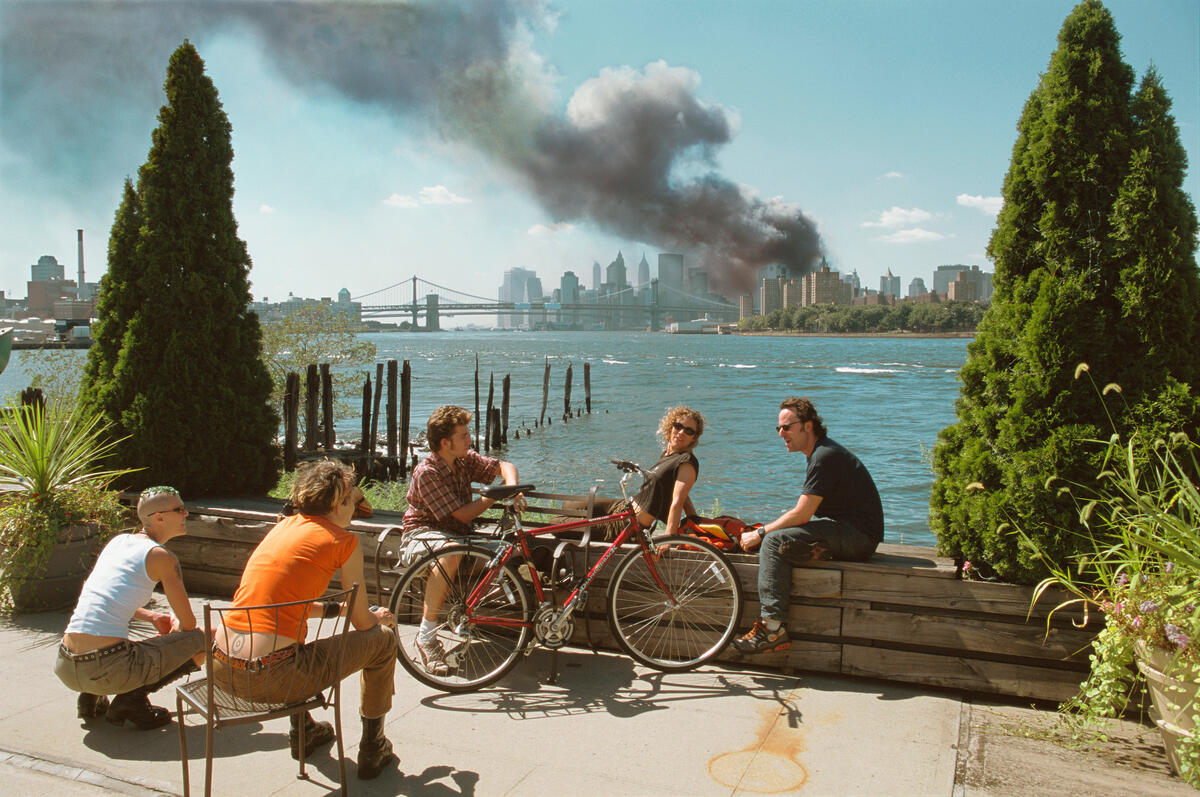
Other Magnum photographers who recorded the catastrophe unfolding and the days that followed were Alex Majoli, Alex Webb, Eli Reed, Chien-Chi Chang, Paul Fusco, Bruce Gilden, and Thomas Hoepker.


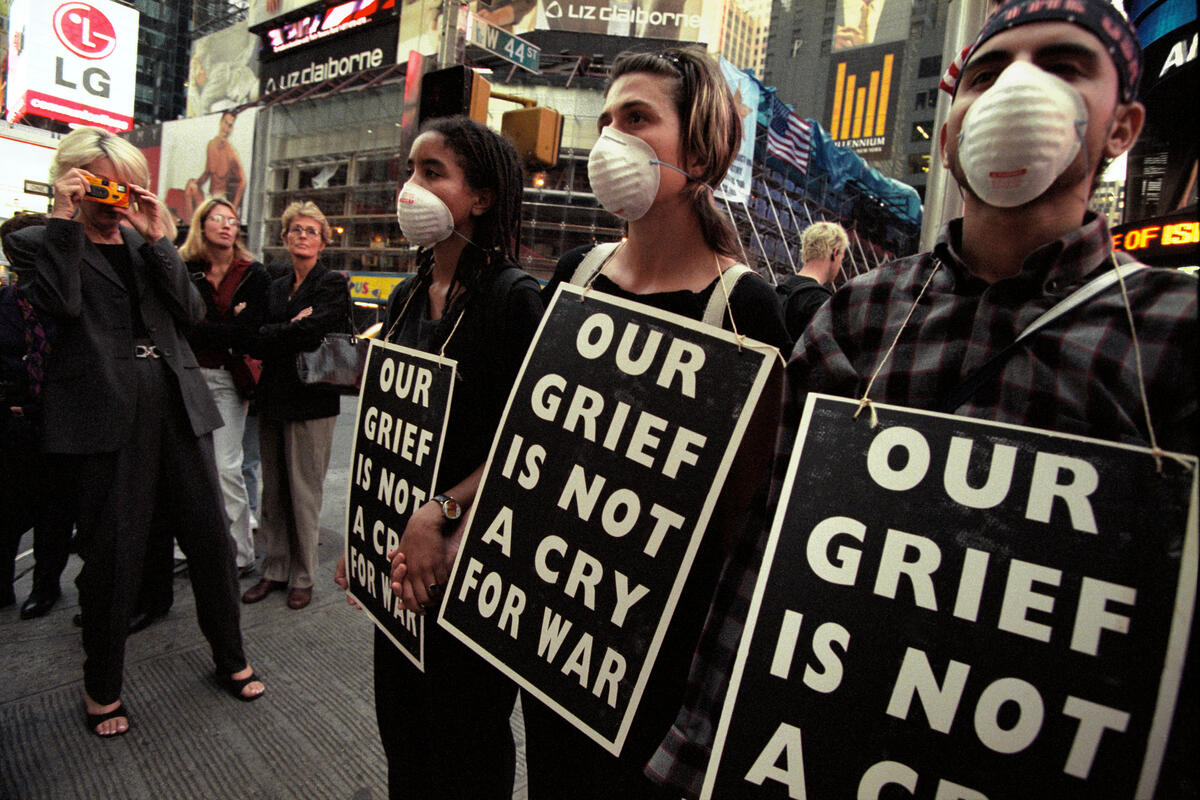
Meiselas photographed a chain of protesters in Times Square in the weeks after the attack, when George Bush declared a “war on terror” and led an international coalition to invade Afghanistan — and Iraq two years later — aiming to eliminate al-Qaeda, upon the Taliban’s refusal to deliver Osama bin Laden.
For Peter Van Agtmael, the September 11 attacks shaped the rest of his career. He was studying history at Yale at the time, and soon went on to document the realities of the post-9/11 wars, embedding with the US military in Iraq. “It was the first time I experienced war, and my understanding of my country and its relationship to the world developed in the crucible of this extremely violent situation, which was descending into civil war while I was there,” he told The Guardian.
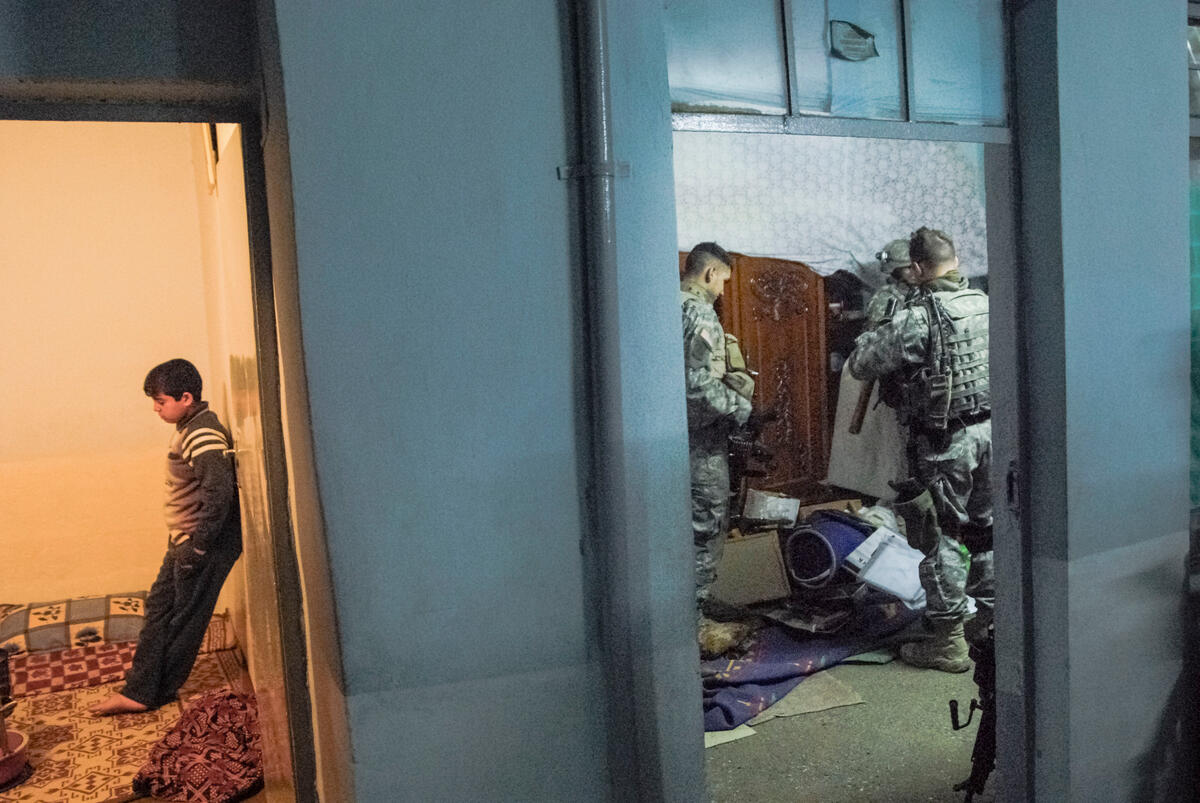
“As a history student, my world view was shaped by photographs: I saw the violence humans were capable of, and it horrified me. So I thought about how photography could impact other people like me, rather than thinking I could shift the nature of war itself,” he continued. His two decades of work culminated in his book Look at the U.S.A.: A Diary of War and Home (2024).
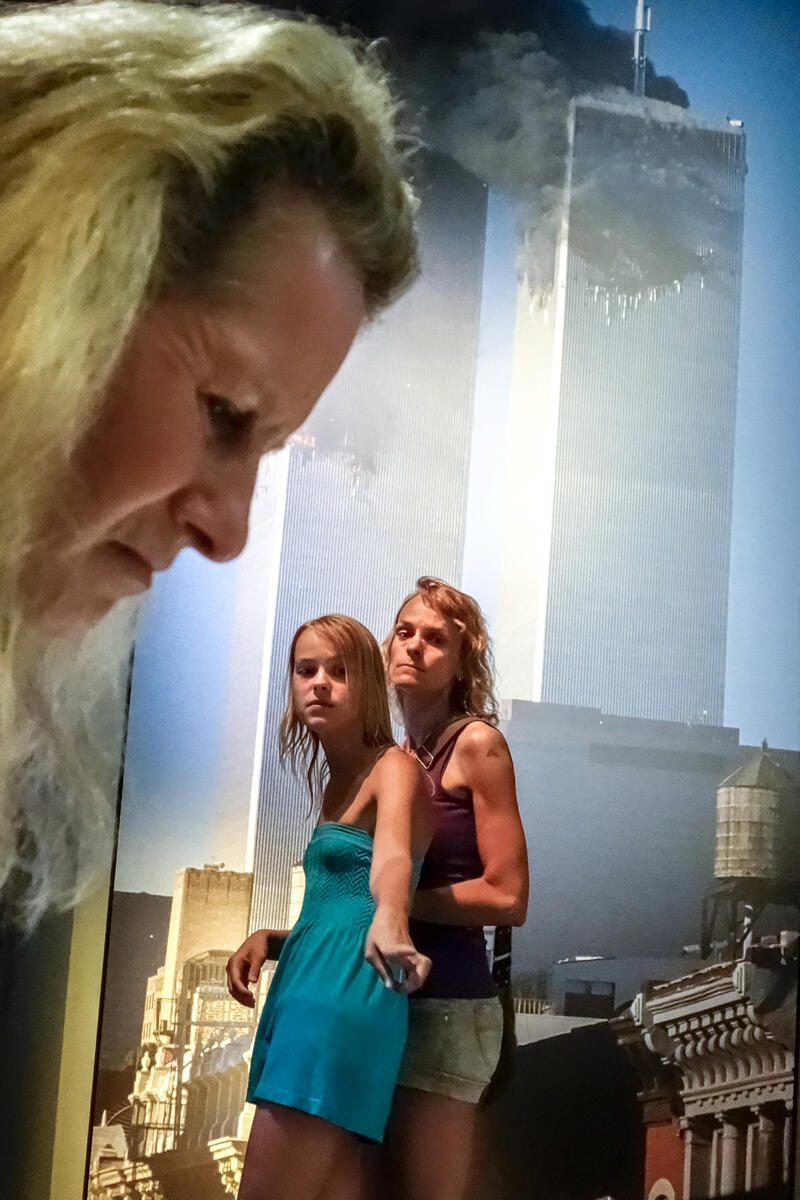
In Understanding A Photograph, John Berger writes: “The camera which isolates a moment of agony isolates no more violently than the experience of that moment isolates itself. The word trigger, applied to rifle and camera, reflects a correspondence which does not stop at the purely mechanical. The image seized by the camera is doubly violent and both violences reinforce the same contrast: the contrast between the photographed moment and all others.”
This double impact — the event and its isolation in a photograph — is contained in the images captured that day. As Steve McCurry said of photographs portraying the attacks and the aftermath, “It burns into your memory. It’s something you can’t forget.”
Read more about Magnum’s coverage of America’s foreign policies post-9/11 in this curated collection here.