

Paris Photo 2026: Exploring the Curation
Magnum's Gallery Director offers an inside look at this year’s Paris Photo curation and the stories behind the images
This year, Magnum returns to Paris Photo at the Grand Palais for a unique occasion: the celebration of 200 years of photography. At Booth C02, Magnum’s curation for the fair’s 29th edition features 41 prints from 17 photographers, merging images from the 1930s to 2025, with spotlights on Harry Gruyaert, Paul Fusco, Philippe Halsman, and Chris Killip.
“We always try to strike a balance between honoring Magnum Photos’ documentary tradition and highlighting the ways in which this tradition continues to evolve,” says Magnum’s Gallery Director, Clémence Vichard-Larroque.
Here, Vichard-Larroque offers an inside look at this year’s curation and the stories behind the images.
Paris Photo 2026 runs from November 12–15. Preview the selection and see the full schedule of events here.
Tell us about this year’s curation. What did you consider this year for the selection?
Magnum’s history is something we are always keen to highlight. We continue to uncover remarkable works in our archives, including the beautiful vintage prints presented at our booth. But we also want to make room for younger generations of photographers and show how they are finding new ways to engage with, reinterpret and build on this legacy.
Gregory Halpern’s collages are a particularly interesting example. They are part of a larger project, Archive of the Unknown, developed within the Correspondences program, which invites artists to explore the collection of the 7L Library founded by Karl Lagerfeld and respond through their own artistic practice.


Halpern took the visual language of books and archives and reworked it through fragmentation, layering and recombination. The result is a fresh way of looking at photographic archives: not simply as material to be preserved, but as something that can be questioned, revisited and reinvented.
What makes this work especially compelling is that it turns photography back on itself. By engaging with the history of the medium, it feels particularly relevant in the context of the bicentennial of photography.
Are there any themes that resonate across the range of prints?
There are a few themes that emerge across the different works.
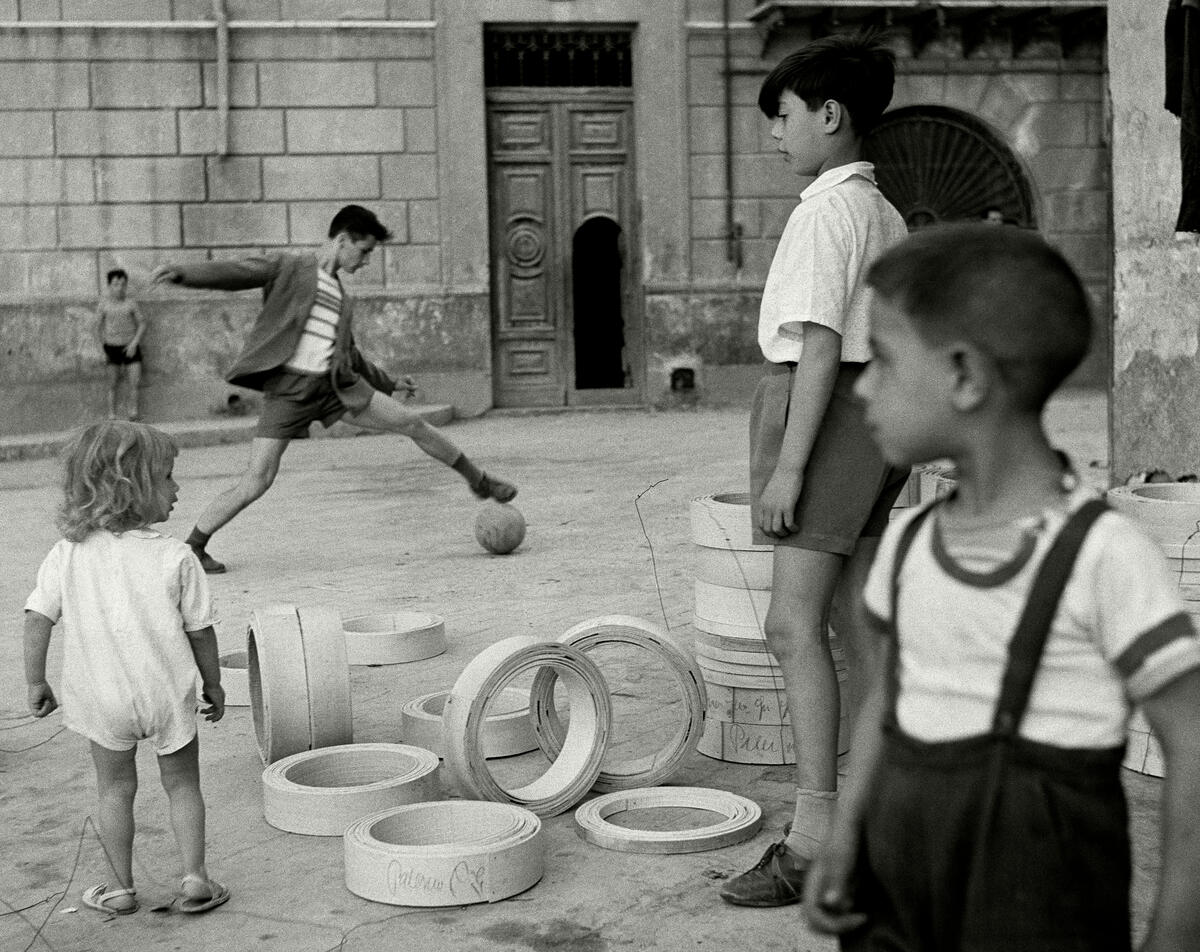
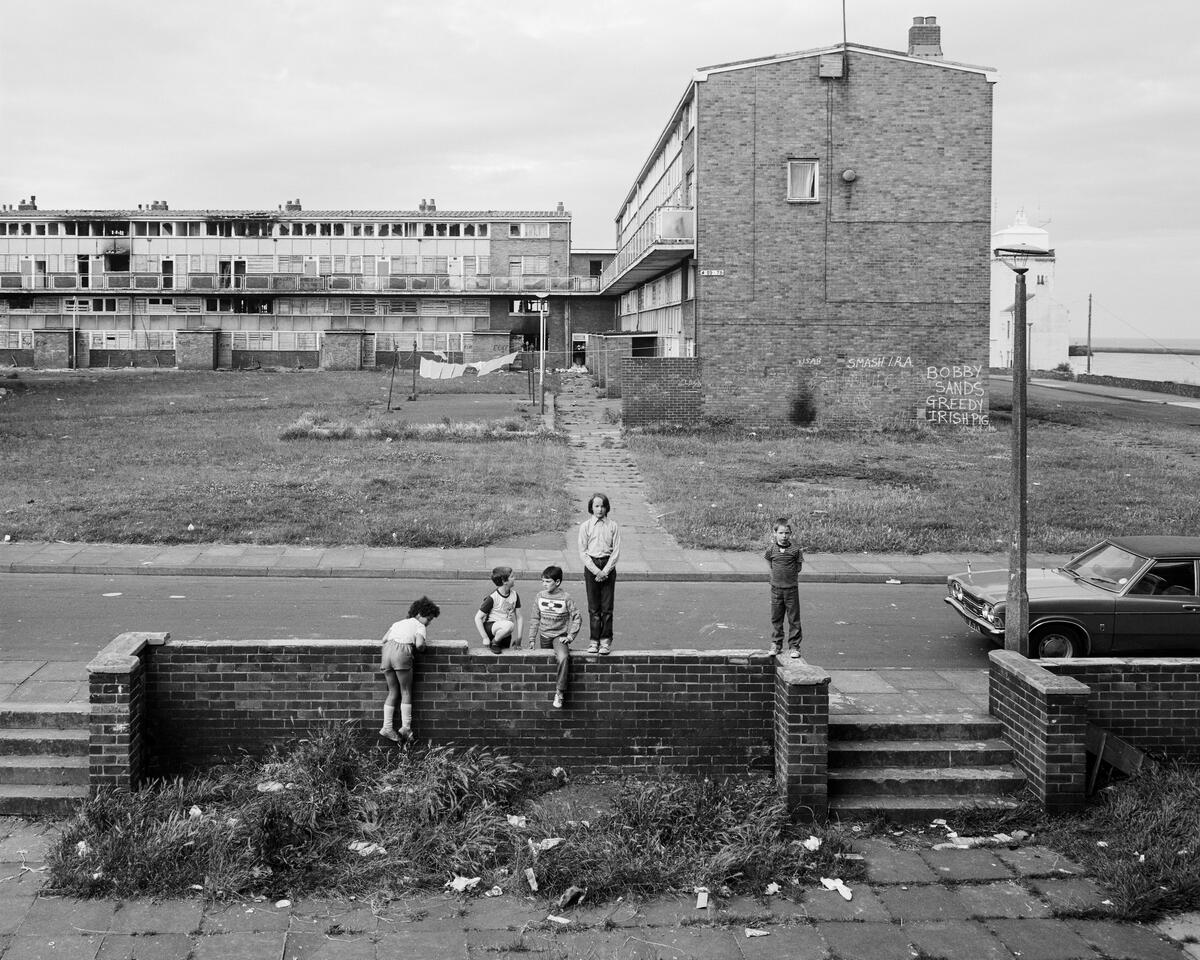
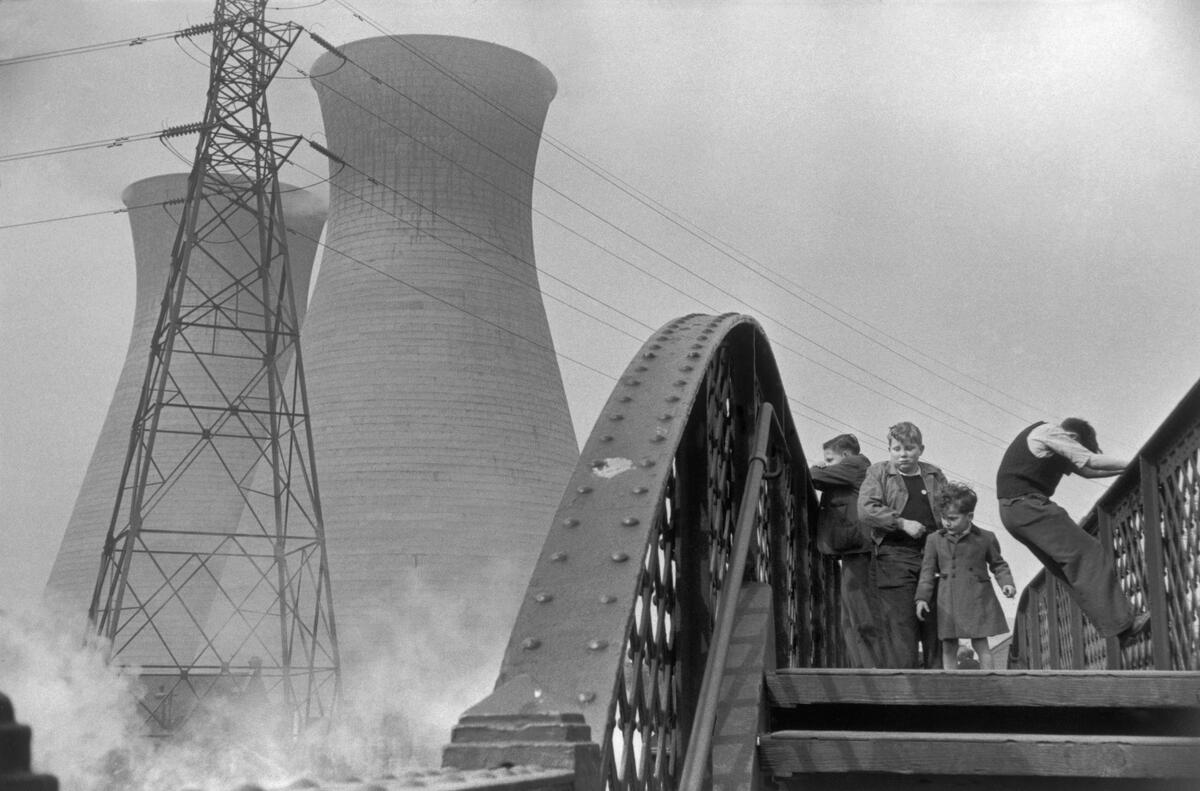
One that stands out is the presence of children and young people playing in places we might otherwise associate with hardship or difficult living conditions, such as industrial sites, damaged environments or marginal landscapes.
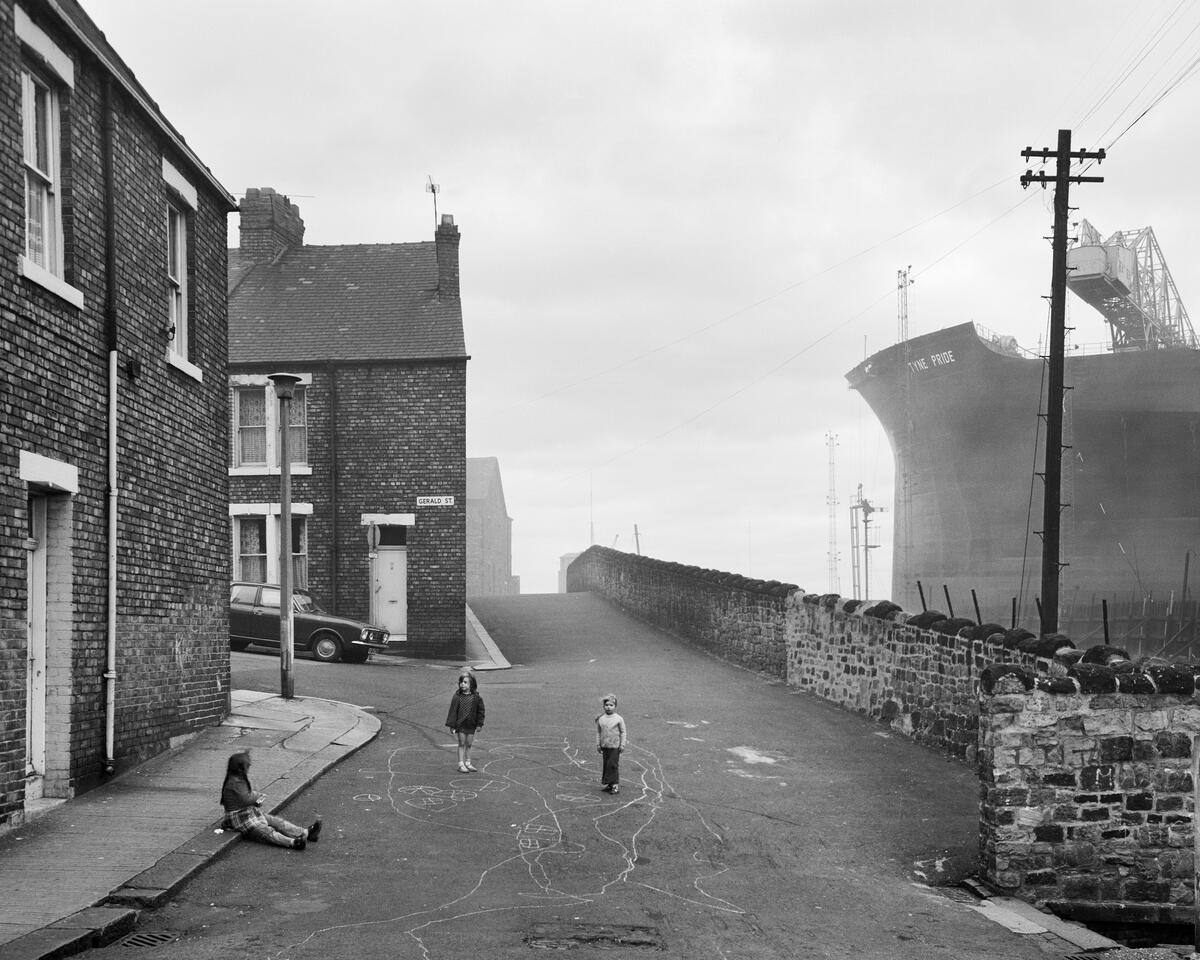
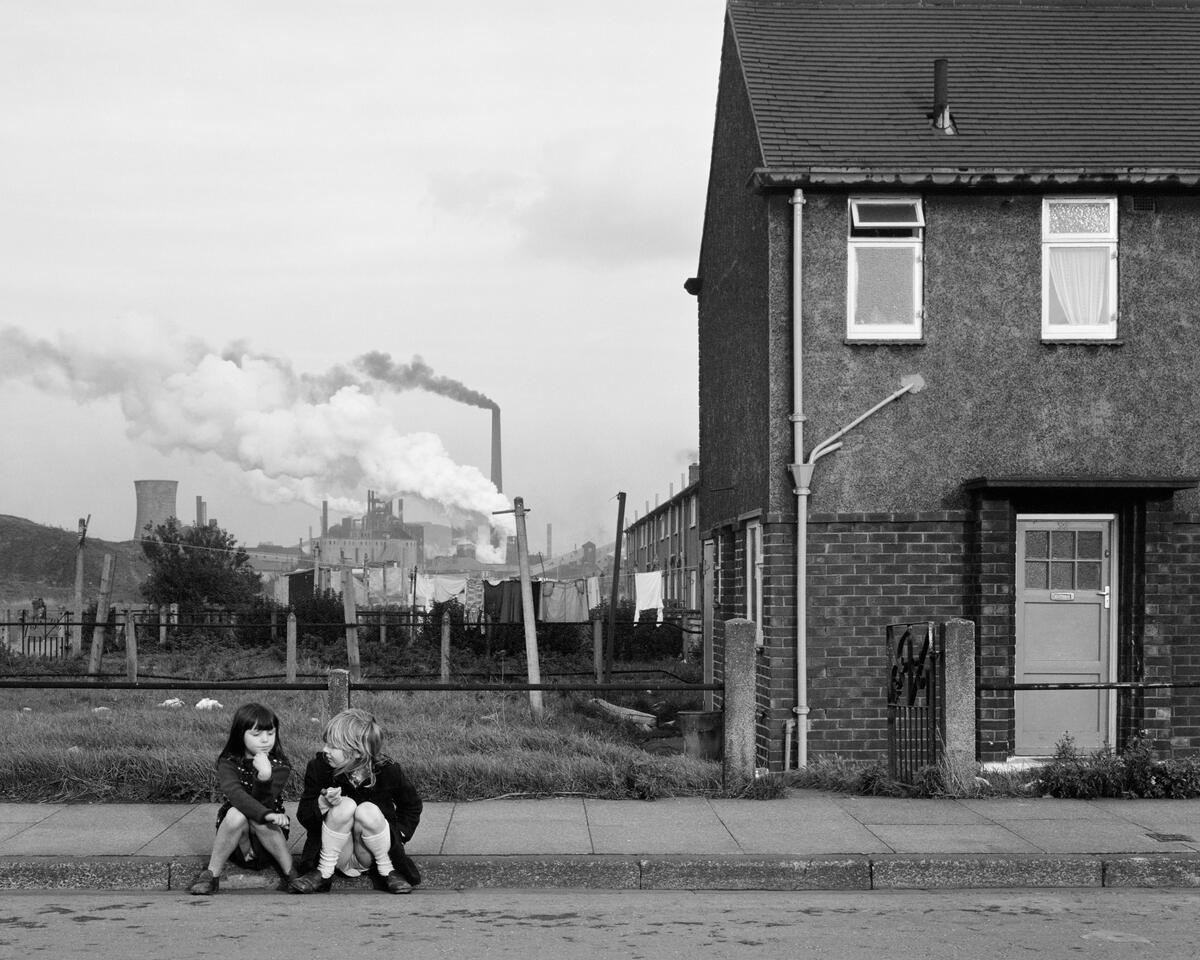
We see this in Chris Killip’s photographs of children playing in the streets of Wallsend and Grangetown, with shipyards and factory chimneys looming in the background. A photograph by Marc Riboud captures a similar contrast, showing children playing on a bridge beneath the imposing silhouette of a thermal power station. In one of Herbert List’s photographs, young boys play football in the streets of postwar Palermo. A more recent example is Emin Özmen’s photograph of children playing on the rooftop of a partially submerged mosque in Halfeti, a town partly flooded following the construction of a dam.
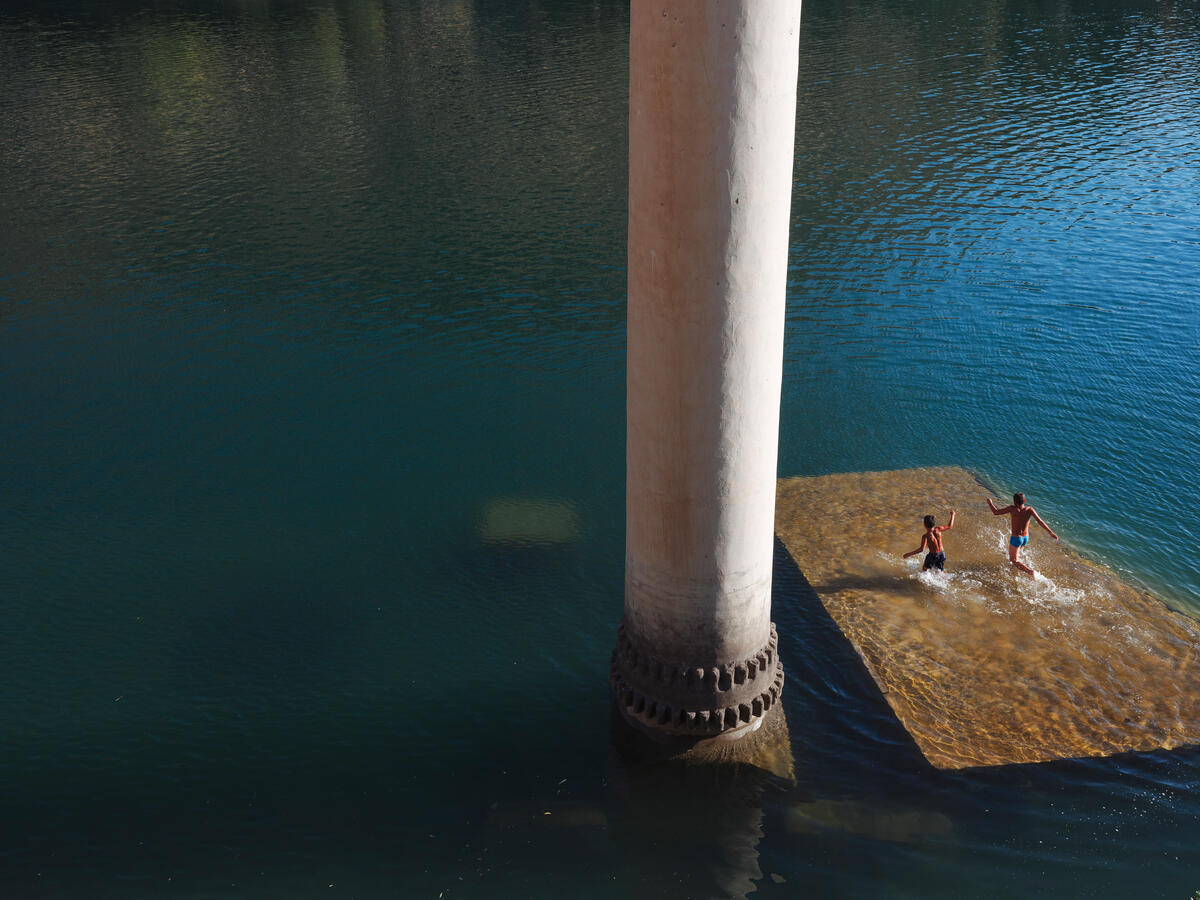
Zied Ben Romdhane’s photograph touches on the same theme, though perhaps less evidently. It is part of his project The Escape, in which he explores the emotional landscape of a generation of young Tunisians who grew up in the aftermath of the 2011 Revolution.
His photographs show seemingly carefree moments of everyday life, of leisure, with young people playing by the sea. But, beneath the surface, there is also a sense of uncertainty. Ben Romdhane evokes a collective unease that he connects to the political instability, economic difficulties, and questions of identity and belonging faced by this generation.
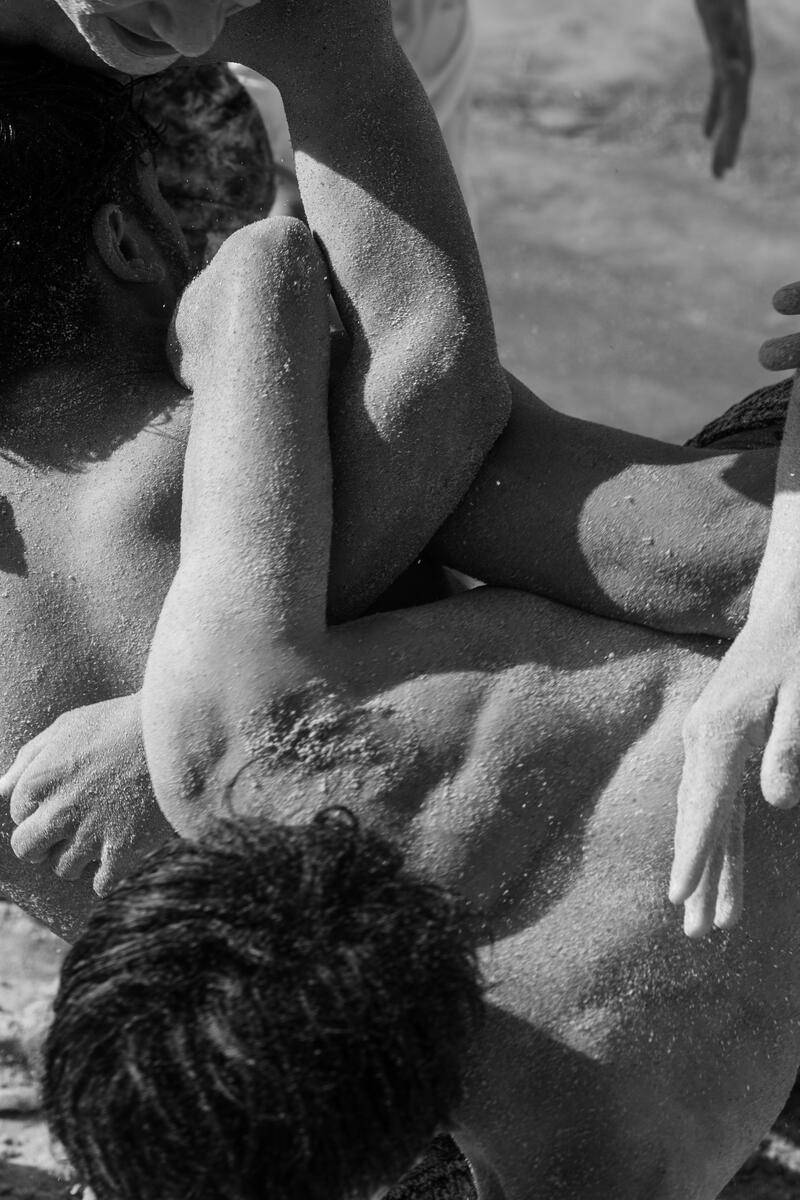
To me, all these photographs say something about the resilience of young people. Whatever their circumstances, children find ways to play, to connect and to make a place their own. Their presence brings life to environments that might otherwise seem defined by hardship or uncertainty.
There is something particularly moving about this contrast: the weight of the surroundings set against the lightness of these moments. These images are inherently hopeful. They remind us that beauty and fragility often coexist, and that even in difficult circumstances, there is always room for the possibility of something better.
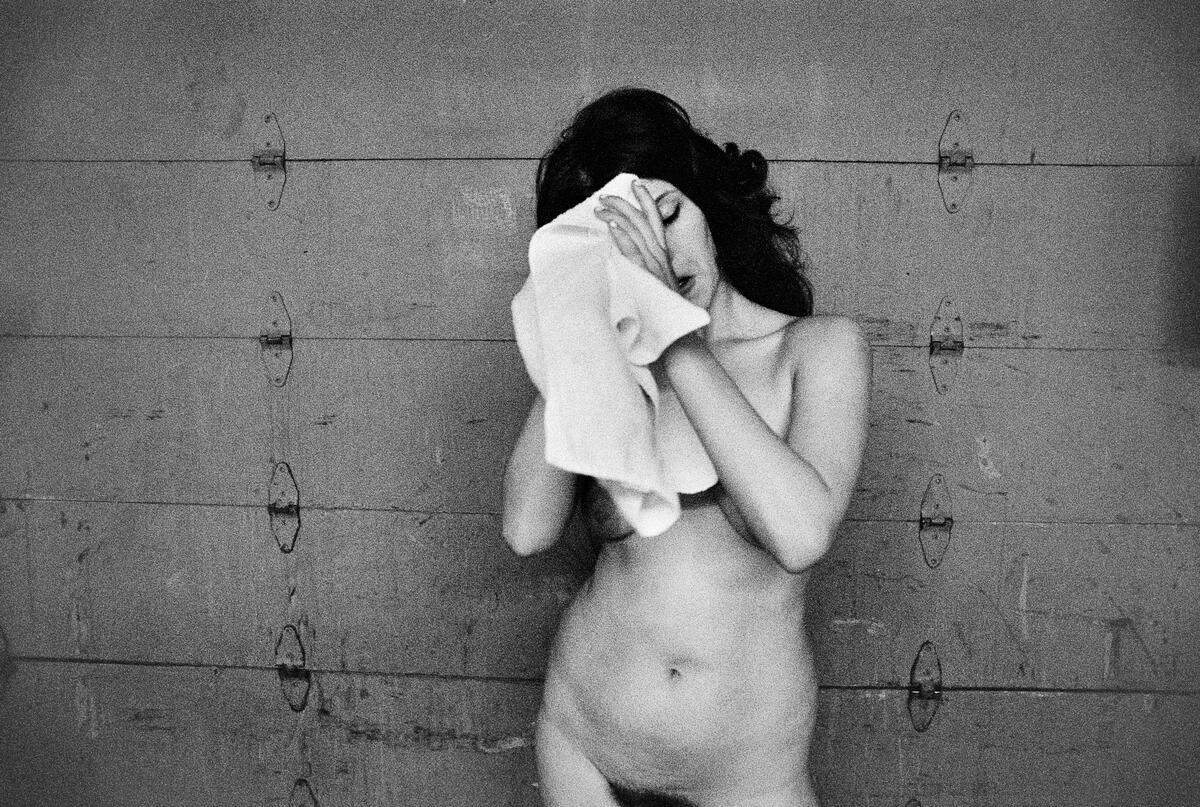
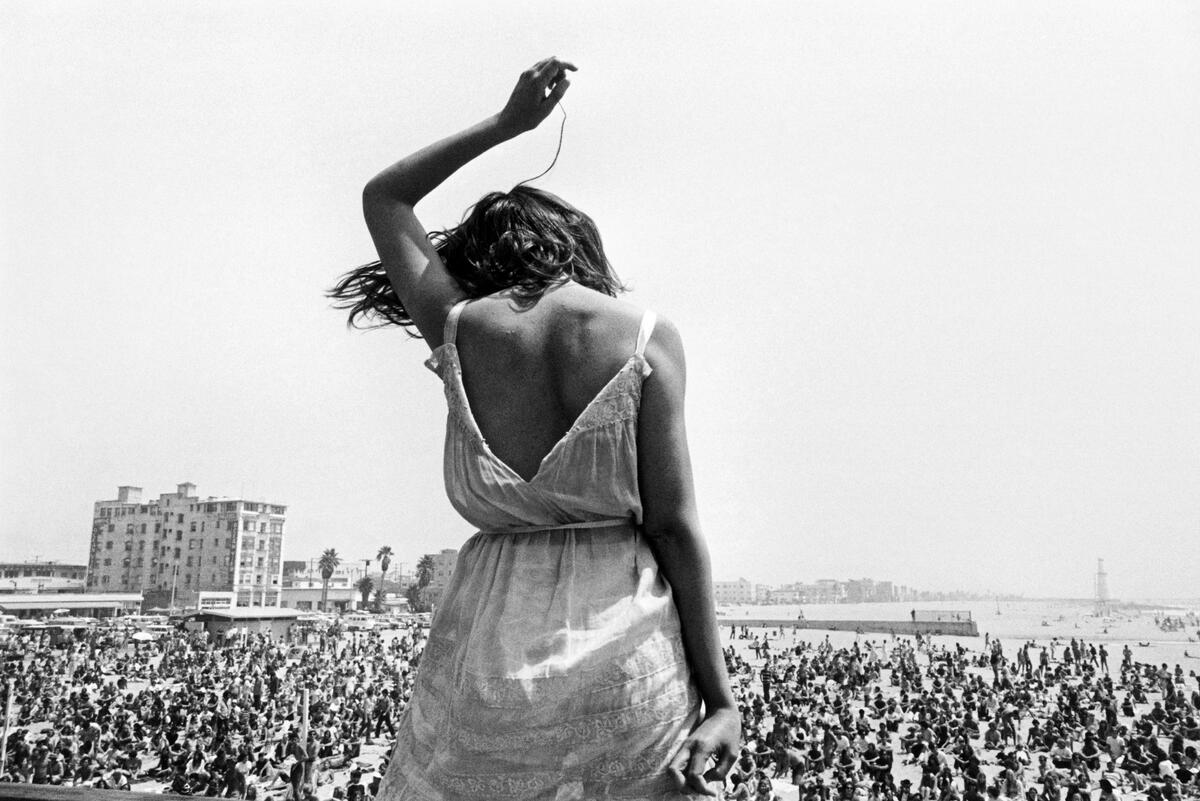
Another theme that emerges is the idea of performance, and the different ways in which people present themselves to others.
There is Susan Meiselas’s Lena after the show, from her acclaimed series Carnival Strippers, in which we see Lena removing her make-up and shedding the glamor of the performance. This print is a really special work, first of all because Carnival Strippers, against the backdrop of the emerging women’s rights movement, became a seminal visual reference in conversations around gender politics. It is an immersive body of work exploring themes of intimacy, vulnerability, and sexuality. But also because the print we are showing is a very rare vintage print, printed c. 1979, so just a few years after the photograph was captured.
Then there is Dennis Stock’s photograph of a woman dancing in front of a crowd at an open-air rock festival at Venice Beach. In 1968, Stock embarked on a road trip along the West Coast, which led to California Trip, an ambitious project documenting the hippie movement and its attempts to reshape society around ideals of love, freedom and solidarity. The series became a visual record of a pivotal moment in American history, capturing both the spirit of the time and the community’s longing for freedom and peace.
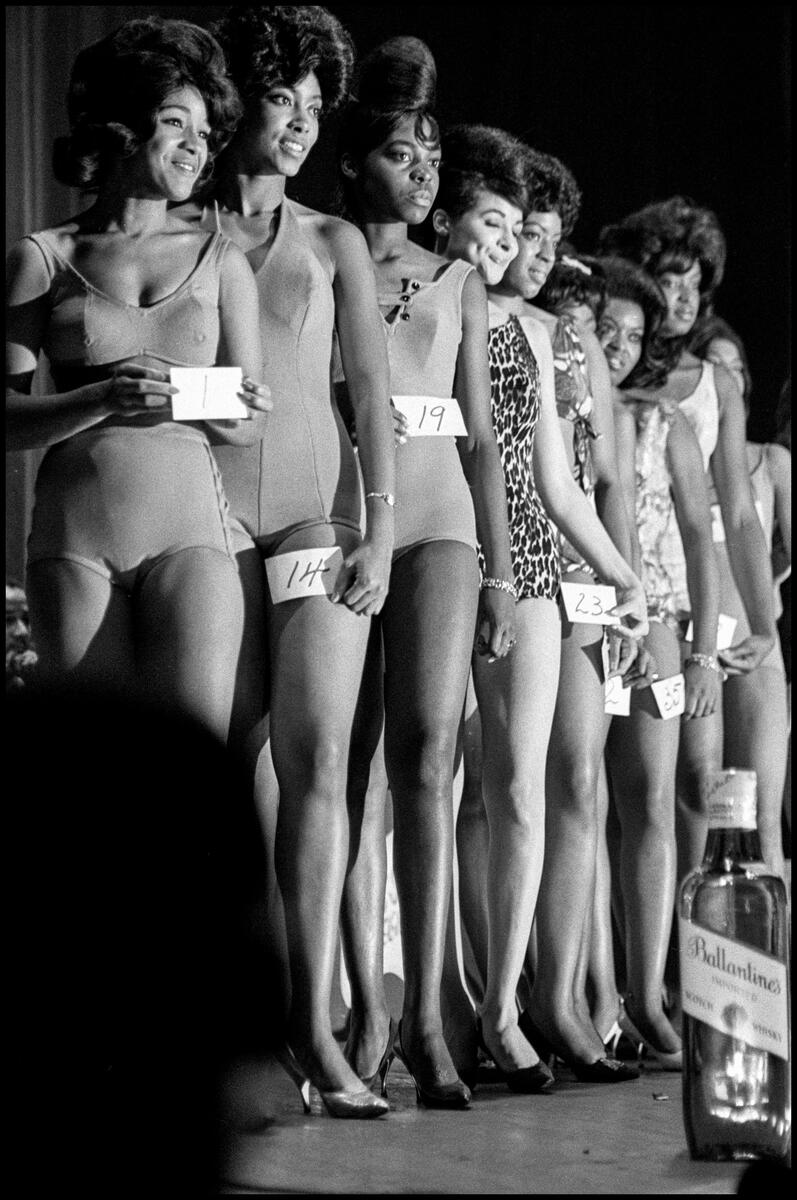
Leonard Freed’s image of a fashion show in a Harlem stadium also touches on this theme.
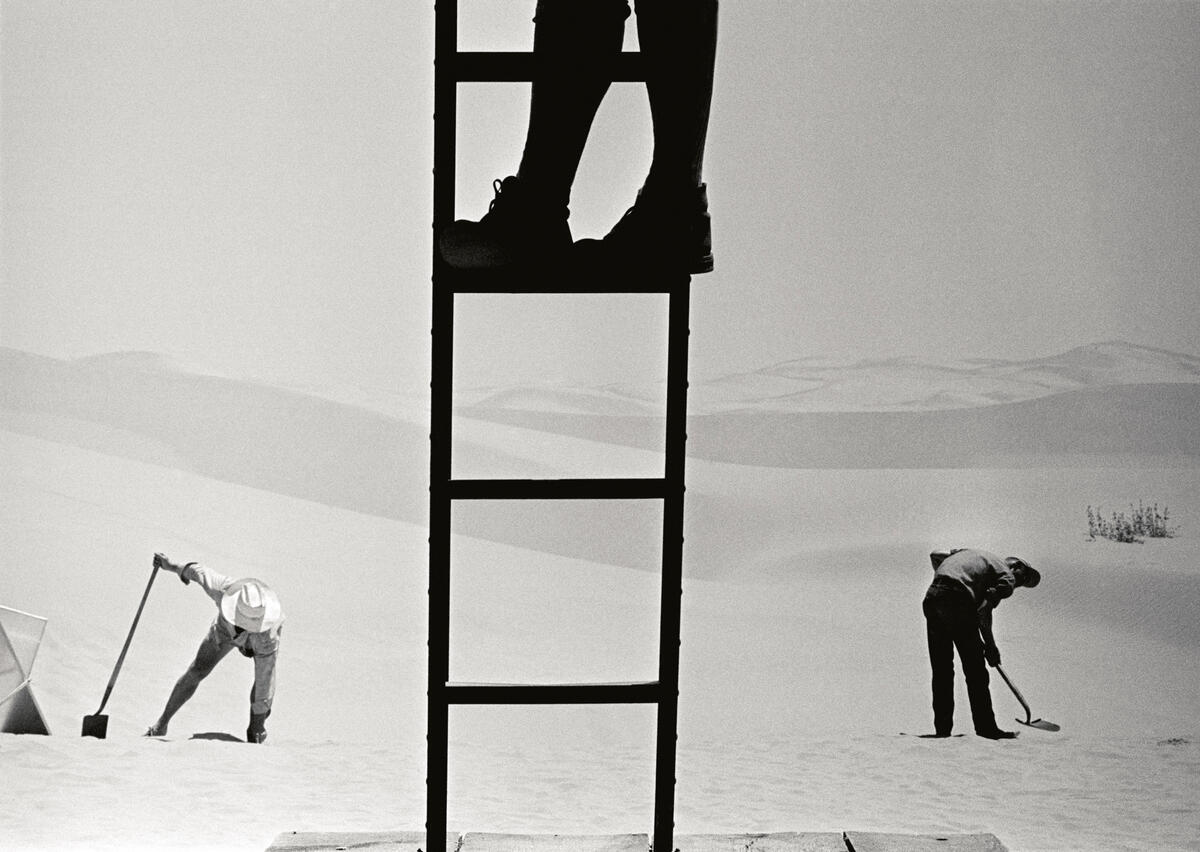
Eve Arnold’s photograph of a film set in the Arizona desert offers another perspective. It reflects her particular humanist approach and the access it gave her to the world of Hollywood filmmaking. Beyond the glamor of studio portraits, she was interested in what happened behind the scenes: the practicalities, the people at work and the more intimate moments on set.
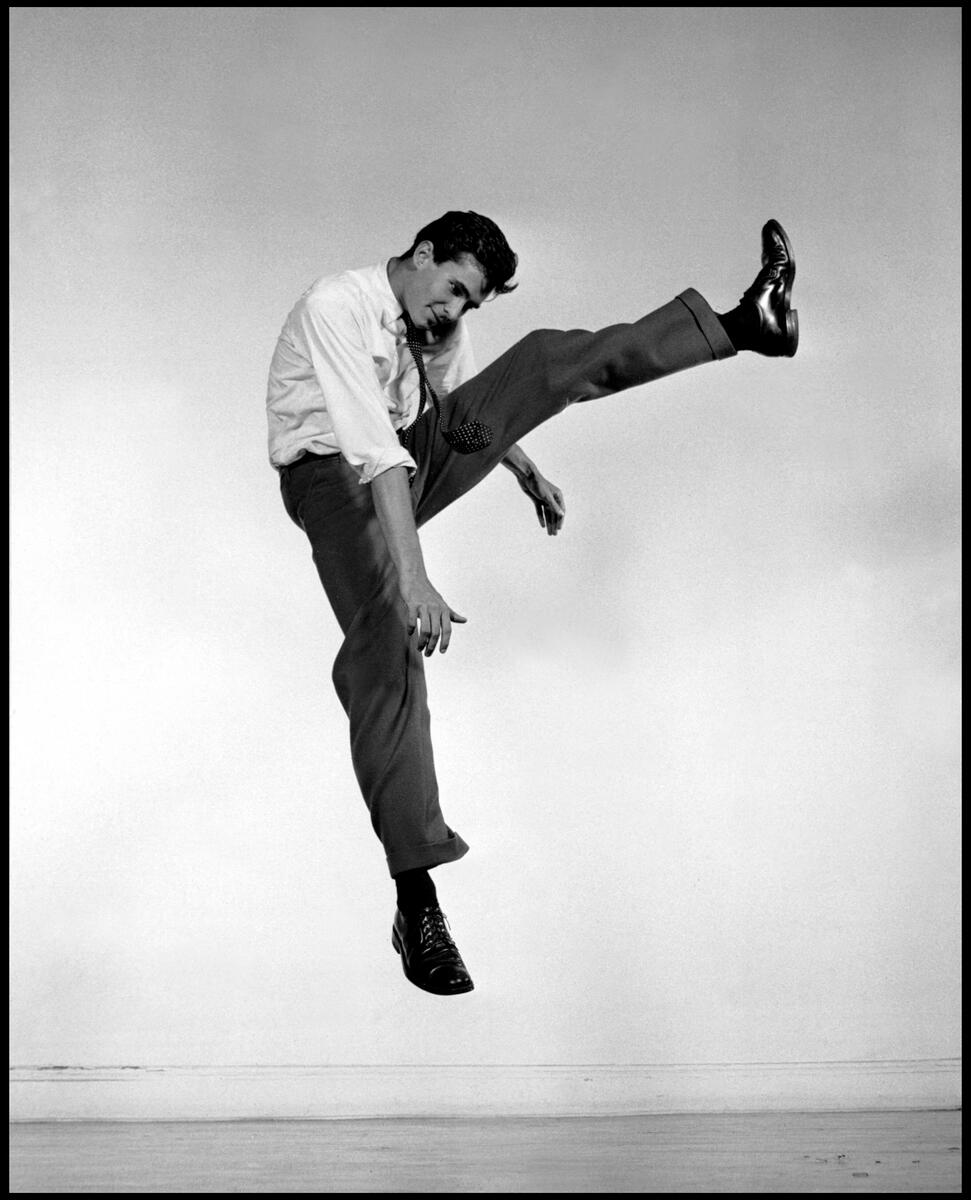
Philippe Halsman’s Jumpology series also plays with the idea of performance. Based on the belief that people reveal something of themselves when they jump, the photographs capture his subjects in moments of spontaneity, when they briefly let go of the usual conventions of portraiture and posing.
Taken together, these images make us think about the relationship between the person being photographed, the photographer and the audience, and about the shifting roles of performer and spectator.
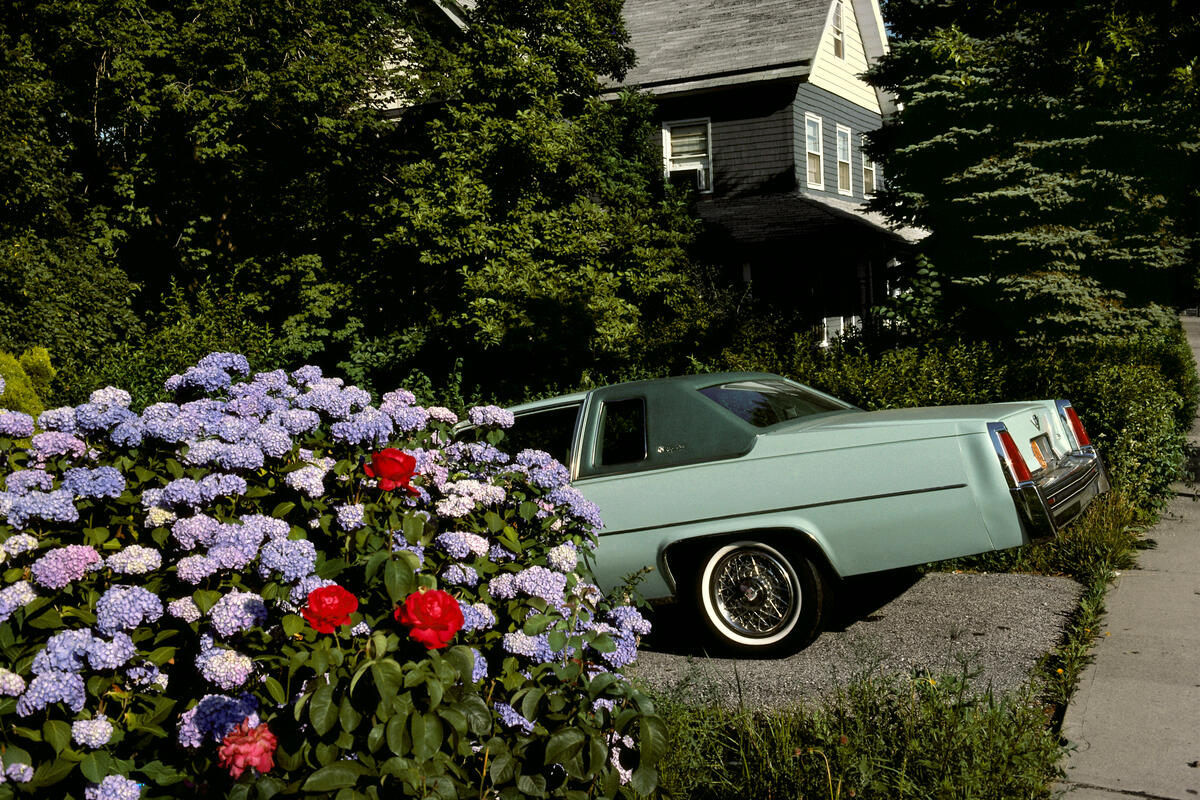
Harry Gruyaert is spotlighted with nine photographs. Can you tell us about featuring his work this year?
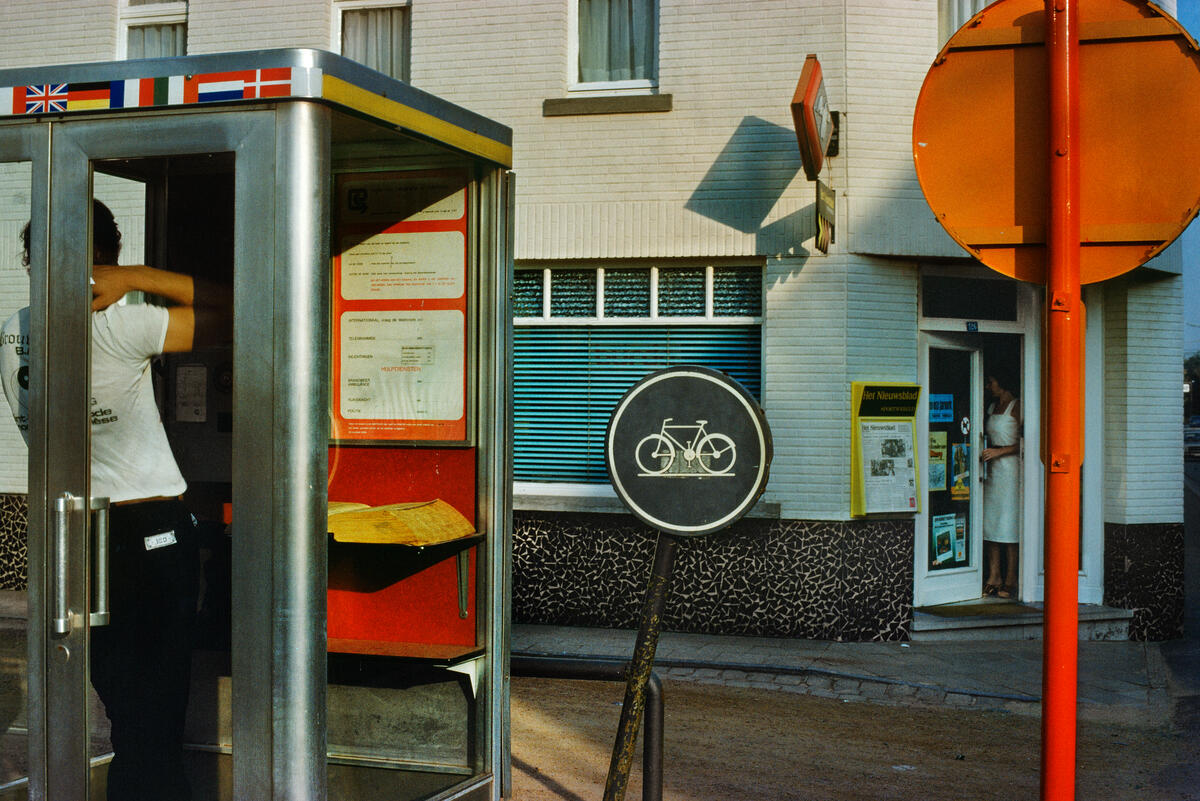
We wanted to pay tribute to Harry Gruyaert’s constant exploration of the possibilities of color. So this year, rather than selecting photographs from a particular country, we decided to dedicate a wall to a grid of nine images he captured in different parts of the world.
This presentation gives a wonderful sense of Gruyaert’s distinctive eye and his ability to capture the character of a place through color. It also reflects the diversity of his work, bringing together landscapes, street scenes and even animals. What connects them all is his remarkable sensitivity to light, color and composition.
Chris Killip’s book North was just recently released, making this a timely feature of his work. What are your thoughts around choosing his three prints?
Chris Killip devoted much of his life to photographing working-class communities and documenting the impact of deindustrialization on their lives, from the decline of mining and shipbuilding to the disappearance of heavy industry. What makes his work so distinctive is the empathy and respect he brought to his subjects. Rather than observing them from the outside, he spent time living among them, becoming part of the places and communities he photographed. As he put it, he was interested in telling the stories of “those who had history done to them”, rather than those who were making history.
I think the lasting power of Killip’s photographs comes in large part from the relationships he built with the people he photographed. There is a real sense of mutual trust in his images, a feeling that he was not simply passing through, but had come to know the people and places he was documenting. This is what gives his work its enduring quality. Beyond the specific social and historical circumstances in which they were made, his photographs continue to speak to us because the human stories behind them remain relevant.
What are some of your personal highlights?
Zied Ben Romdhane’s photograph has been selected for one of the official posters of the fair, which I think is fantastic. There is something particularly striking about the composition of this image: the way these bodies come together and collide, but also the sand clinging to their skin. It evokes something almost sculptural, reminiscent of ancient Greek sculpture.
This year, we are dedicating a wall to four vintage prints by Philippe Halsman, all from his celebrated series Jumpology. This series was developed around the idea that people reveal their true personality when they jump. Halsman captured his subjects in moments of spontaneous, unguarded expression, free from the usual constraints of posing. Each of the four works is an exceptionally rare vintage print, made by Halsman himself in his own darkroom, making this selection particularly special.


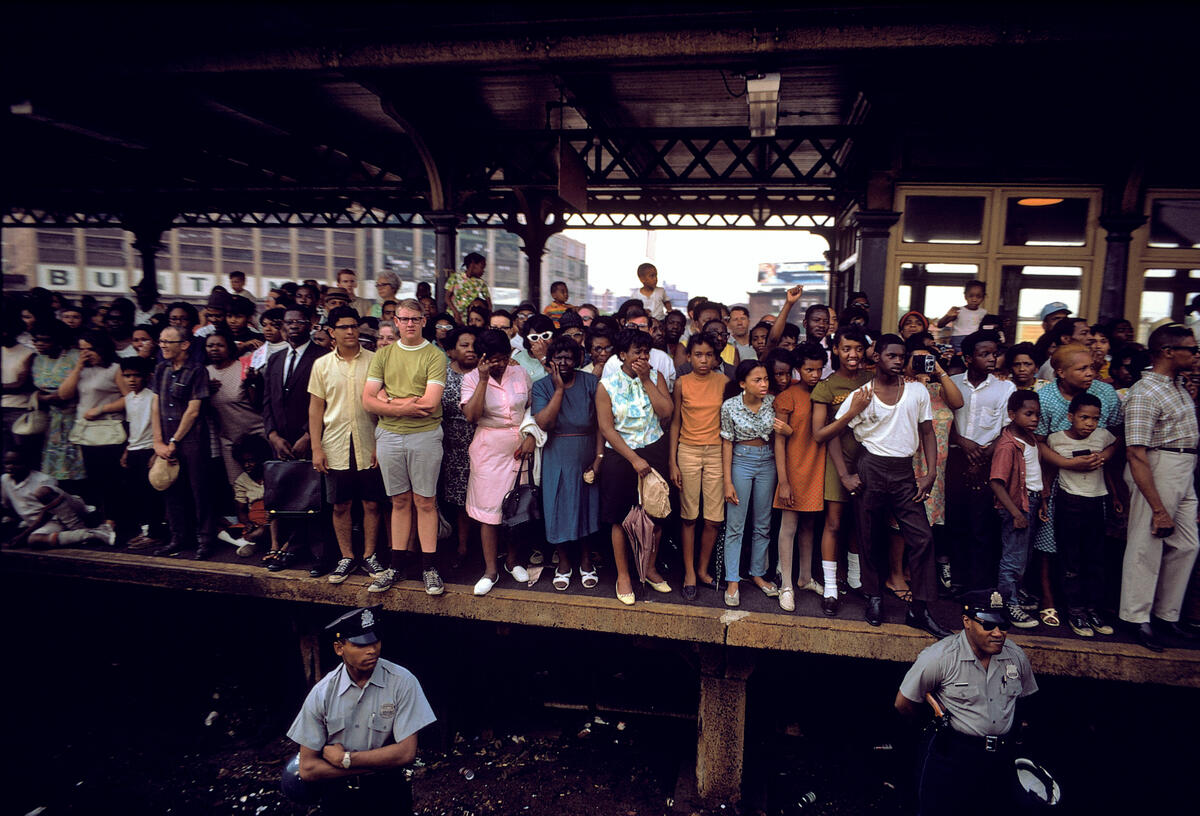
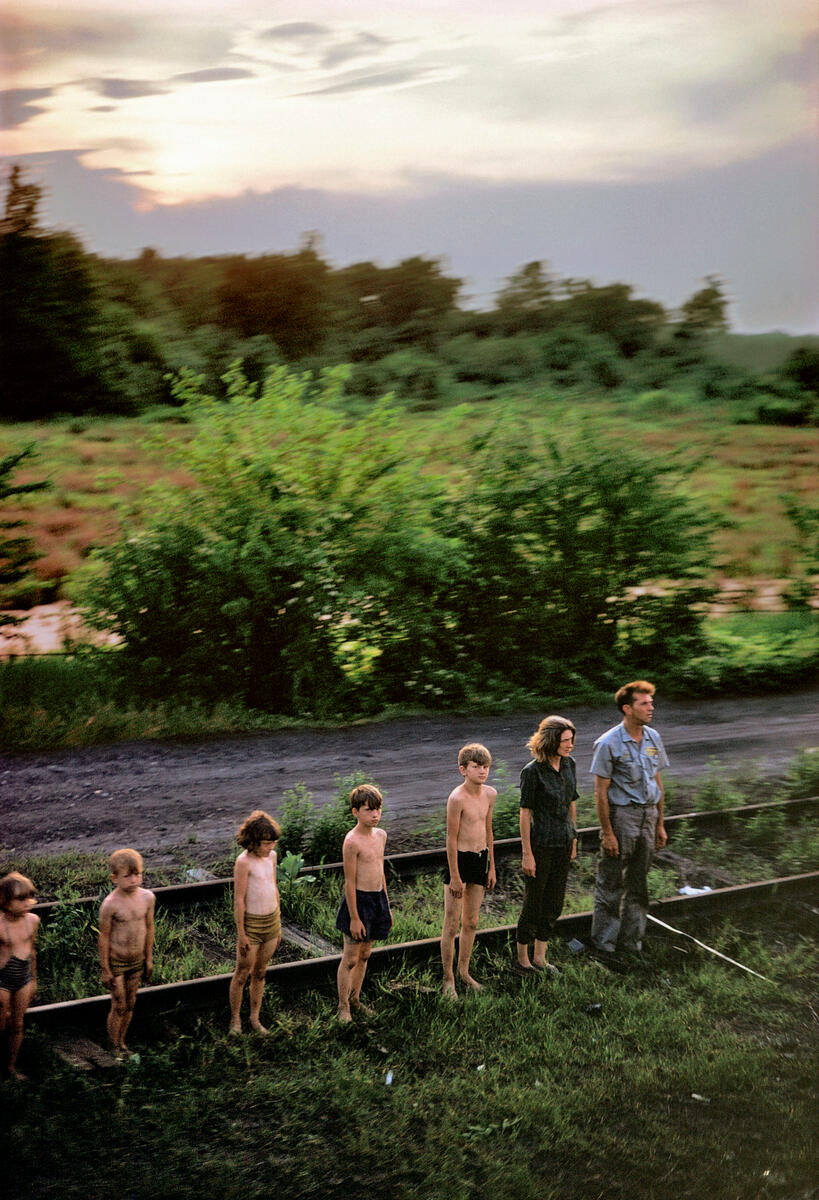
For this edition of the fair, we are also presenting four photographs from Paul Fusco’s Funeral Train series. Robert F. Kennedy’s assassination in 1968 sent shockwaves across the country. Kennedy was a leading contender for the Democratic presidential nomination, and he had become a figure of hope for millions of Americans, particularly through his commitment to civil rights and economic justice.
Paul Fusco boarded the train carrying Kennedy’s coffin in New York, intending to document the journey from Penn Station to Washington, D.C. He could hardly have anticipated what awaited him along the way. Nearly two million people had gathered beside the tracks, standing in the intense summer heat to pay their last respects.
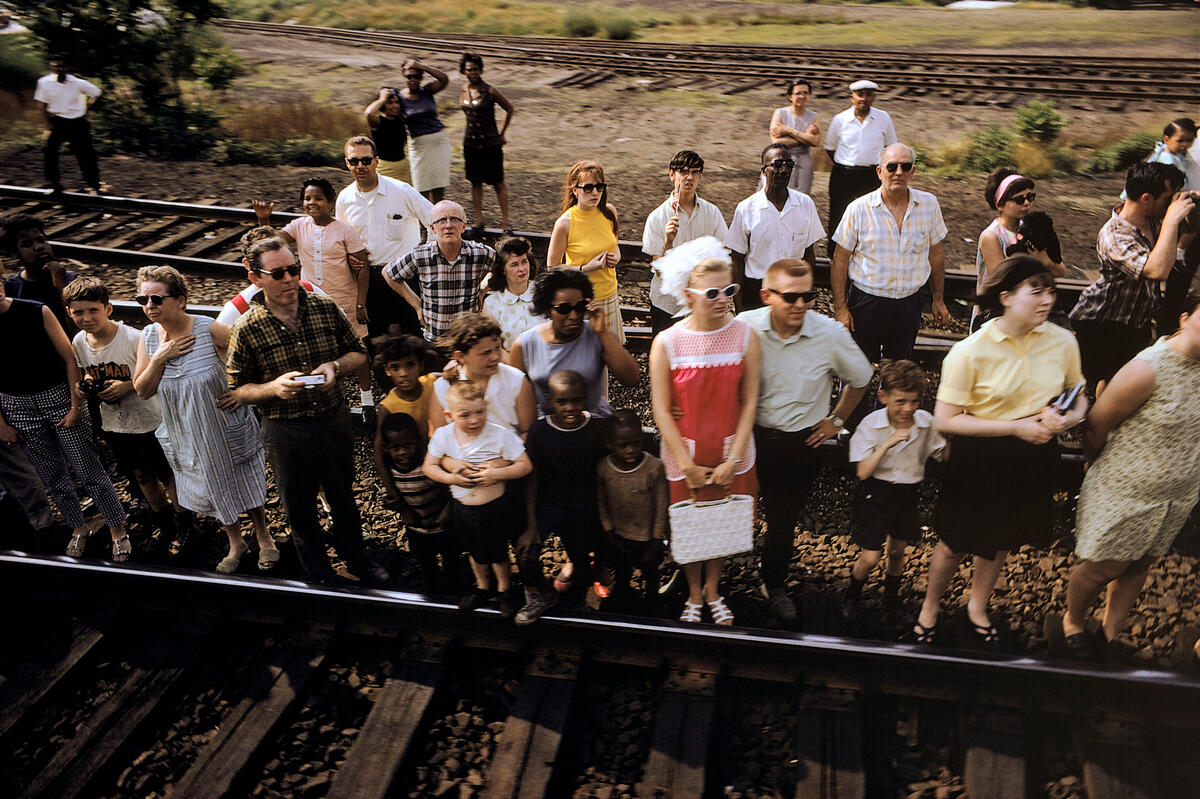
These photographs capture the scale of the nation’s grief, but Fusco was interested in more than documenting a moment of collective morning. He also turned his attention to the faces and emotions of the people who had come to say goodbye: working-class families, Black Americans who had placed their hopes in Kennedy’s commitment to civil rights, and countless others for whom his death meant the loss of a real possibility for change.
Paris Photo 2026 runs from November 12–15. Preview the selection and see the full schedule of events here.


