Memento 1945
A new, expanded edition of Herbert List's book and an exhibition explore the photographer's depiction of postwar Germany
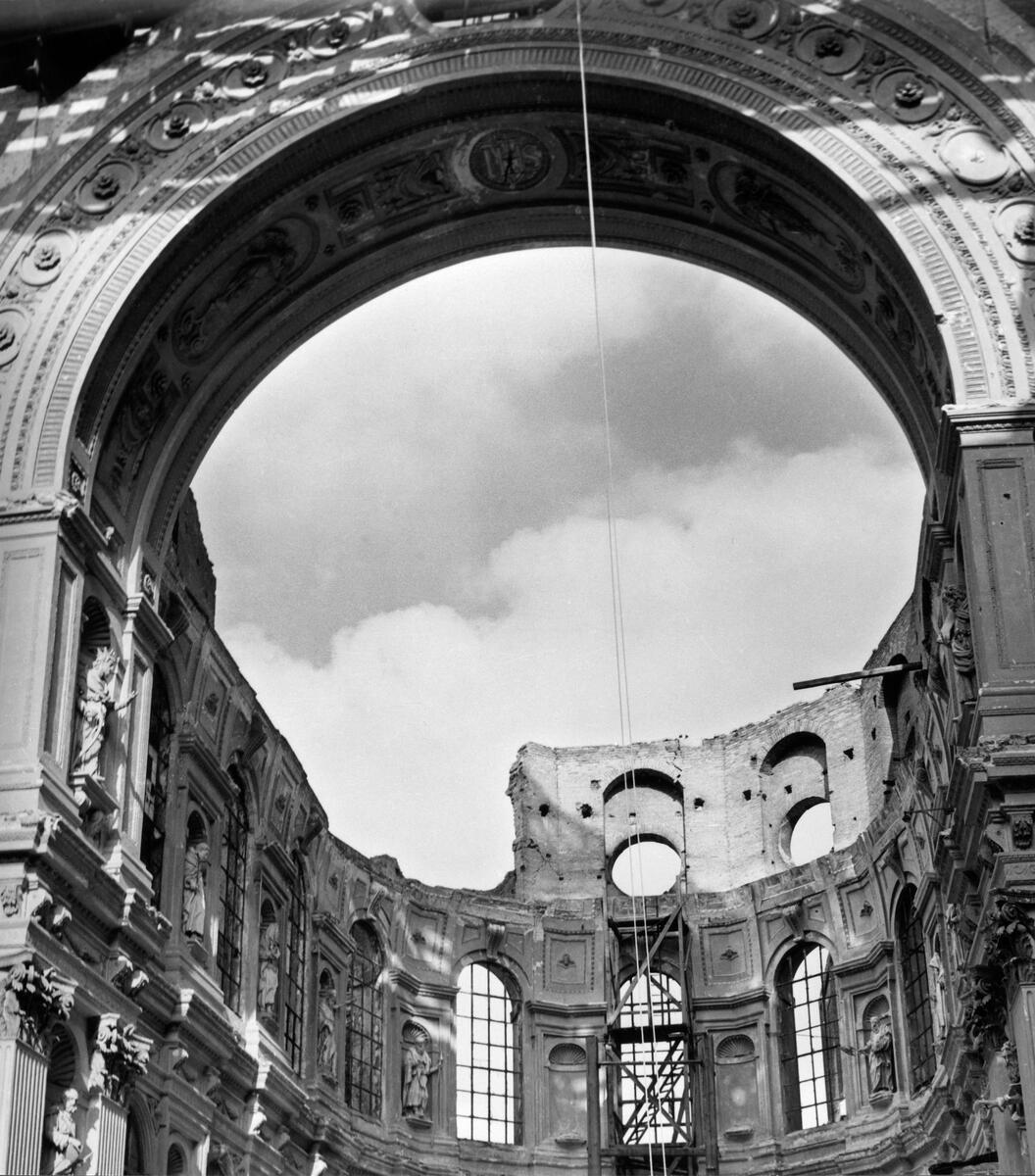
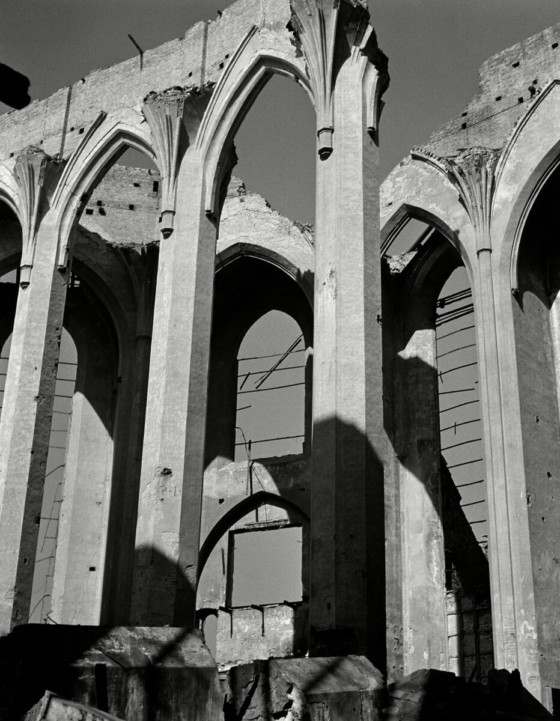
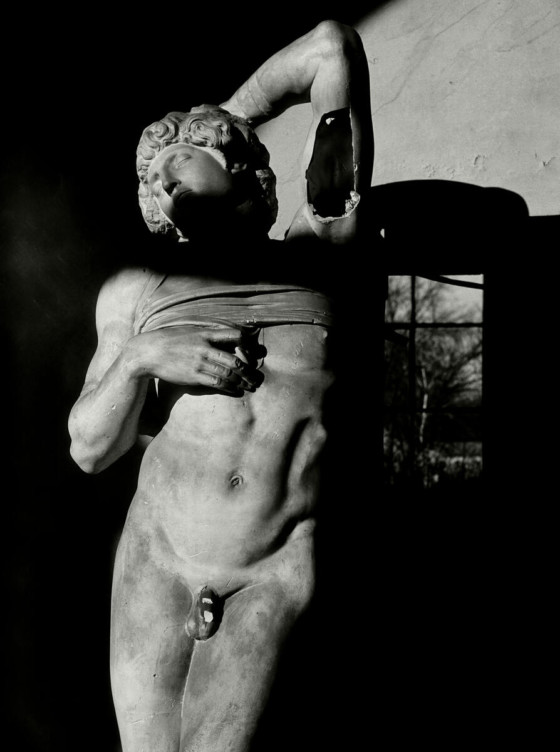
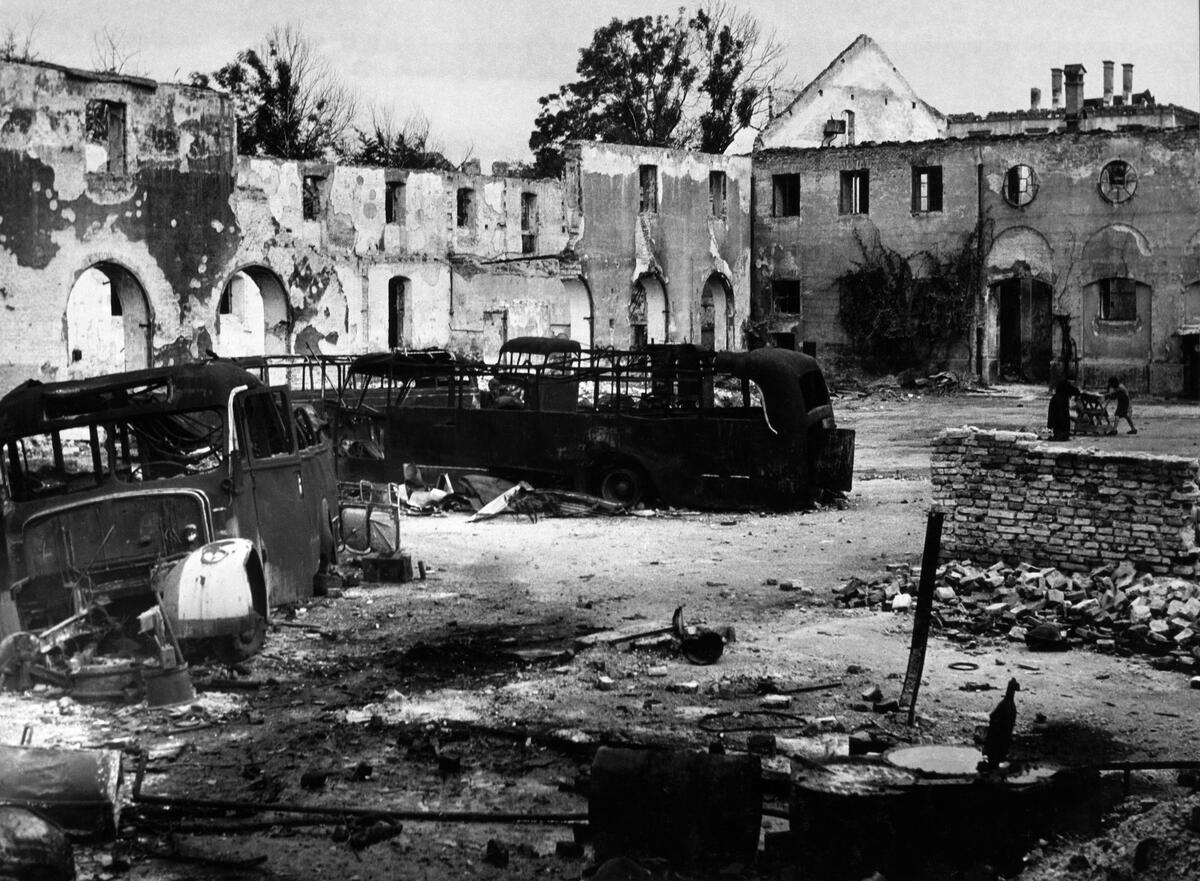
80 years ago, Herbert List arrived in Munich, where he witnessed the city’s unthinkable devastation in the wake of World War II. Following his exile in 1936 to London, Paris and Greece, he returned to Germany in 1941 and was drafted into the Germany military, despite his Jewish heritage. In 1945, he faced the ruins of Munich just as the dust had settled, capturing the wreckage and those who remained to pick up the pieces. Depicting the collapsed statues and columns of landmark buildings like The Brown House, the Glyptothek museum, and the Academy of Fine Arts, List merges artistic vision with documentation, creating surreal scenes that serve as a somber response to his earlier work of glistening, statuesque youth.
The exhibition “Destroyed City: Herbert List and the Photography of Ruins in Munich,” presented by Münchner Stadtmuseum, is on view at Rathaus Gallery in Munich from November 21 to December 17, 2025. A new expanded edition of List’s publication Momento 1945, originally released in 1995, was published by Schirmer/Mosel Verlag in the spring of 2025.
Below, Peer-Olaf Richter, head of the List Estate, details the importance of this work within List’s photographic journey, as well as its lasting relevance today.
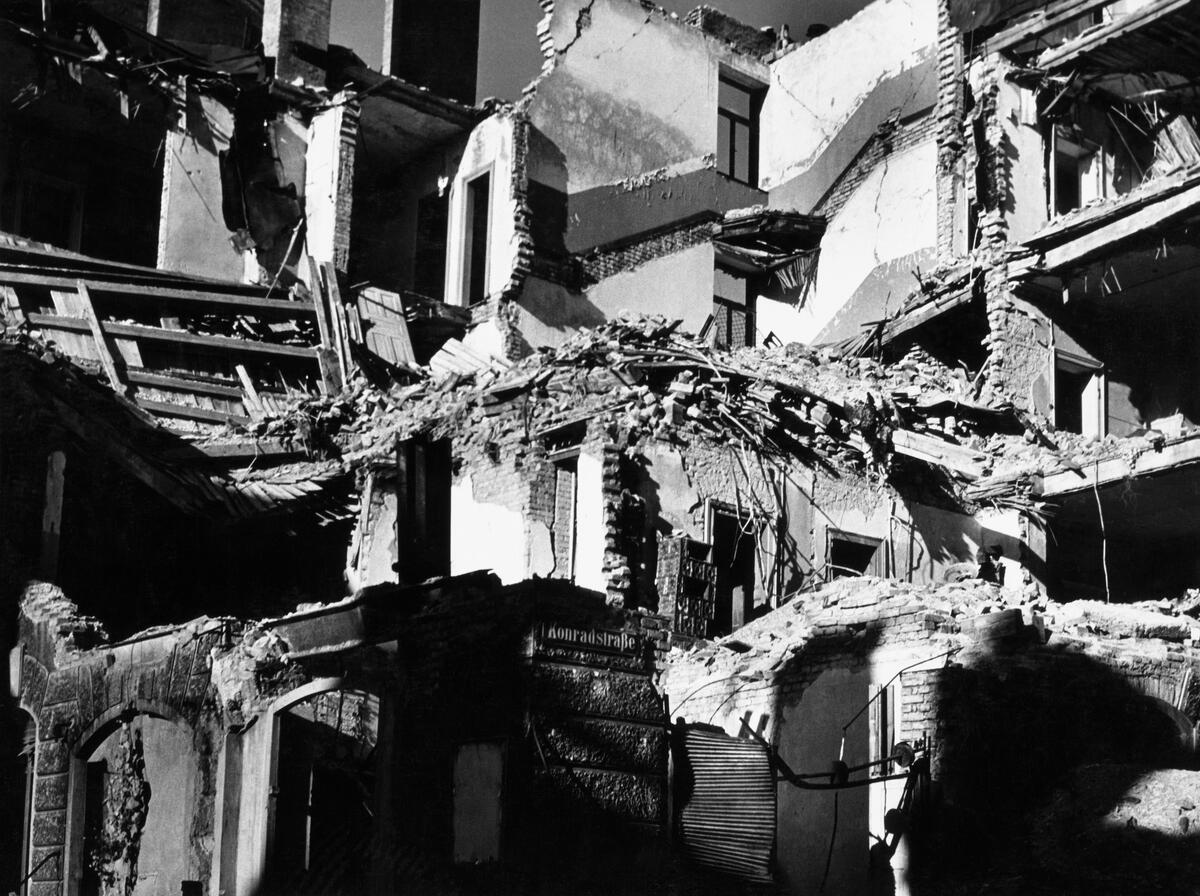
In the immediate aftermath of the war, List struggled to build on the international success and recognition he had achieved during the 1930s. Travel was almost impossible, which proved especially difficult for someone whose creative life had been shaped by constant movement. Forced to remain in one place, he turned his gaze toward his immediate surroundings.
When he returned to Munich in the summer of 1945, his view of the devastated city was marked by a certain detachment. Munich was not home to him yet — it was merely the place where he had ended up after being forced to leave Greece in 1941. During his time there, he lived in a hotel room until he was drafted and sent to Norway.
His family home in Hamburg had already been destroyed earlier in the war, and when his Munich hotel was bombed in 1942, he reacted with wry bemusement, noting that there was little left in his life that could still be destroyed. Since leaving Germany in 1936, his life had been marked by a restless, nomadic existence. This distance from a fixed sense of place shaped his perception of the ruins that surrounded him in 1945.
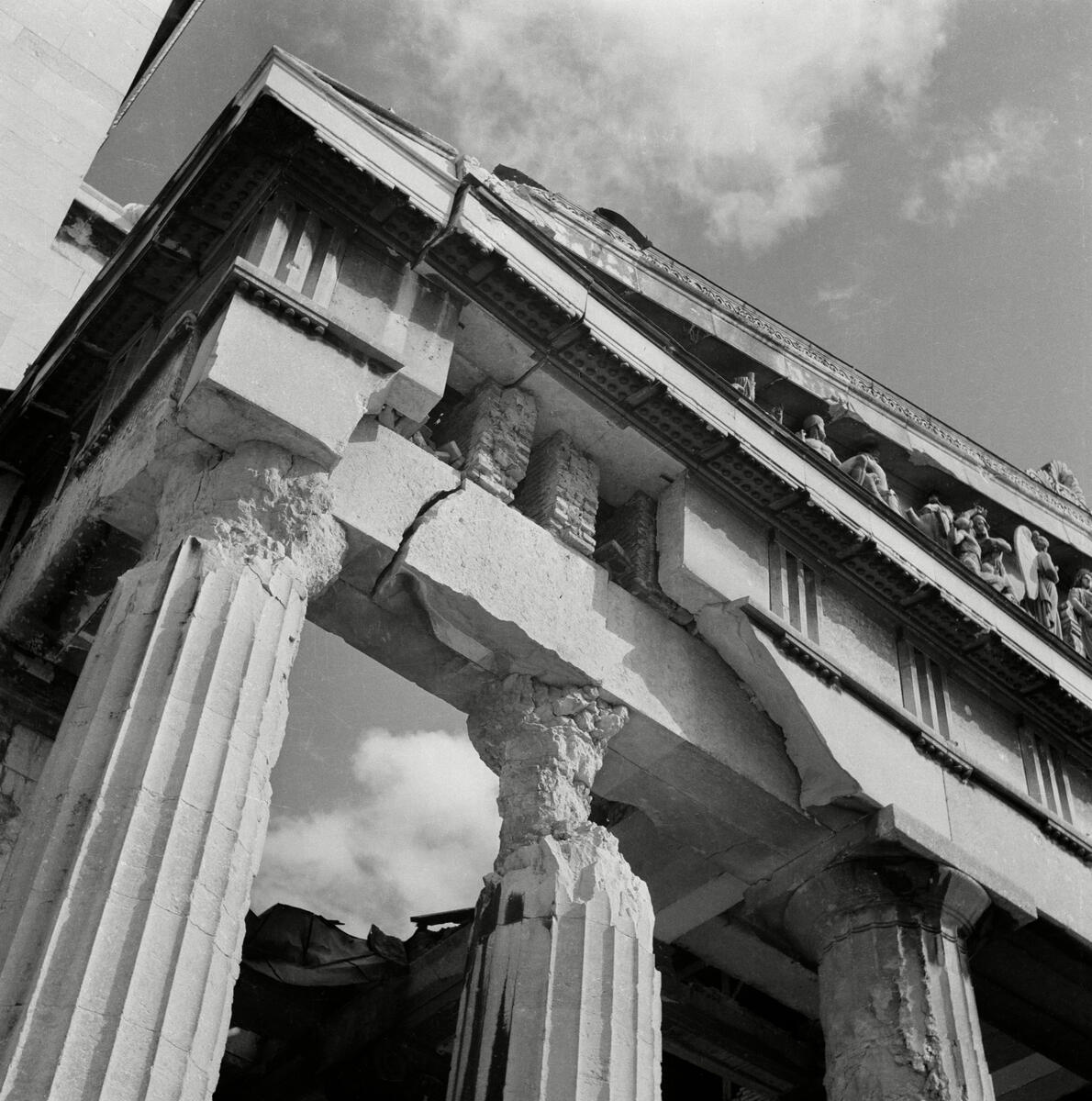
"His images radiated a quiet austerity, informed by his earlier fascination with the classical ruins of Greece. "
- Peer-Olaf Richter
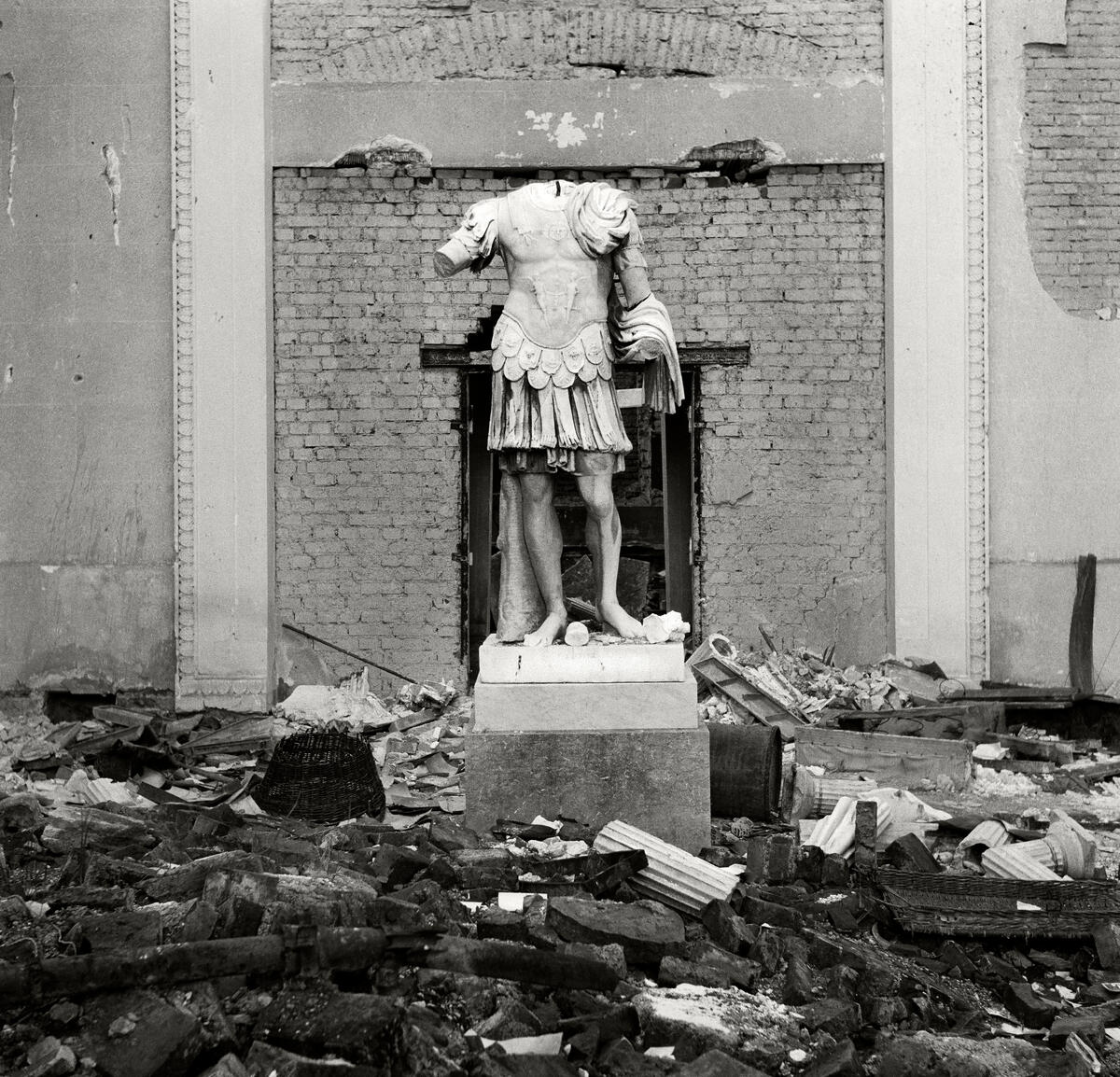
List’s work experience in Greece deeply influenced his artistic style: a detached, meditative vision that he now applied to the wreckage of postwar Munich. This approach, however, was not well received at the time. His photographs of the ruined city were criticized for their contemplative tone, lacking the moral or accusatory edge expected of postwar photojournalism. Instead, his images radiated a quiet austerity, informed by his earlier fascination with the classical ruins of Greece, as well as his admiration for the Parisian Surrealists and Italian painters of the Pittura Metafisica movement. The pathos of these Munich photographs reveals that same reverence for timelessness amid decay.
These images grew into a long-term project, spanning from 1945 to 1949. Photographic materials such as film and paper were scarce at first and could only be acquired through professional networks. During the first years, List worked as art editor for the Allied newspaper Heute in Munich. Although he managed to publish a few of his own images there, none were from the series of ruin images he titled Die Magischen Reste (“The Magical Remains”).
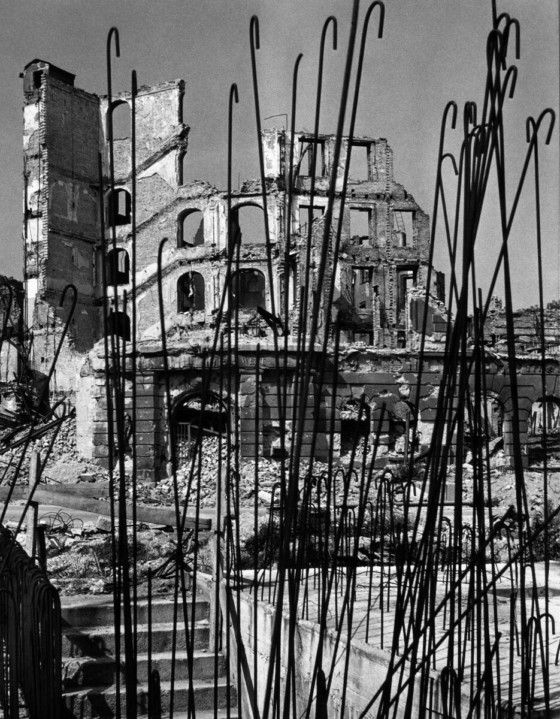
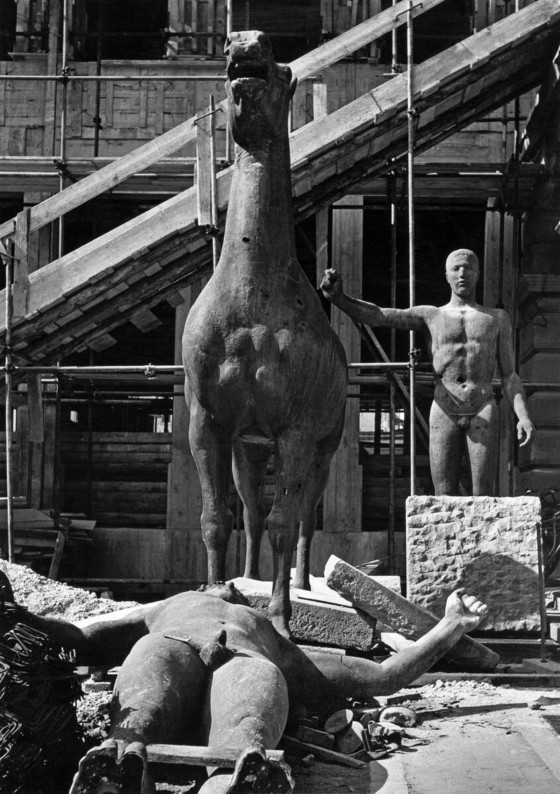
20 years later, the series was finally acquired in 1966 by the Munich City Museum. However, it took another 30 years before the works were publicly shown and published for the first time, in a book released in 1995 for the 50th anniversary of the end of World War II. The sentiment of that time was shaped by the fall of the Berlin Wall and widespread disarmament across the Western world. The series was then valued for its artistic achievement and perceived absence of political message, with its presentation tailored to that interpretation.
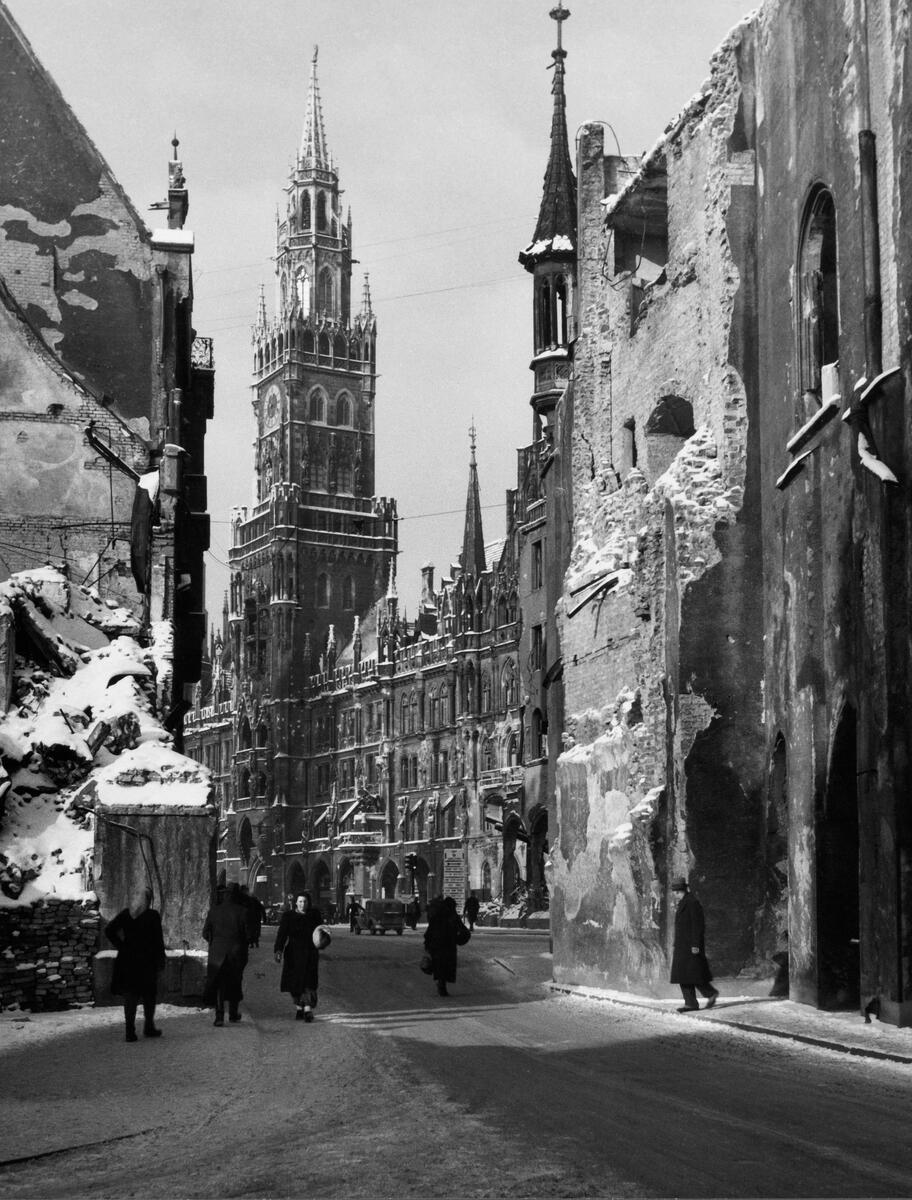
Now, another 30 years later, the world has changed once again. We find ourselves surrounded by conflict, witnessing renewed militarization, and immersed in news saturated with images of war. The new edition of our book now presents the complete set of photographs once acquired by the city of Munich. It offers insight into how List composed his scenes from various perspectives, while inviting the viewer on a visual journey through landscapes of devastation.
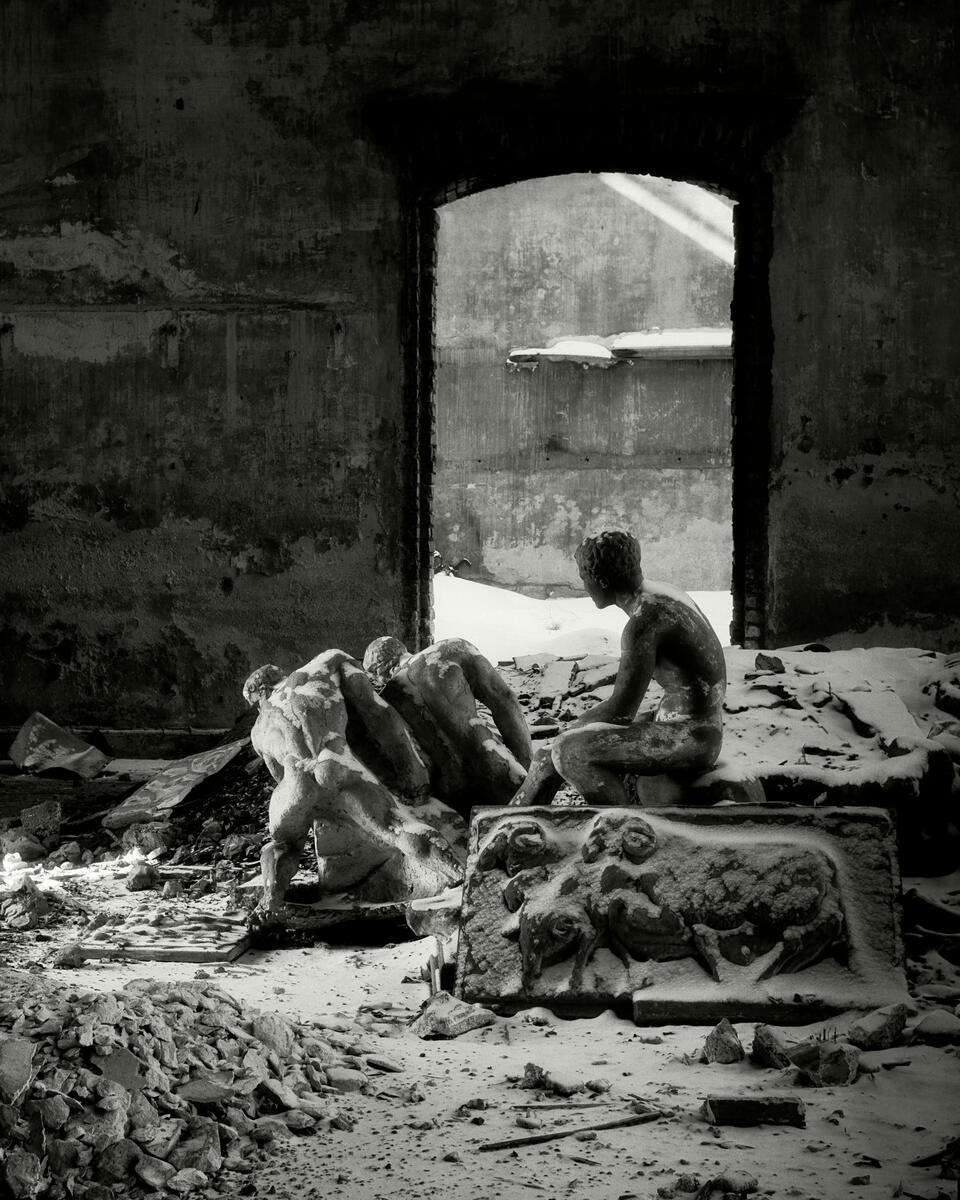
The accompanying texts frame the more than 130 images by not only providing context about their reception at the time, but also their significance within List’s wider body of work, and their place in the museum’s collection. It also includes a detailed chronology of the city’s bombardments, along with several literary excerpts that convey the prevailing sentiment during the period in which these photographs were taken.
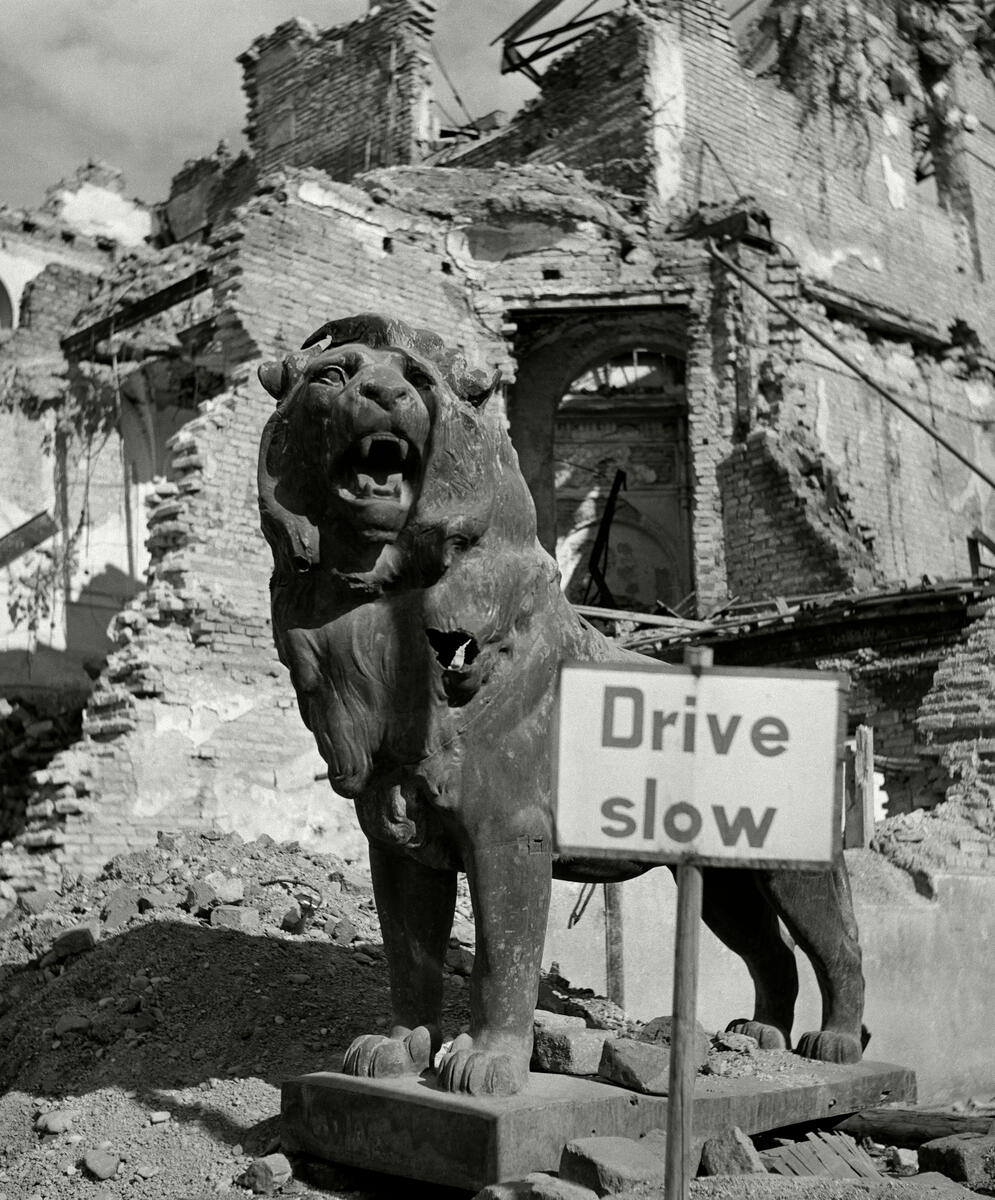
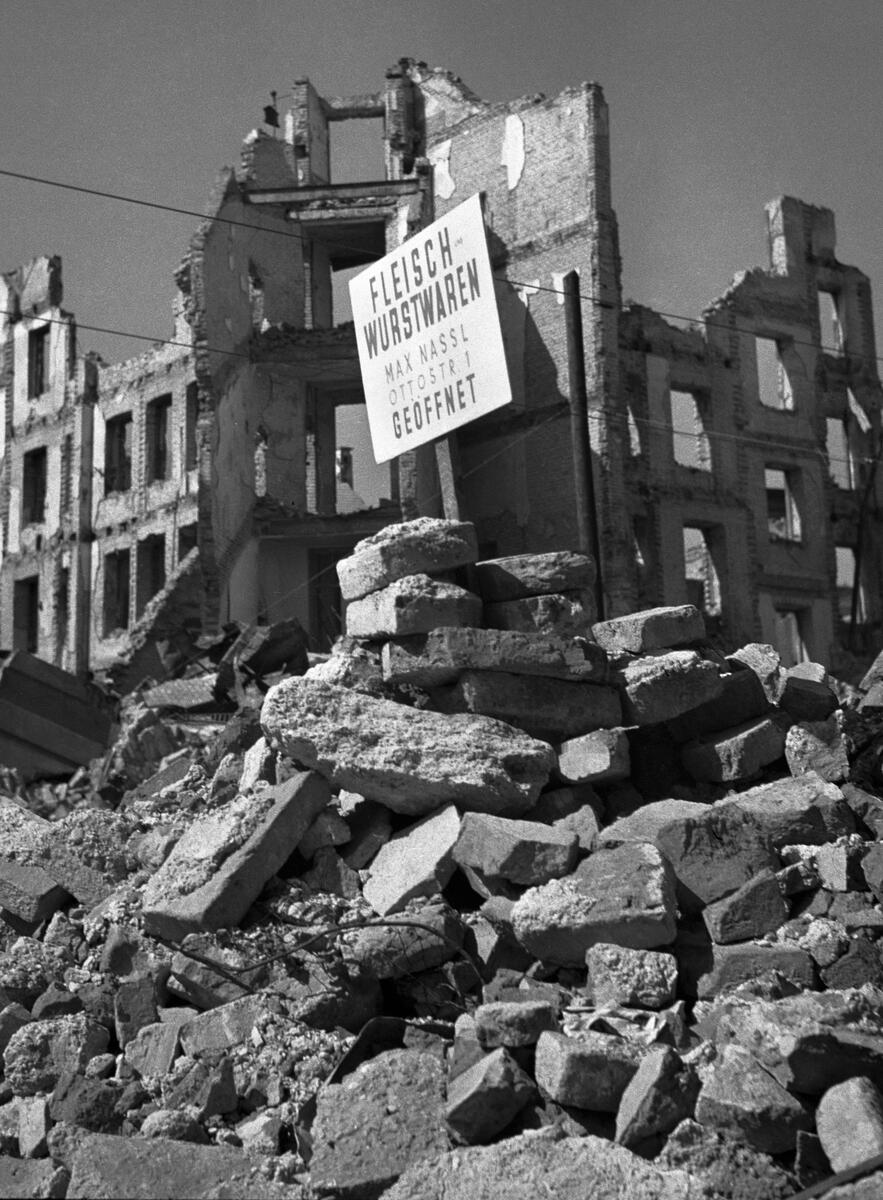
List was particularly inspired by the city’s imperial history and cultural significance. Some of the best photos were taken in the Academy of Arts, museums and churches. Moments capturing the mundane life of the battered city also stand out for their surreal nuances — such as the traffic sign of the American troops next to the royal Bavarian lion, or the butcher shop’s announcement of being open for business amid a lunar landscape of rubble. Perhaps the most iconic image, however, is one that differs from the rest of the project with its absence of human presence: a girl collecting wood, with one of the legendary “Trümmerfrauen” in the background.
"List’s photos continue to serve as both a reminder and a warning."
- Peer-Olaf Richter
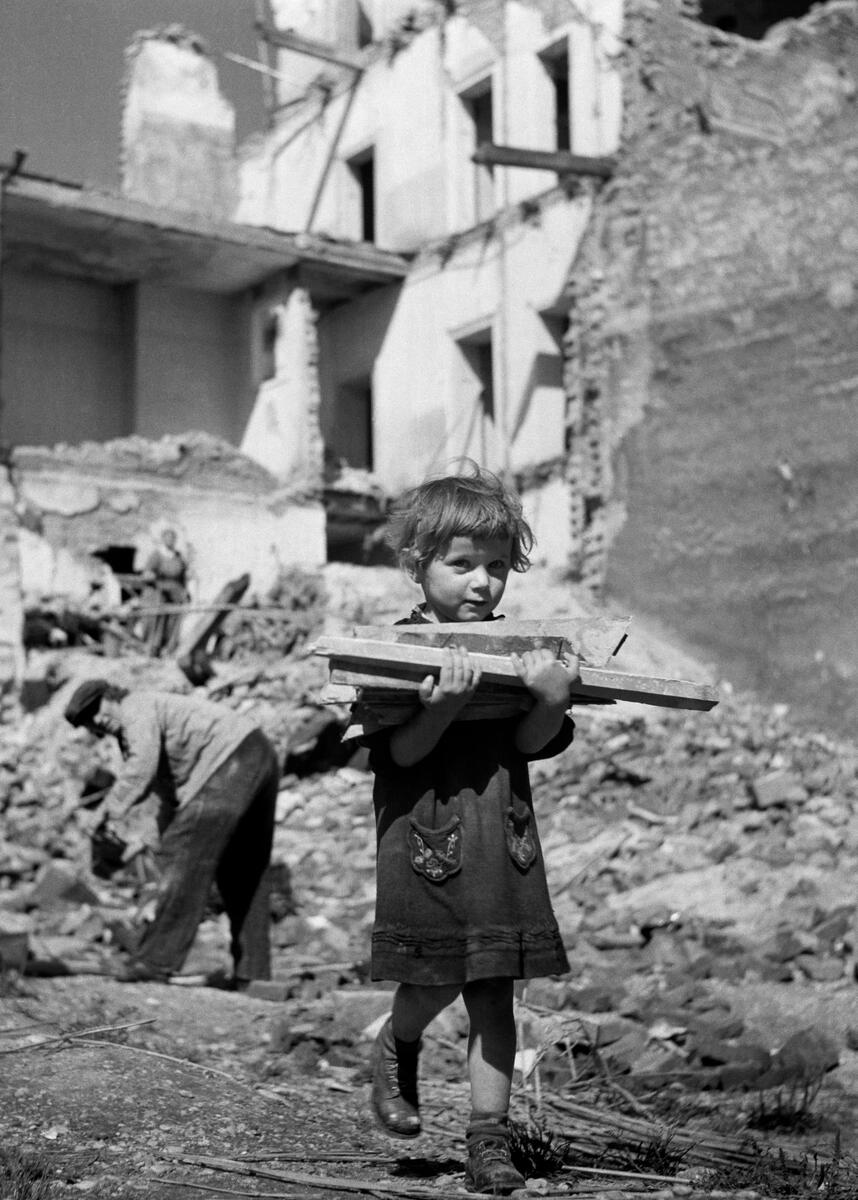
Set among the ruins, these images seem timeless: there appears to be little separating them from the ruins of earlier eras. Perhaps that is why List’s experience with photographing Greek ruins led him to undertake this project in Munich. Viewing the photos 80 years later, I can’t help but notice similarities with the images of destruction from war zones like Gaza or Ukraine. It seems List’s photos continue to serve as both a reminder and a warning. In light of today’s news and political saber-rattling, such reminders about the terrible consequences of armed conflict feel more timely than ever.
“Destroyed City: Herbert List and the Photography of Ruins in Munich” is on view from November 21 to December 17, 2025 at Münchner Stadtmuseum’s Photography Department in Rathausgalerie.
Rathausgalerie
Marienplatz 8
80331 Munich, Germany
Plan your visit here.
Herbert List’s earlier work was selected as part of Magnum Gallery’s curation at Paris Photo 2025. Preview the booth (CO2) and discover the program here.