Paris Photo 2025: The Early Years of Herbert List
Four vintage prints selected by Magnum Gallery trace the story of how List became a photographer, from photographing on the weekends in 1930 to his first solo show in Paris in 1937
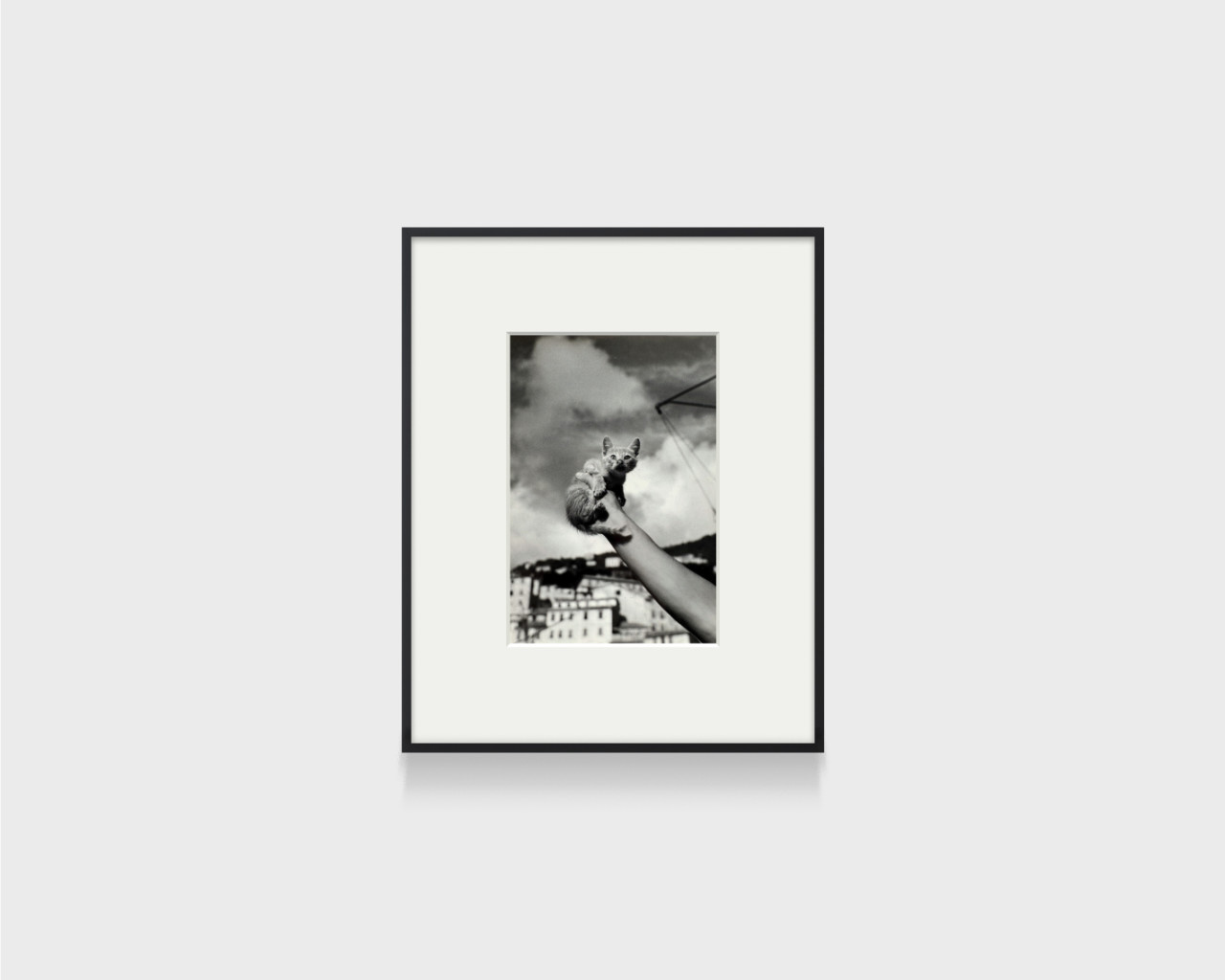
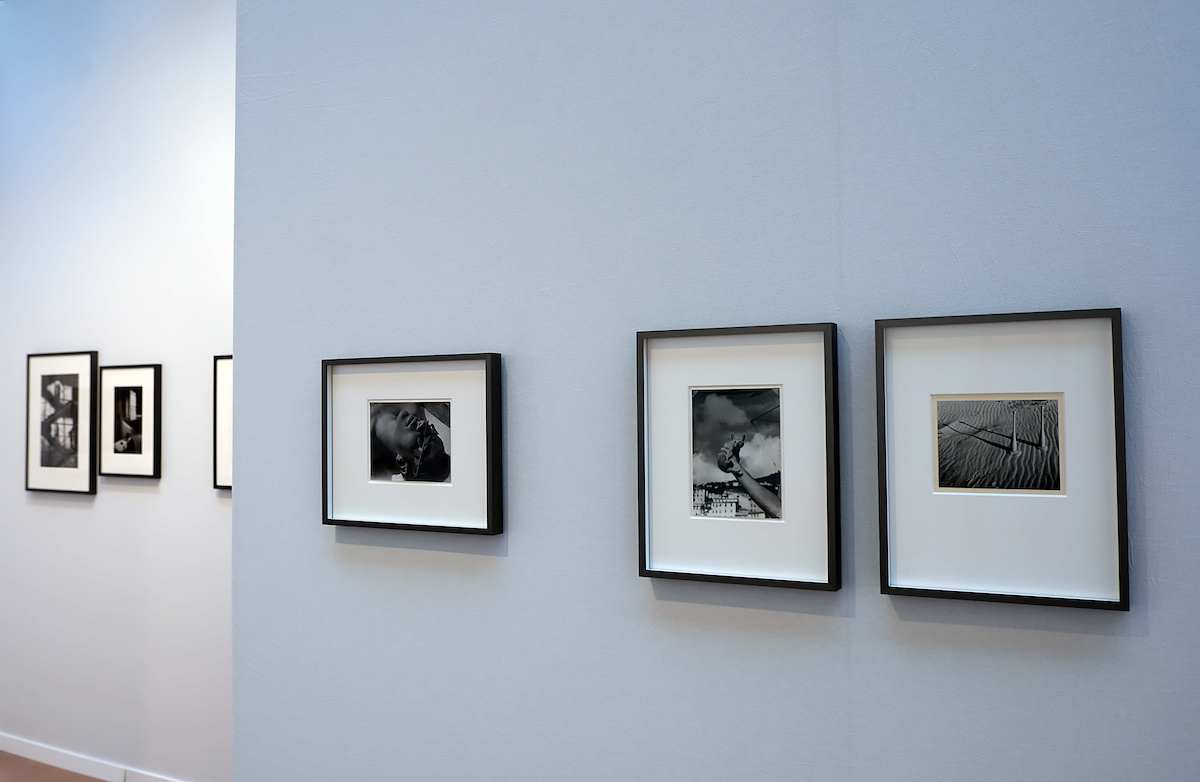
Magnum Gallery has selected four vintage prints by Herbert List for Paris Photo 2025, tracing the photographer’s first seven years of practice, from an amateur photographer in 1930, through fleeing Nazi Germany, to discovering his passion for Greece. Each print is small in format — around postcard size — and exemplifies the character of his pre-war prints. Some would have been included in List’s first solo exhibition at the Galerie Chasseur d’Image in Paris in 1937, now 88 years ago “Together, these prints illustrate why List saw himself as an amateur and an artist rather than a professional photographer,” writes Peer-Olaf Richter, head of the List Estate.
Here, Richter walks us through the four prints on view from a historical perspective, weaving together motifs from List’s own life story and his artistic approach.
Picnic at the Baltic Sea, 1930
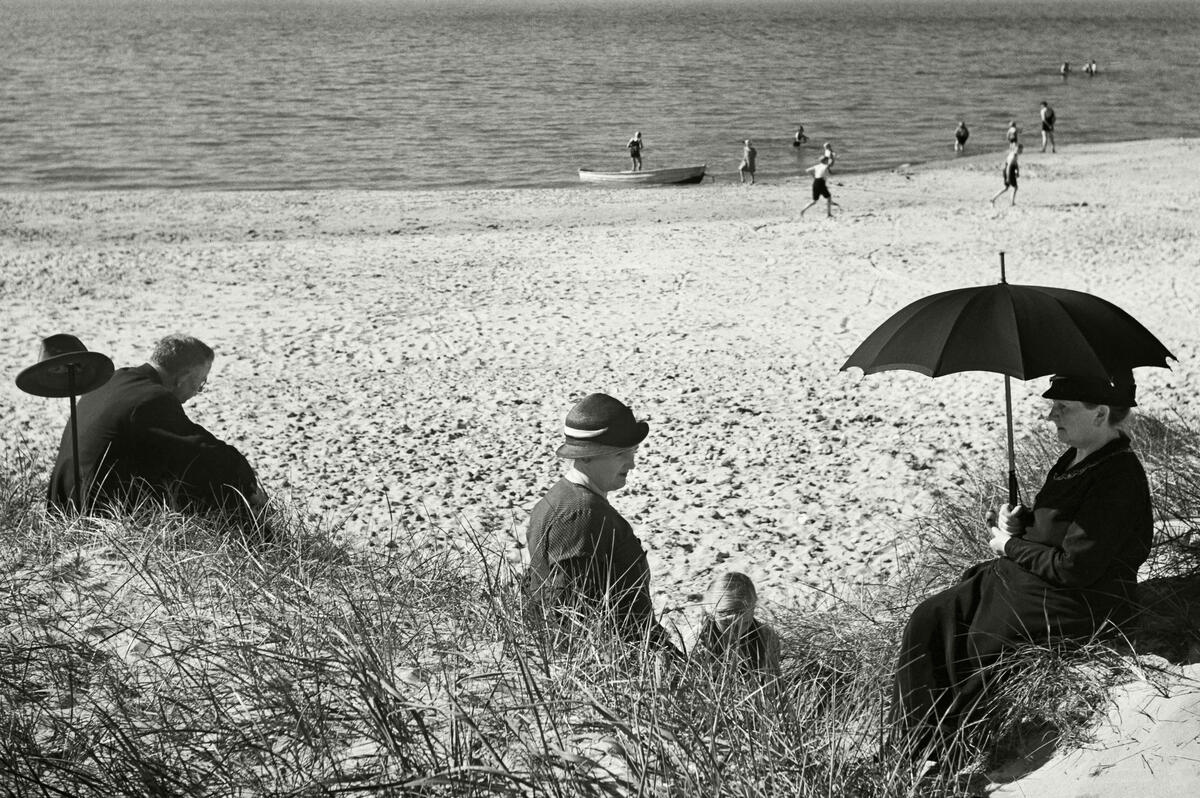
"By referencing a key work of post-impressionism, [List] affirms his self-image as an artist, distinct from the realms of photojournalism and commercial photography."
- Peer-Olaf Richter
List captured “Picnic at the Baltic Sea,” the earliest image in this group, when he was 27. He made photographs during the weekends and in the hours outside of his family’s business. This Baltic Sea beach, roughly a two-hour journey from Hamburg, was a frequent destination and the backdrop for many of his playful portraits of friends in the early 1930s. Poet Stephen Spender referred to List and his circle as “Children of the Sun,” a nod to their embrace of the ideals of the Life Reform movement: communion with nature, freedom of the body, and a celebration of youth and vitality.
This particular image, however, feels different — almost as if from another time: the fully-clothed family shielding themselves from the sun presents a striking contrast from the reformist ideas mentioned before, appearing as fossils of a bygone era frozen in time.
This photograph has been compared to Henri Cartier-Bresson’s “Sur les Bords de la Marne” (1938). Cartier-Bresson’s working-class scene brims with warmth, movement, and human intimacy, celebrating the spontaneity of photography. List’s somewhat bourgeois composition, by contrast, feels more like a carefully arranged “tableau vivant,” underlining not a departure from, but an alignment with traditional image making such as drawings and paintings. In photographing this scene, List seems to situate himself within a lineage of painters, extending back to Georges Seurat’s “Un dimanche après-midi à l’île de la Grande Jatte.”
Just as Seurat’s pointillist technique marked a turning point in modern painting, List appears to propose photography as capable of redefining the trajectory of image making. The content of this early work might seem old-fashioned, but by referencing a key work of post-impressionism, he affirms his self-image as an artist, distinct from the realms of photojournalism and commercial photography.
Le Couple, 1933
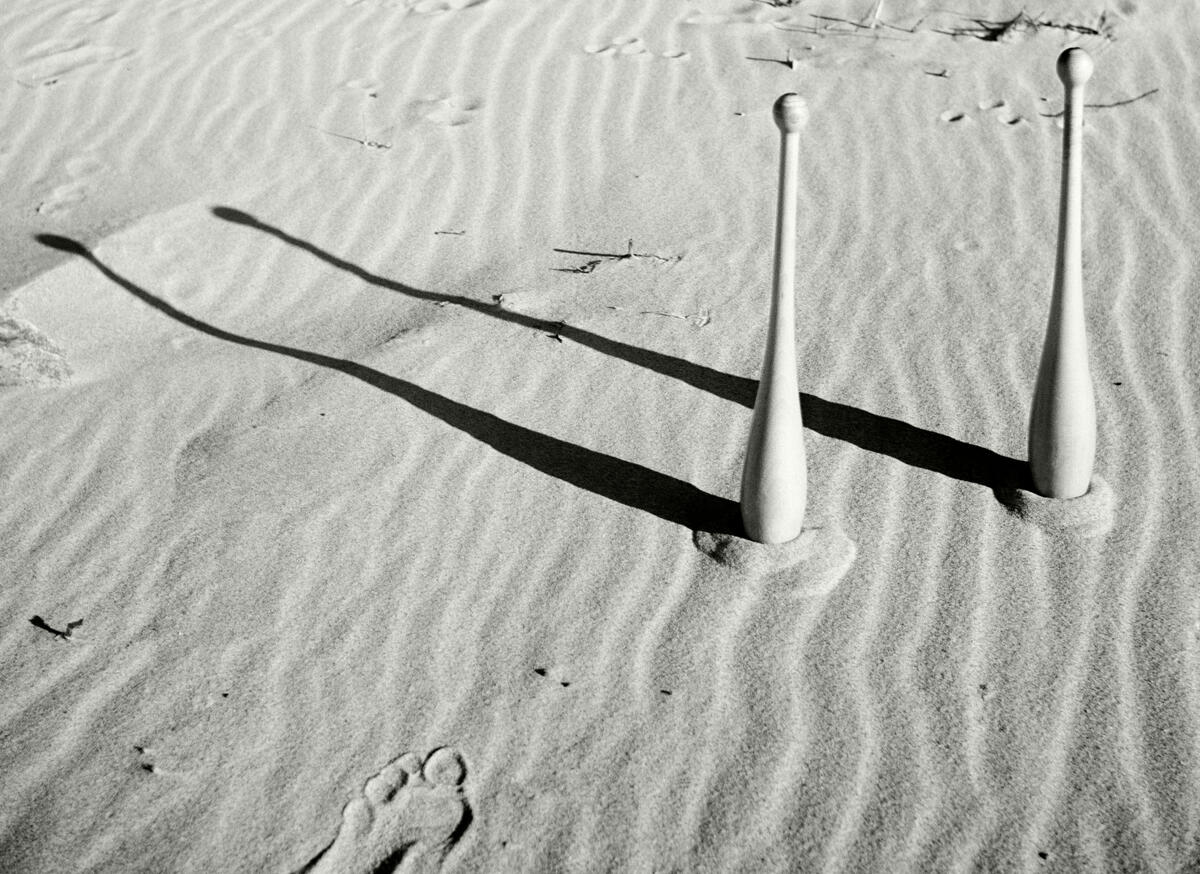
"These paired items evoke the presence of same-sex couples who remained absent in the public imagery of the time."
- Peer-Olaf Richter
“Le Couple,” an early still life, echoes friendship paintings popular in the Romantic and Sentimentalist eras. In these stills, List composes pairs of objects, such as two identical pins or sunglasses, as symbolic representations of their non-visible owners. These paired items evoke the presence of same-sex couples who remained absent in the public imagery of the time. The visible footprint in the frame not only links this natura morta to a human presence but reinforces a paradoxical spontaneity of the scene: it balances what is premeditated and carefully composed with the immediacy of a fleeting moment.
The print’s mount on A4 paper indicates that it belonged to his German archive before his exile, while the signature “Gil” is a pseudonym he used for his 1937 Paris show.
The Kitten, 1936
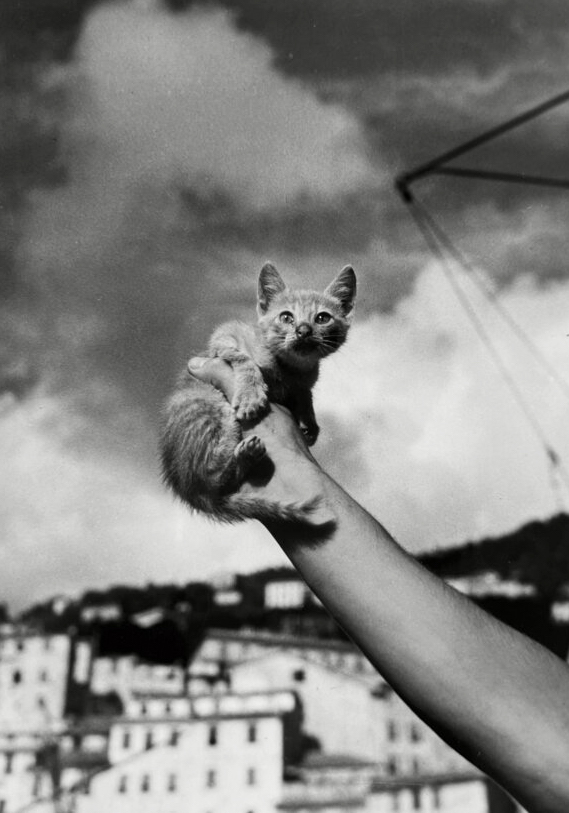
"To me, this expression mirrors List’s own emotional state at the time: he had just fled Germany as a homosexual man of Jewish heritage."
- Peer-Olaf Richter
“The Kitten” is a wonderful discovery recently made by the Estate in a newly uncovered set of photographs. This seemingly spontaneous image, possibly taken at a market in Liguria, reveals List’s humor and the diaristic, profound quality of his work. List was surely aware of the use of photography as a tool of political propaganda and agitation during his youth. The gesture of a human arm cropped into a strong diagonal across the image may have reminded him of the raised fist, a symbol of solidarity and resistance prevalent in the Weimar period.
By organizing the composition around this diagonal, he evokes the visual language of the era’s New Vision and Bauhaus movements, while the curious, wide-eyed kitten at the center adds a different dimension to the image. With eyes wide open, the kitten looks directly at the viewer — its gaze a mix of surprise and unease, as if puzzled by this unfamiliar vantage point from above. Beneath the innocence of that look lies a trace of fear about what might come next. To me, this expression mirrors List’s own emotional state at the time: he had just fled Germany as a homosexual man of Jewish heritage. Yet this flight, born of necessity, was also a thrilling break from his bourgeois life as a coffee merchant and the beginning of a new existence as an artist.
Laurel Over the Eyes, 1937
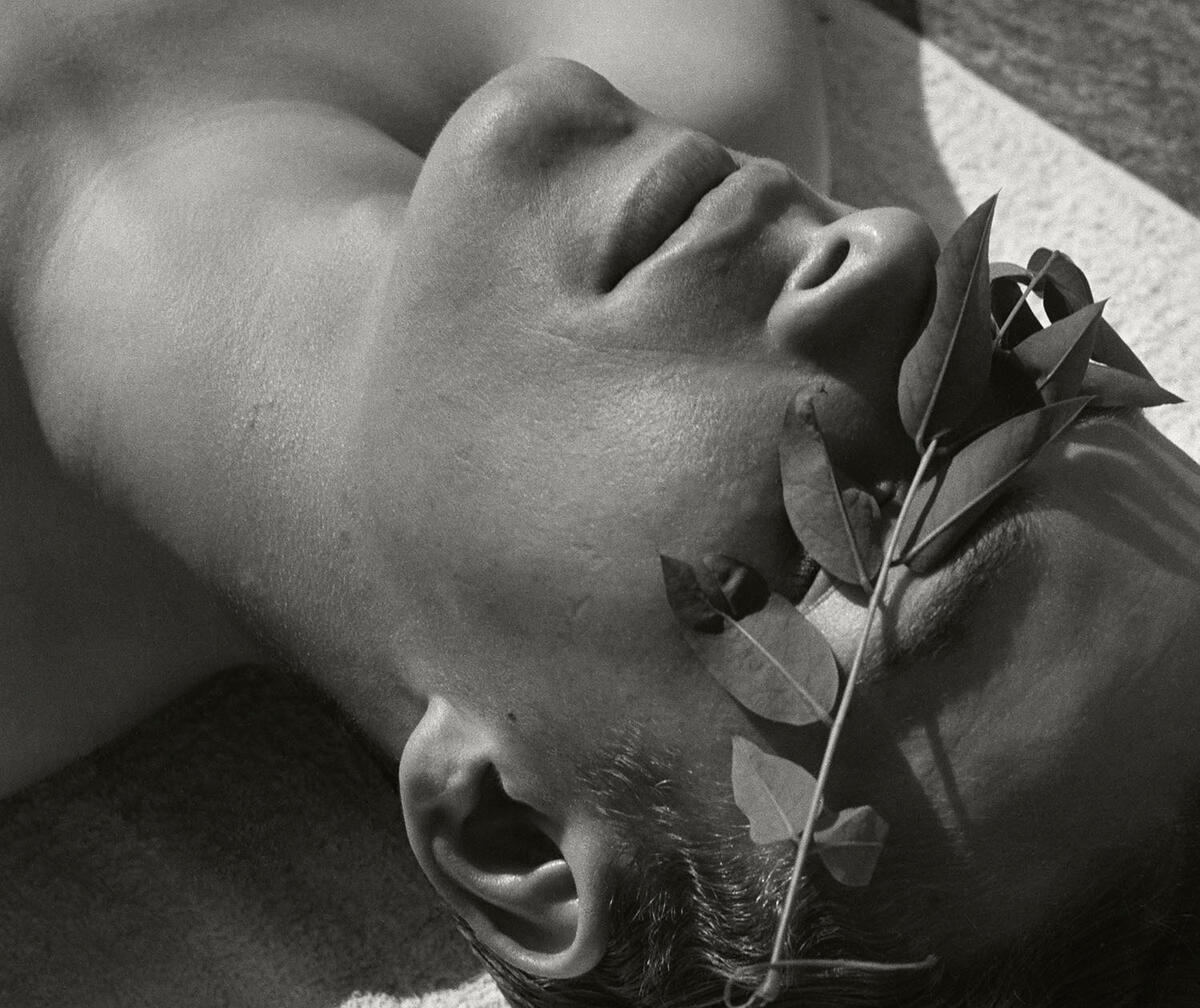
"We are not looking at a monument to a fallen hero but at a sensuous mise-en-scène. "
- Peer-Olaf Richter
The final image, depicting a young man with leaves covering his eyes, serves as a foil to “The Kitten.” Here, serenity and sensuality replace a dynamic alertness of an uncertain future. The young man reclines on a wall, unable to see what lies ahead, his eyes obscured. His posture of surrender and ease stands in subtle tension with the leaves on his face, which recall a victory wreath adorning an athlete or fighter. It is as if the wreath has slipped down during a moment of rest after the struggle.
The entire scene is clearly staged. The young man is not an athlete but a friend of the photographer, who conceived this playful composition — perhaps inspired by a visit to the Panathenaic Stadium in Athens, where the image was likely taken. The leaves covering his eyes are not laurel, as the title suggests, but an ordinary shrub the two may have found nearby. Yet none of this diminishes the image’s power. What truly matters is its beauty. List captures a delicate tension between the sensuality of the reclining body, the luminous skin touched by sunlight, and the vision of an athlete or warrior resting after battle — suspended between sleep and death. These layered associations make the photograph both moving and intellectually rich. We are not looking at a monument to a fallen hero but at a sensuous mise-en-scène exploring the intertwined themes of the photographic moment with beauty and mortality, eroticism and transience.