So Long, China
Patrick Zachmann's award-winning study of China and the Chinese captures thirty years of flux


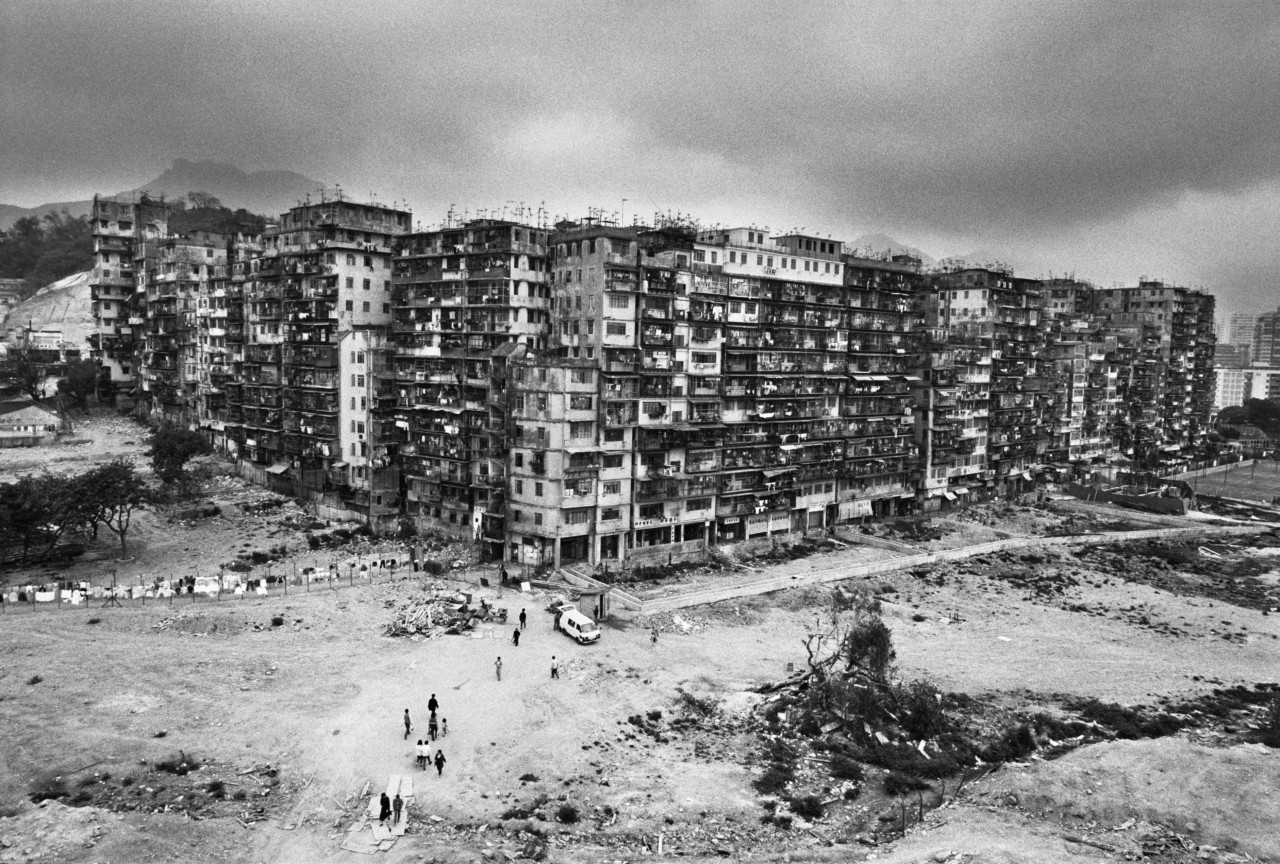


For over 30 years, Patrick Zachmann traveled across China, a country he first visited in 1982 while reporting on the Chinese film industry, resulting in a major body of work entitled So Long, China.
From the triads of Hong Kong in the 1980s to Beijing’s transformation and the Tiananmen Square protests, Zachmann’s long term project brings together a contemporary view on a vast nation in constant flux. Spanning 20 trips to China, Zachmann undertook a persistent and thorough documentation of Chinese culture, both in China and abroad — his most recent work documents the Chinese community in France. Underlying these photographs is the subject of Chinese identity, or rather, the younger generation’s collective and individual loss of identity as the country experienced a flood of change.
During his first trip, Zachmann wrote in his diary, “It is my first trip to China. I have prepared it for months. I feel attracted to this country and its culture, not knowing exactly why. I have fantasies and clichés in my mind, bound to this millenary culture, its strangeness, its mystery. Bound to unreachable things.”
In the years to come, he witnessed immense upheavals, most notably in May 1989 during the events of Tiananmen Square:
“May 1989. I was working on the Chinese diaspora when I happened to be in Beijing right at the start of the Tiananmen Square movement. Nights and days, I am going to share the students’ enthusiasm while they challenge the authority of the old leadership. Nor I nor anyone could expect the tragedy of the 4th of June. History has kept that brutal act of repression, but ahead of it there was a fantastic impetus of dreams and hopes, something akin to a Chinese Woodstock. […] For those who know China, this wild enthusiasm, this joy, this desire for freedom was astounding! Imagination, actualized feelings that had been hidden for decades…”
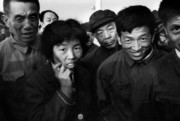
From his black and white reportage in a country where, as a European, he was perceived as “a long-nose” by Mao-suited, curious locals, Zachmann transitioned to color photography in 2001.
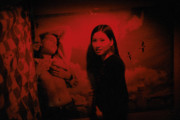
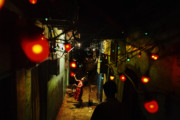
His series Chinese Nights brings to life urban landscapes drenched in extravagant, artificial light, highlighting the rapid mutation of the urban space China is well-known for today. Achieved by a veritable army of poorly-paid construction workers whose ceaseless labor overhauled the country’s cities, the drastic mutation was described by Zachmann as “the invariable mass destruction of the past for modern and unappealing new buildings.”
He recalls, “When I was working in China during the 1980s and 1990s, there wasn’t such a thing as a ‘nightlife’, properly speaking. Or, to be more accurate, there was one, only it remained underground, wrapped in secrecy. Nowadays, though, the night territory is in open daylight, if I may say so. All around the country, cities stay alive at night, either for intense work (particularly on construction sites) or for intense merriment in gambling, celebrations, shopping, the quest for pleasure…myriad young girls from the poorest provinces become, by means fair or foul, bar hostesses, masseuses or hookers, and they are the living force of the Chinese nights.”
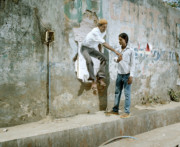
Zachmann’s multi-generational portraits show the speed of change in China, contrasting the old generation with the young, photographed in spaces that bear the hallmarks of both traditional China and the mark of a globalized youth society.
Through photographs and written entries, his book So Long, China, published by Xavier Barral, brings together three decades of contemporary Chinese history, and won the Prix Nadar on October 27, 2016.