The Importance of Visual Literacy
The Magnum Learn team discusses why the way that we read and understand images is crucial, and how to support younger generations as principal sources of media consumption shift

Magnum Photos began hosting workshops with Magnum photographers in 2010. Designed for aspiring or practicing photographers, the original five-day shooting workshops were a chance for the cooperative’s photographers to share their knowledge, feedback, and best practices with the wider photographic community.
15 years later, Magnum’s educational outreach has evolved, with a dedicated Magnum Learn team hosting a wealth of online and in-person workshops around the world. In the last eight years or so, it has enlarged its sphere of activity to include free workshops for younger generations, aged 12 and above, and the general public. Their goal is to help people understand how to read, understand, and think critically around an image that is presented before them, and why this is important.
Defining Visual Literacy
While the still image captures a specific moment in time within a certain context and from the photographer’s point of view, the way that an image is then used and disseminated is often out of the photographer’s control. When Magnum was established in 1947, one of its fundamental roles as a cooperative and agency was to protect a photographer’s work via the creation of a copyright. By shifting the property of an image made on assignment from the assignee to the photographer themselves, they could therefore prevent an image from being used out of context without the photographer’s knowledge or approval, and stop their images from being used in propaganda, corrupt messaging, or simply misleading or inappropriate contexts. Back in 1947, the idea that a photographer, rather than the magazines, should and would own their negatives, was a radical one. It is one that Magnum still defends to this day, and any licensing of Magnum images must include the copyright and caption as attributed by the photographer and agency.
Visual literacy is defined as both the ability to use imagery as a form of expression and the ability to read and understand an image in the context in which it is presented. “Visual literacy is rooted in the knowledge that images must be read and understood within a specific context,” explains Sonia Jeunet, Global Head of Education at Magnum. “It’s about intentionality and having a critical reading of the image. Visual literacy invites the viewer to be an active reader, to understand that behind that frame, there is the decision of the photographer to frame a moment, then the decision of the individual to use or absorb that image in whatever context we receive it.”

"It is important that the younger generations turn from passive consumers to critical readers when it comes to imagery."
- Sonia Jeunet
The Dangers of Visual “Illiteracy”
While today’s younger generations are perhaps more visually literate by nature, consuming and using images and videos more than ever before, Jeunet argues that the ability to read images critically has not developed alongside this rapid increase in consumption. “Until roughly 10 or 15 years ago, documentary photography and photojournalism were mostly accessible via print media, with photo essays spread over several pages, allowing photographers to expand on a subject and build a story across several images,” she explains. “Consumption of images drastically changed with the rise of social media. Young people now access information via platforms such as Instagram, TikTok, or YouTube — places where images are shared multiple times and often viewed out of context. They are accessible in the middle of hundreds of other pieces of information, with little time to pause to really understand what they see.”
“We all learn to read words, but despite the rise of images in communication, media, press, and advertising, we are rarely given the tools to read them,” she adds. “With an increase of fake news, as well as the manipulation of information and a growing distrust towards what we see in the media, it is important that the younger generations turn from passive consumers to critical readers when it comes to imagery.”

"Consumption of images drastically changed with the rise of social media."
- Sonia Jeunet
Teaching Visual Literacy
Around seven years ago, Magnum Learn launched its first visual literacy “pilot program” in a secondary school in eastern France with a group of pupils aged 12–13. “The conversations we were having with young people during the workshops showed us quite clearly that they had rarely thought about the making of images, or the idea that they could and should interrogate them critically rather than passively digesting them,” Jeunet explains.
“Some of the skills that we teach include looking for a caption, and if reading an image in the context of an advertisement, or on social media, questioning the intentionality of the image — what does it want to make us feel, or do? On top of the contextual analysis, we also help young people learn to deconstruct an image, analyzing the background, the foreground, and how all the different elements of an image are in dialogue with each other — imagining what’s left out of the frame, too.”
In Practice
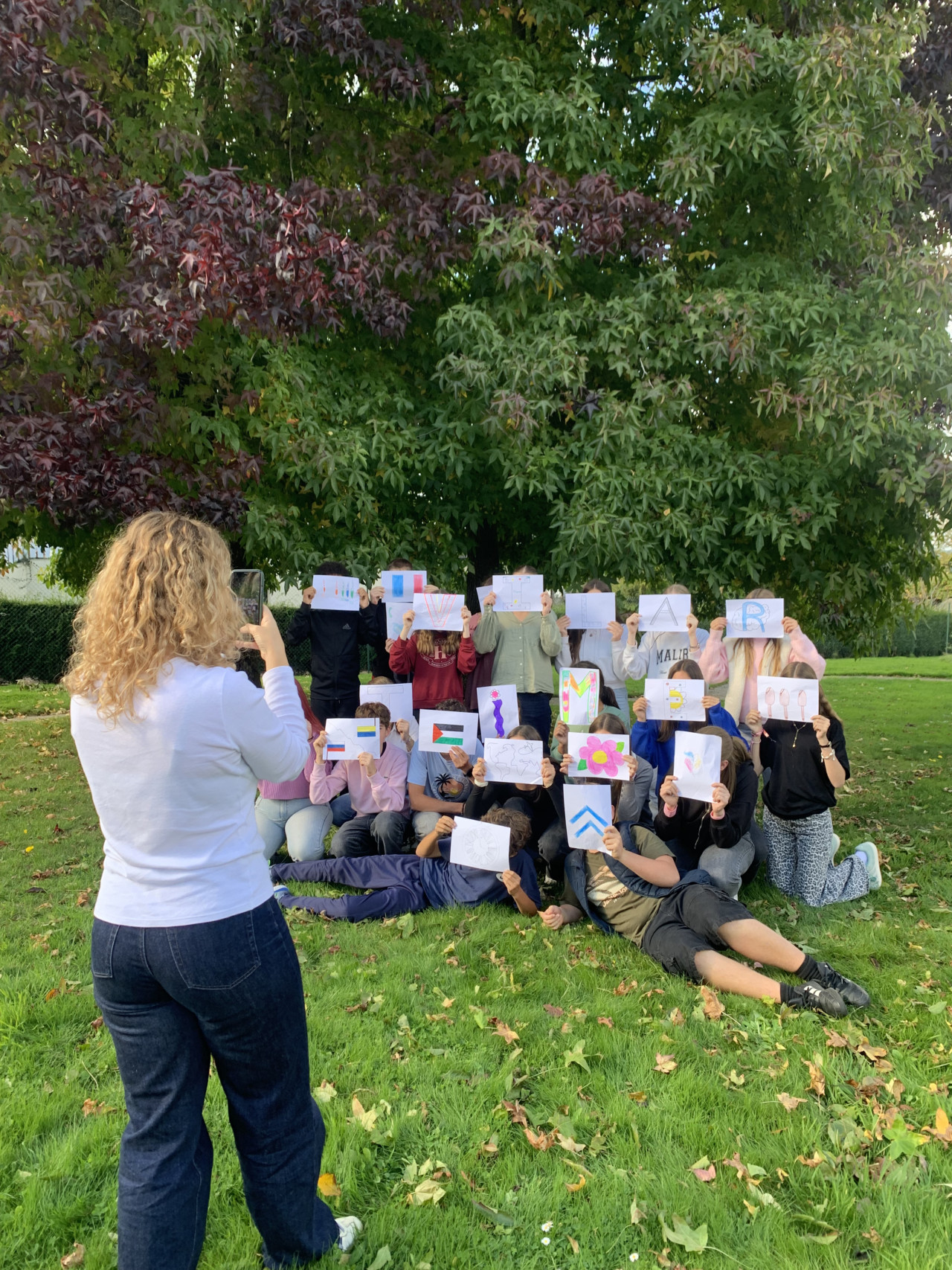
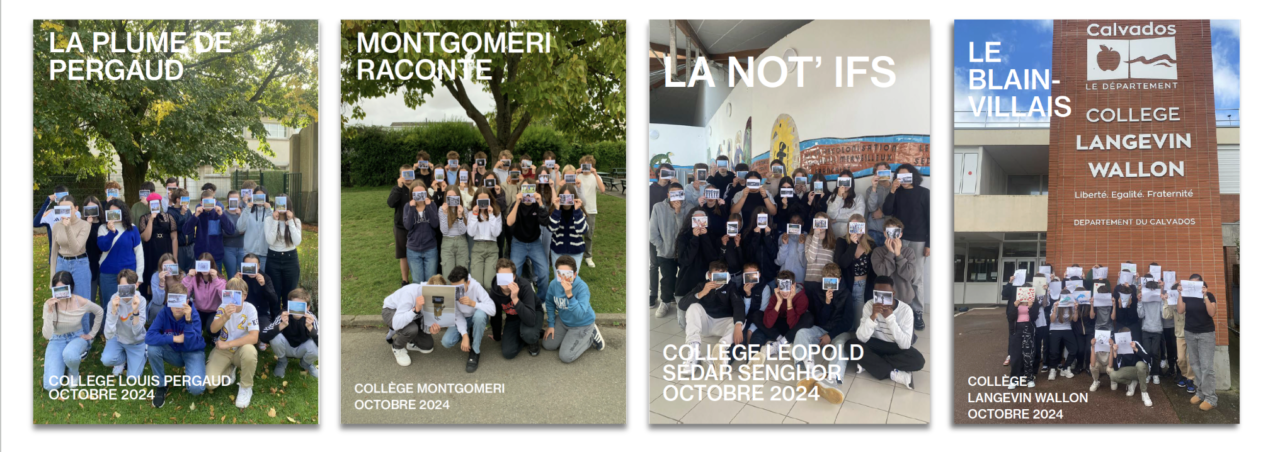
Their original “pilot program” in eastern France has since morphed into a fully structured program called “Regardez Voir,” or “Take a Look,” in English. They continue to hold sessions each year, with pupils in early adolescence, and now work in partnership with the Bayeux Calvados-Normandy Award for War Correspondents, which takes place each October in Normandy.
“The students take on the role of journalists and photo editors for a day, working with images from the Magnum archive,” explains Sofia Abechir, Education Manager at Magnum. “But the process begins a lot earlier. One month before the on-site workshop, students begin working on different themes, selected beforehand with the Magnum Learn and Prix Bayeux teams, for which they are required to write articles. Then, during the week itself, we help students produce their own magazines, which are printed at the end of the day. They learn how to analyze photographs, how to tell a story through them, and how images can bring new information to a text, but it is also an opportunity for them to discover new professions within the cultural and photography sectors.”
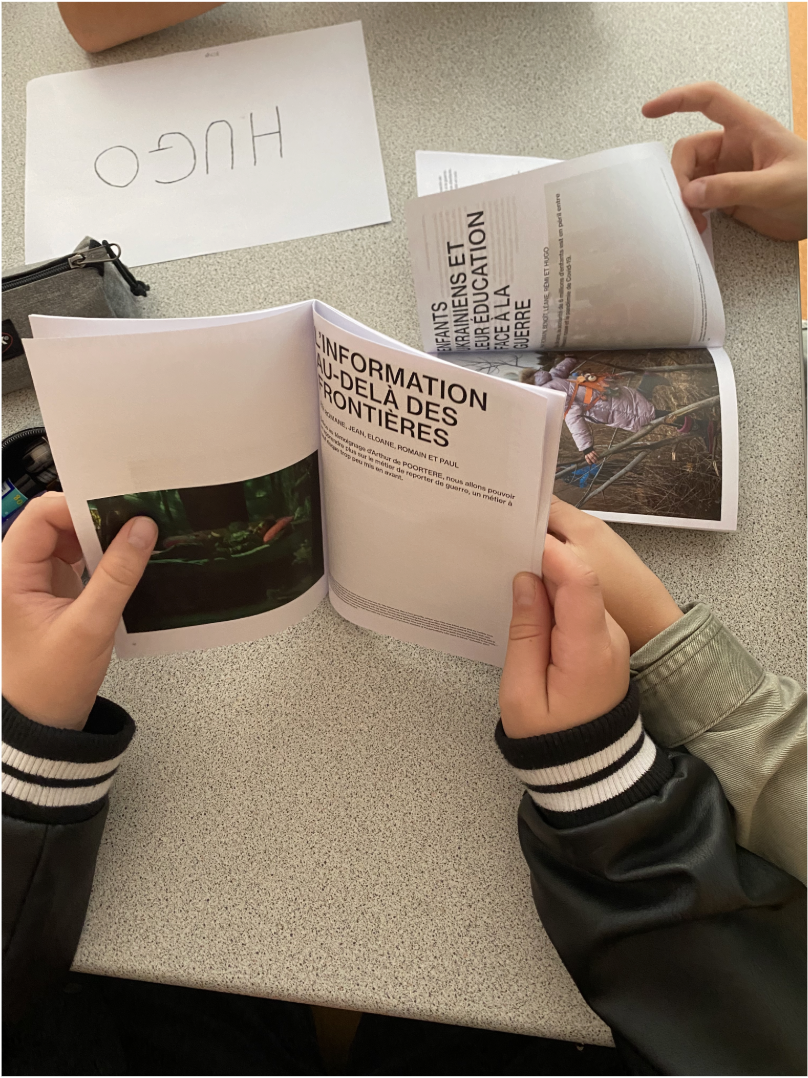
Previous themes include “Disinformation,” “Youth in Times of War,” “A.I.,” “Gender Stereotypes in Mass Media,” and “Environment,” to reflect on ongoing societal issues and encourage discussions and debate.
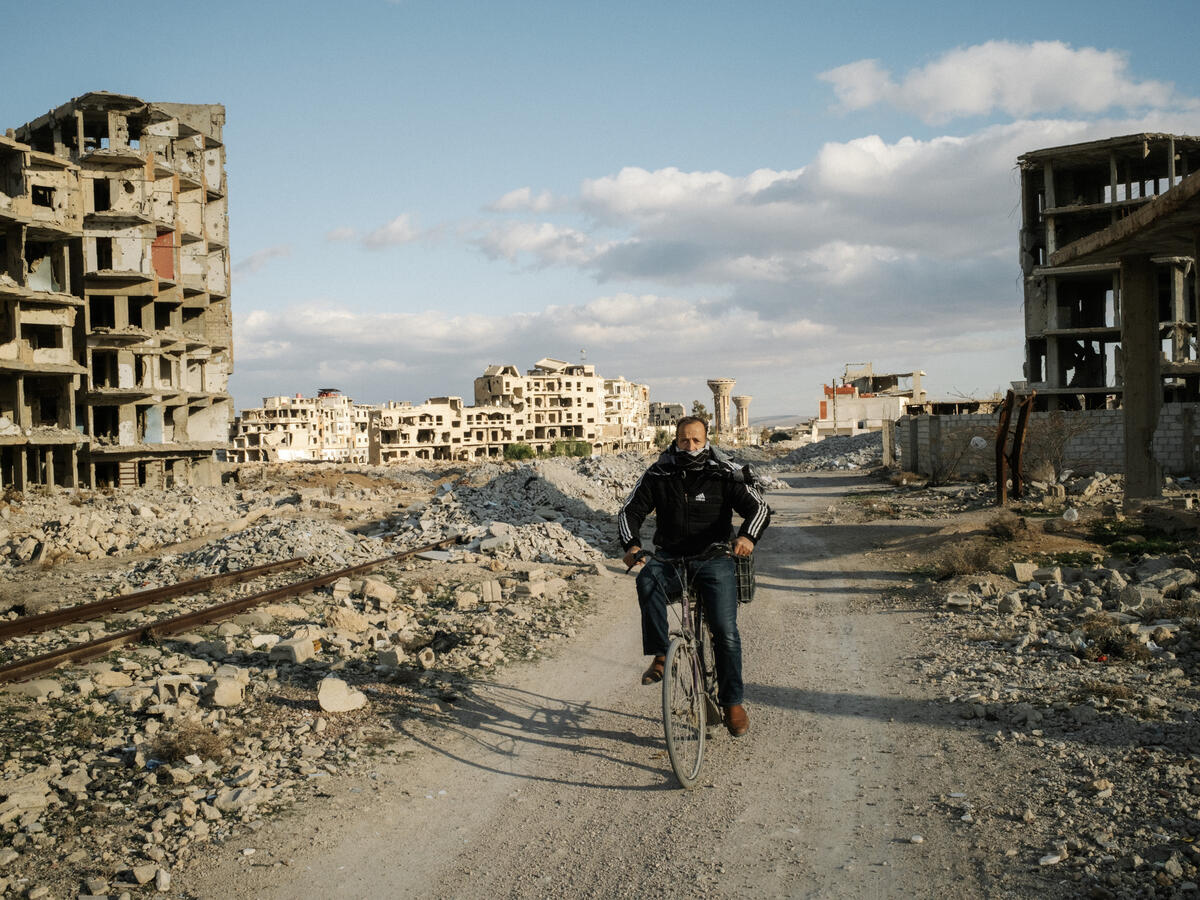
One exercise consists of showing a single still image, and asking students to describe what they see. From this description, they are encouraged to think about what they can guess about the context, or what an image is trying to say. Then, an article title and subtitle are revealed, showing an example of fake news, or where the same image has been used out of context. “Some immediately click and understand that there is something wrong. Some don’t, and we slowly deconstruct all that we previously analyzed on the image, creating links to what they’re learning in their history classes,” Abechir explains. “We finish by revealing the original caption, and the real context in which the photograph had been taken.”
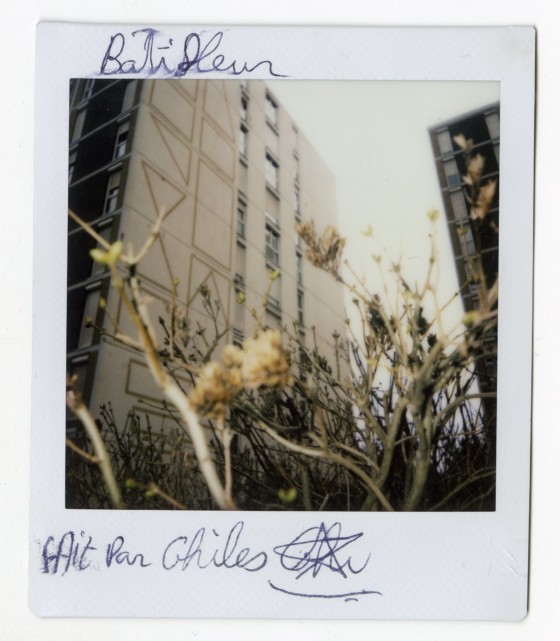
Another workshop, in partnership with the French Social Housing Union Toit et Joie, opened its doors to the general public in Argenteuil, a northwestern suburb of Paris. Similar in its approach to the workshops in Bayeux, this workshop saw a much more diverse age range, with participants aged 8 to 80 years old. It was an open-door policy — anyone could come to one or all sessions, and it was entirely free.
“Working in Argenteuil was a little different as it was more about helping people reconnect with themselves, with their neighbors, and with the environment they grow in through the visual arts — photography, collage, writing, and drawing,” explains Abechir. “It’s about giving them the space and tools to experiment and find their artistic voice.”

Magnum’s Pledge
In the past three years, Magnum Learn has hosted a total of 12 workshops, both in cities and rural areas in France, Spain, and the United Kingdom, engaging approximately 300 people in the process, mostly Generation Z or Generation Alpha.
“Leading the Learn team within Magnum, we do feel this is part of our mandate, or the responsibilities that Magnum holds as an agency — to use the dense, rich historical archive to help guide younger generations and the general public to have a greater understanding of the visual world,” Jeunet explains.
“One of the teachers we work with once summarized it nicely: ‘The duty of education is to train free and enlightened citizens. In our world where images are everywhere, it is crucial that students possess the tools to understand how information is produced today and what the world behind their screens is made of.’”
In 2026, Magnum Learn will be conducting a new series of workshops in Argenteuil for a group of teenage girls, using photography to reflect on self-image and to experiment with the notion of self-portrait — an attempt to combat the anxiety and self-doubt women can feel when faced with perfect faces and bodies on social media. “We invite them to take a step back on what society has instilled in us, and reflect on what beauty and confidence means to them,” says Abechir.
“The interactions and conversations we have had in the past years show us that it is essential to create a dialogue around subjects that can be polarizing. Our role as educators is to encourage these conversations and provide guidance, so that young people can analyze photographs within their cultural, political, ethical and aesthetic contexts, giving them greater agency in how to use them, or simply how to read them,” Jeunet concludes.
Read more about Magnum Learn here, or follow their Instagram for regular updates here