Mikhael Subotzky: The Art of Reconstruction
Using the sticky-tape transfer process in his visual art, Subotzky interrogates imbalances of power, from colonialism to personal relationships
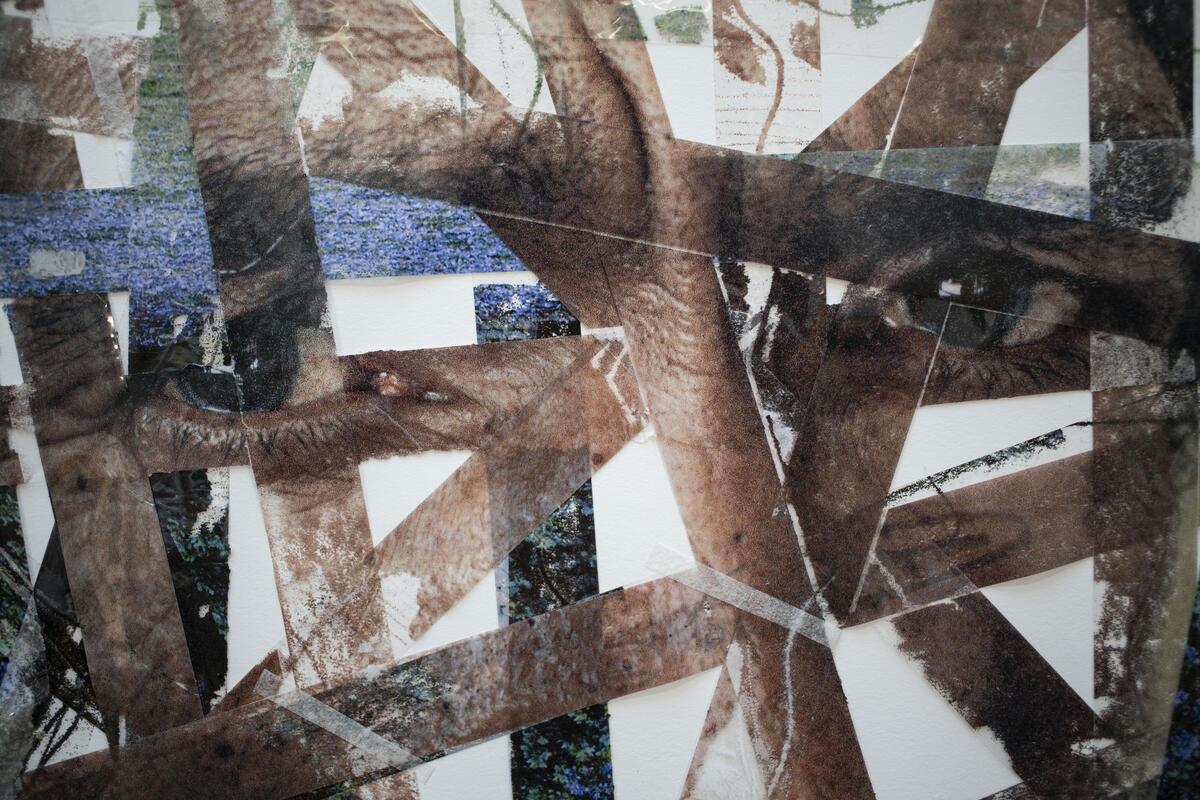
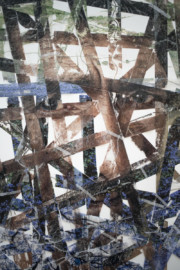
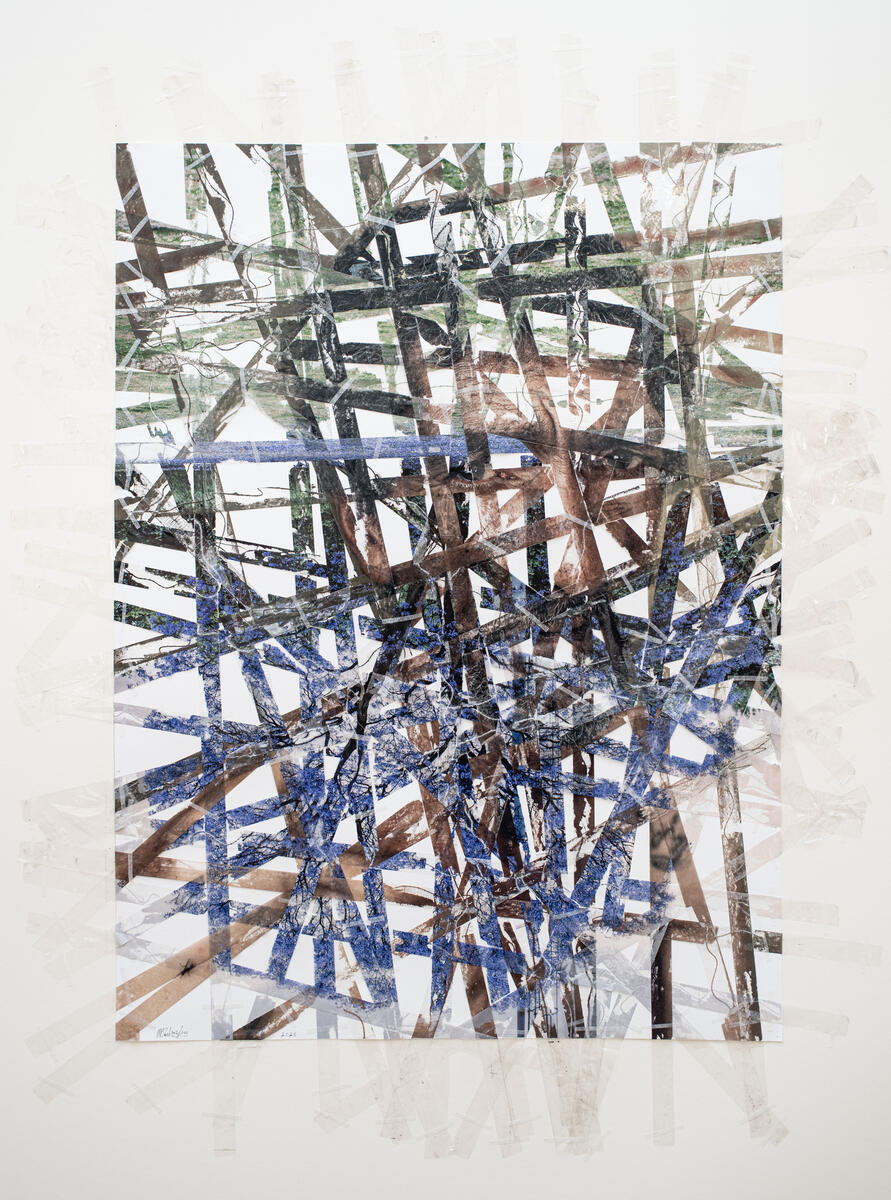
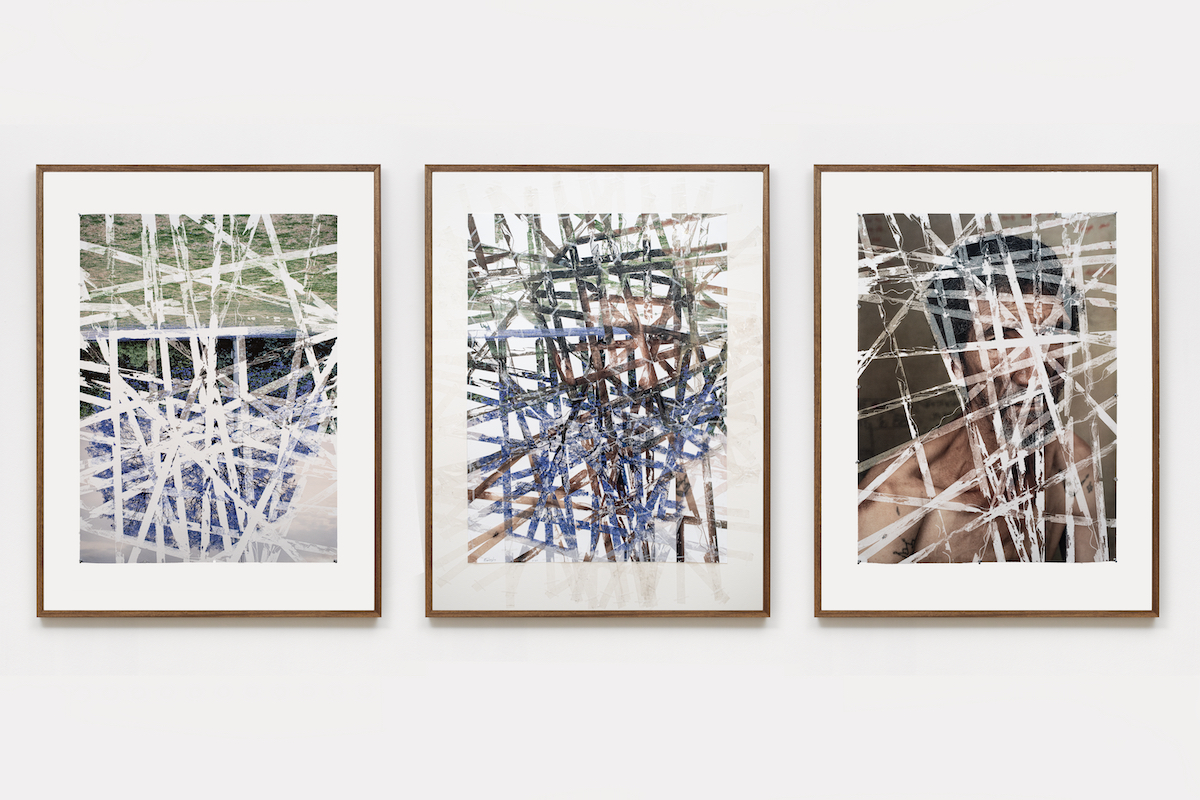
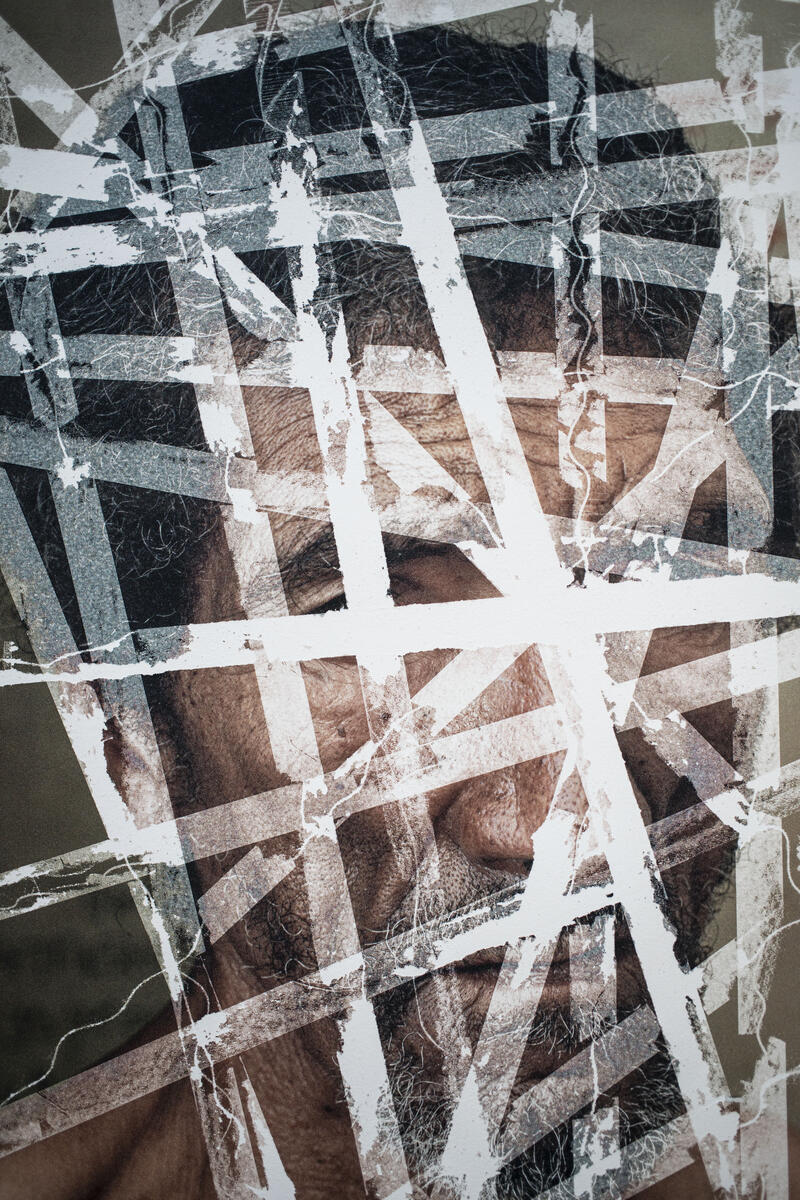
Amidst a dense cross-hatching of ink and tape, two eyes gaze out from the work’s center, deep wells beneath furrowed brows. A portrait of a man emerges from the assemblage, his chest criss-crossed with tree branches of violet flowers. It takes a moment to realize that we are looking at a combination of the two photographs either side – remnants of ink on the tape interlock to create a new image of man and tree.
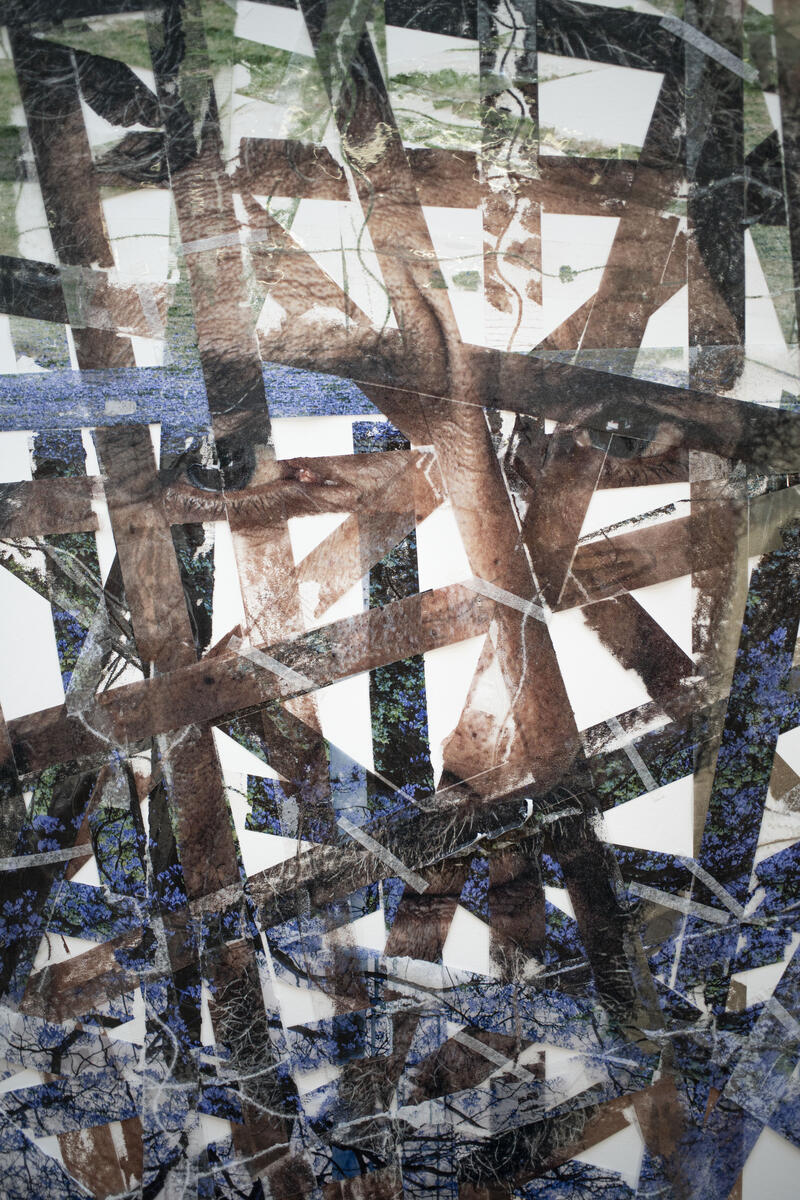
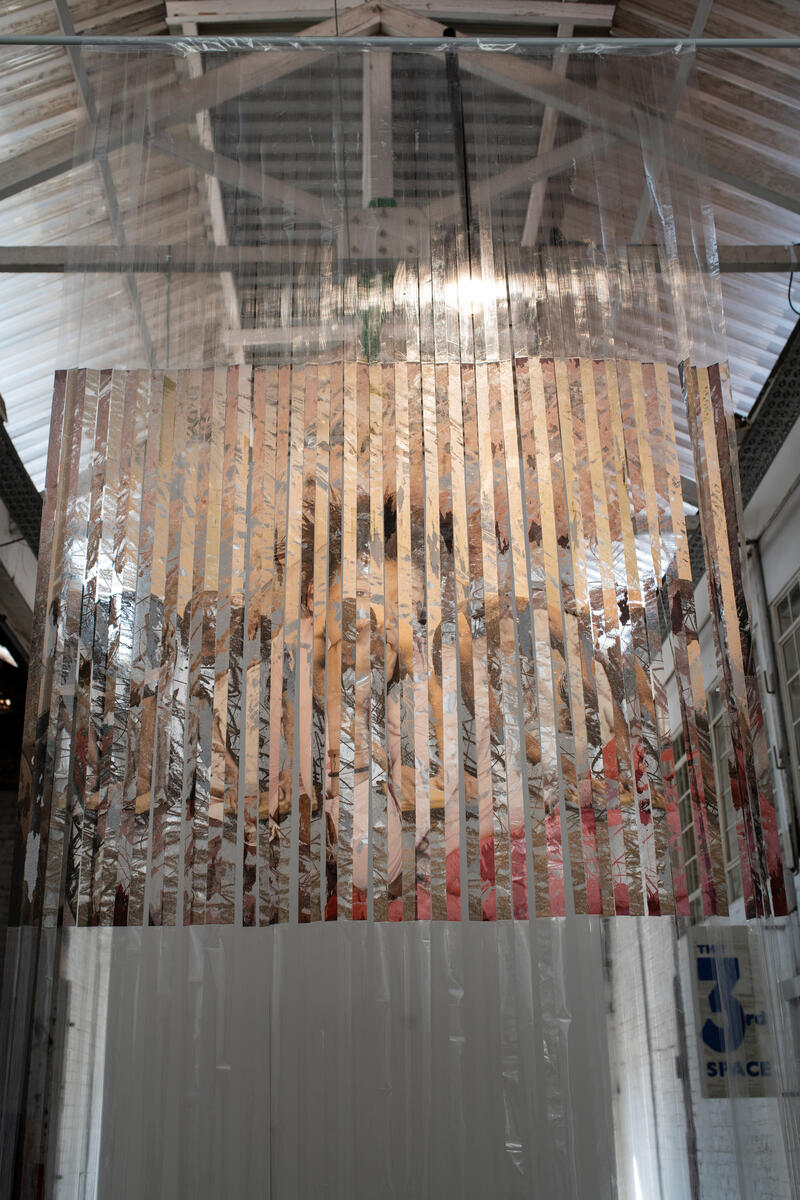
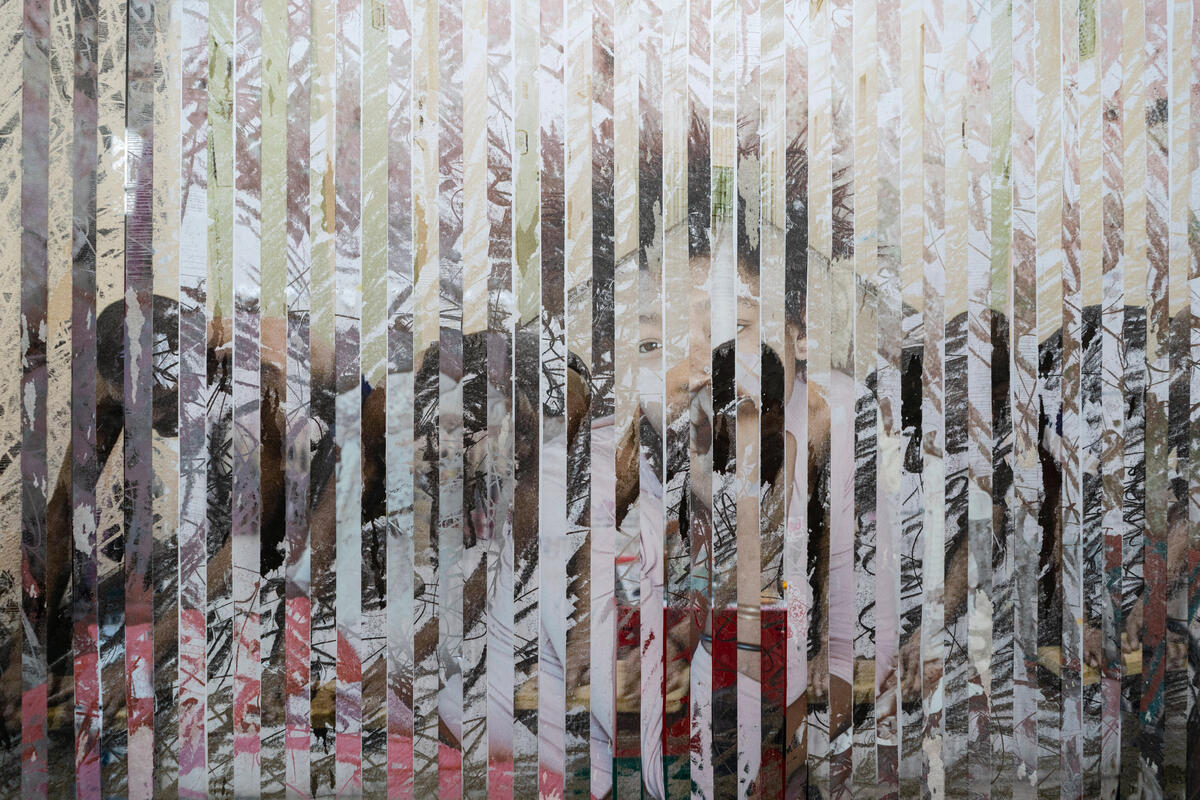
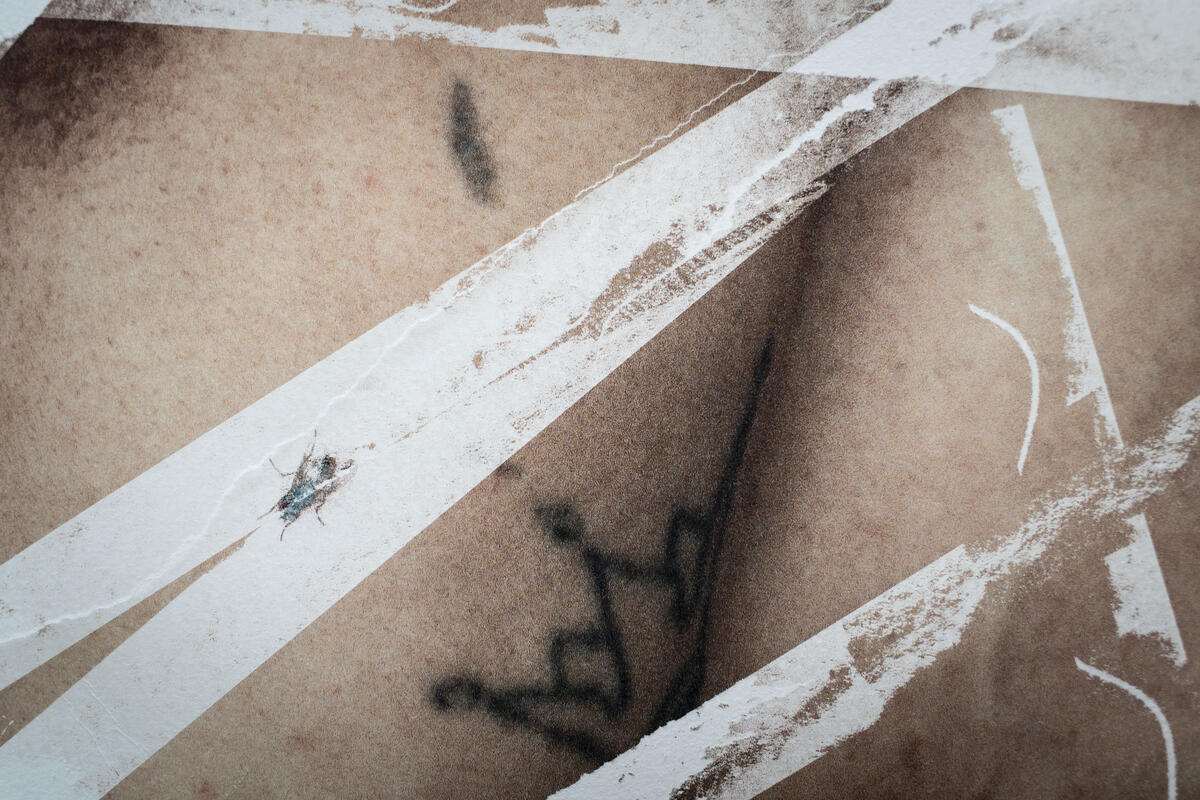
Mikhael Subotzky has used this “sticky-tape transfer” process for over a decade. He takes sticky-tape, perhaps an unassuming artistic material, and lays it over inkjet-print photographs – found images from encyclopedias, photography manuals or from the artist’s own archive – and gently lifts off the pigment from the paper support, to remake something else entirely. Sometimes these take the form of framed and solidified triptychs; other times, the works embody a more free-flowing, diaphanous structure, such as the curtain-like Untitled (Michelle, Pasvang / Pasvang, Michelle) I, 2023, displayed in the recent Magnum exhibition Ukuzilanda, Homegoing (2023), where two photographs can be glimpsed between the sheaths.
It makes sense that processes of separation are at the heart of Subotzky’s practice. He grew up in a white middle class family in Cape Town, where this seemingly comfortable experience was fractured by violence and illness from within the home. This was at a time when the entire country was emerging out of apartheid amidst deep-rooted racial and class inequity. As an artist, Subotzky confronts imbalances of power on both personal and societal levels: he interrogates the construct of whiteness and the legacies of colonialism within his South African homeland, while turning his attention inwards to analyze more personal relationships with his community, friends, and family, particularly with his father.
Subotzky speaks often of the need to “get inside and in between” images, to follow a mistrust of so-called “objective” documentary photography. His physical deconstruction of the medium disrupts our perception that a photograph is a “complete” picture, neat and sanitized of any raw emotion. This methodology began back in 2004, after Subotzky took a photograph of something deeply traumatic for him and the wider community, and felt the peculiar urge to smash the photograph. And this is what he did, causing cracks to trickle outwards from the subject, still visible and aching through the broken mounting glass.
Initially it seemed like a violent and unusual thing to do, but, reflecting afterwards, Subotzky came to realize that this was “retrospectively writing my own feelings of violence, trauma and fear that came from both my experience of taking the photograph and my ambivalence at the representation I had made, back into the photographic object itself.” It was a way to make sense of it all, to draw out the pain and longing and heartbreak from his own chest. He continued to make works in this vein, known as the “smashed photographs,” first shown at his exhibition Retinal Shift in 2012.
Subotzky’s deep-rooted interest in pulling apart and reconstructing can be seen across the media in which he works. His multi-faceted practice spans film, painting, performance, as well as photography. Particularly in his films, considered by Subotzky as the “spine” of his practice, time is chopped up and re-arranged, not unlike the sticky-tape transfers. Thoughtful editing and intersecting dialogues by characters from different time periods and places converge to form coherent and poignant tales about the effects of colonialism, fatherhood, and vulnerability.
We see this in WYE (2014-16), which traces stories from three different chronologies and geographies – England, South Africa and Australia – while foregrounding the failure of the ideas and technologies of enlightenment in the hands of the colonial subject.
His most recent film, Epilogue: Disordered and Flatulent, parallels the “fathers of nations” of the so-called Dutch Golden Age, built upon colonialism and the international slave trade, with the artist’s present-day reflections on the relationship with his own father. The inevitability of history repeating itself permeates the visuals and operatic soundtrack. This film was shown alongside other sticky-tape transfer works, which take on a different appearance and methodology to the criss-cross collages. They are almost like “clouds” of sticky tape, direct copies of 17th century portraits of Dutch colonizers. Subotzky applies the tape, then scrubs away at the back to “ghost the image,” as he says. And they do resemble ghosts, swaying in the breeze of the gallery.
The Epilogue film also depicts reflections between the artist and a man called Hermanus, Subotzky’s long-time collaborator and dear friend. The two men have staunchly different lived experiences. Hermanus lives through challenges of displacement, a volatile living situation and regular stints in prison, though what connects them both in this context is difficult relationships with father figures.
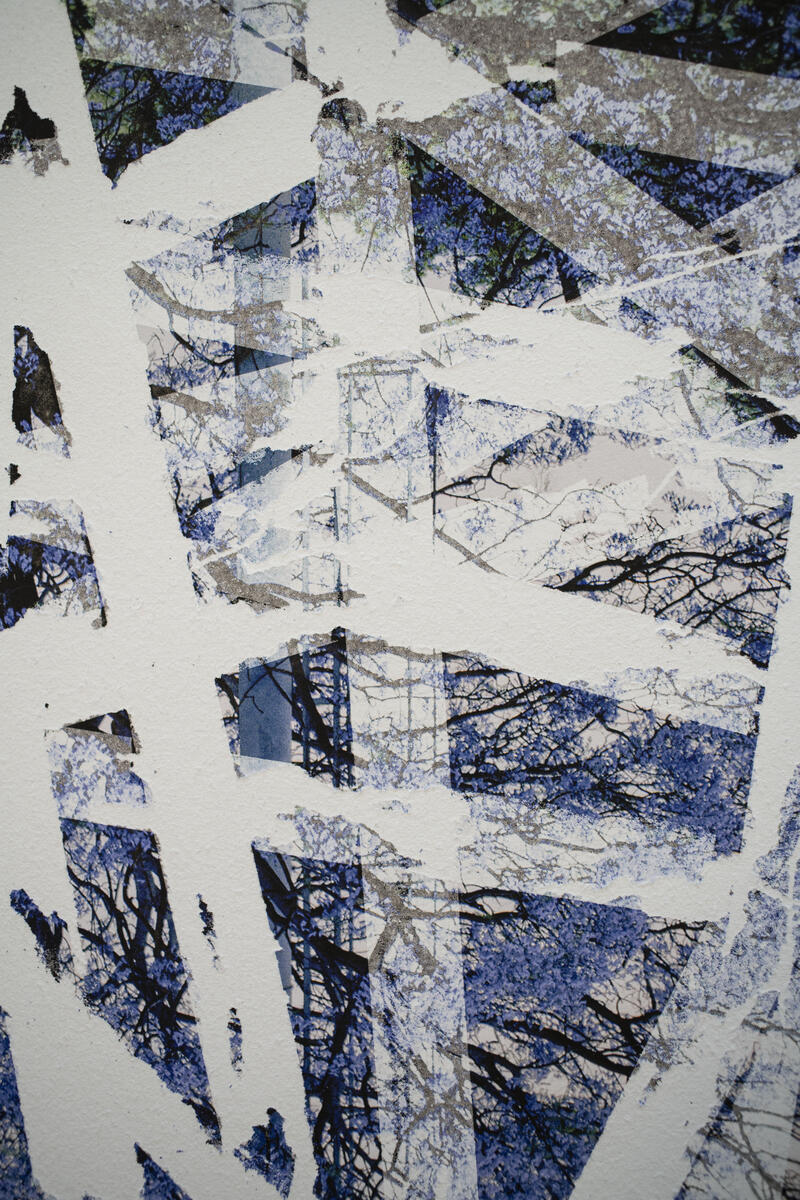
In this way, the everyday material of the humble sticky-tape in this series is transformed into a tool to analyze history – the civic, communal, personal, familial. The triptych is fraught with questions about memory and the act of remembering – about what is removed and concealed, what is remade, how our own memories are just patches of a subjective reality that we use to build a cohesive story for ourselves.
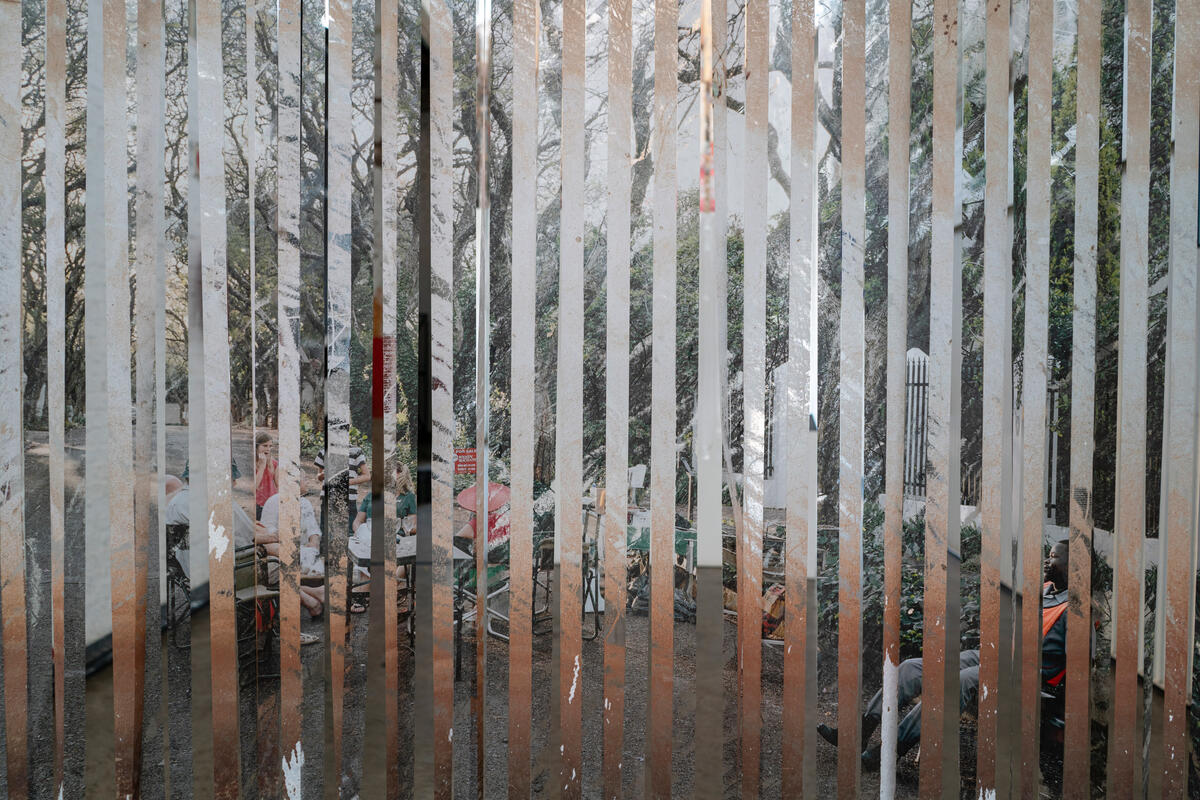
And for all of the methods of breaking, smashing, tearing, and violence, there comes a sense of healing. Perhaps the artist’s movement from the smashing – instinctual, quick, irreparable – to the meditative patching together of tape pieces, signal an optimistic shift towards reconstruction and regeneration rather than destruction. The very tape takes the appearance of bandages, the jacaranda tree is in full bloom and the care and respect in the way Subotzky has framed Hermanus’s gaze is unmissable.