Behind the Image: René Burri in America
In a series exploring the stories behind Magnum Editions prints, we spotlight Burri’s 1966 image of Fort Lauderdale, Florida and how he captured America at large
Two months after the atom bomb was dropped on Hiroshima and Nagasaki, George Orwell wrote the essay “You and the Atom Bomb,” in which he pressed readers to reflect on the threat of nuclear warfare, to be wary of “a permanent state of ‘cold war.’”
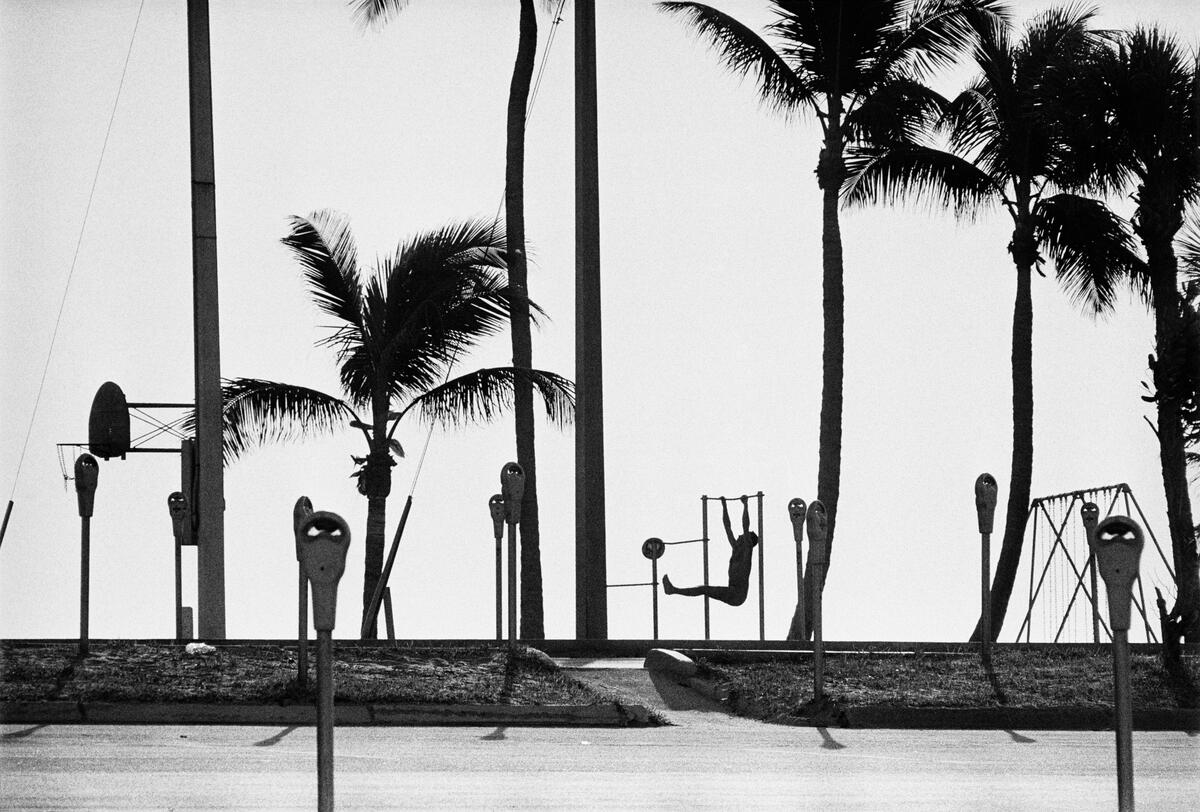
René Burri’s 1966 photo of Fort Lauderdale on Florida’s east coast does not, at first glance, suggest the unease of the Cold War, as predicted by Orwell. Held in the prints collection at Tate Britain, Burri’s image shows a tranquil coastal path, framing the alignment of palm trees, telephone poles and parking meters, as a lone man’s silhouette harmonizes with his surroundings.
Yet, in his description, Burri notes that nuclear submarines were stationed at a nearby U.S. Navy base, inscribing the moment within the unseen presence of America’s military agenda. In this context, the figure seems more isolated, unaware of — or perhaps unfazed by — the larger forces in his proximity, as the parking meters stare back at as.
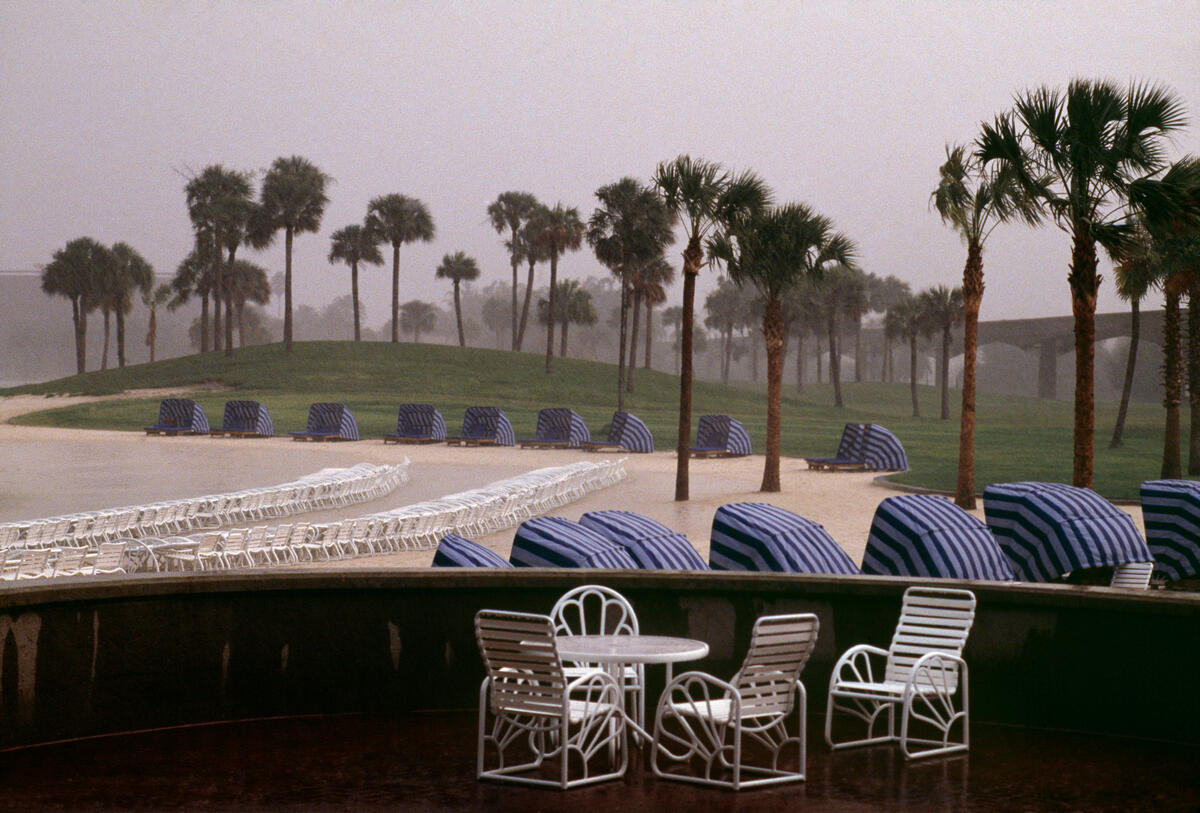
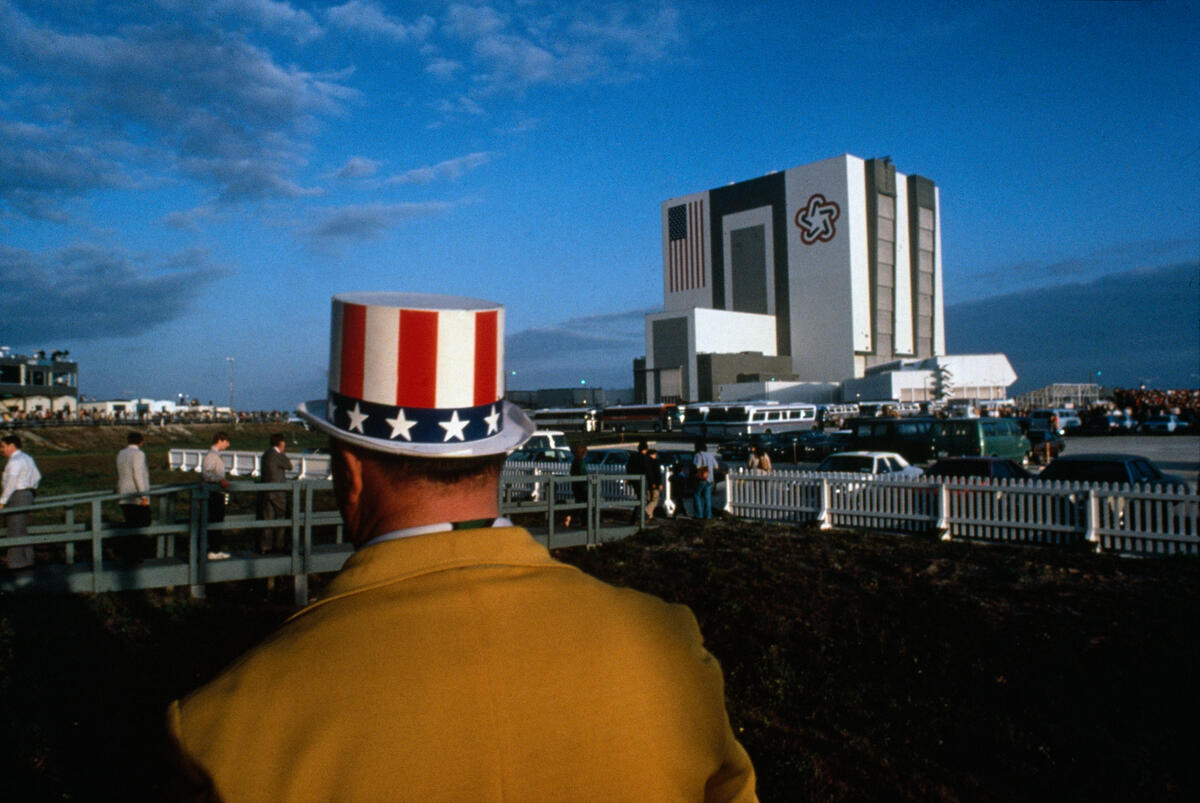
Burri’s record of American culture over the decades was often politically charged, yet obliquely so. His repeated visits to Florida are subtle considerations of political and consumerist forces in a disquieting landscape of distraction, loneliness and detachment.
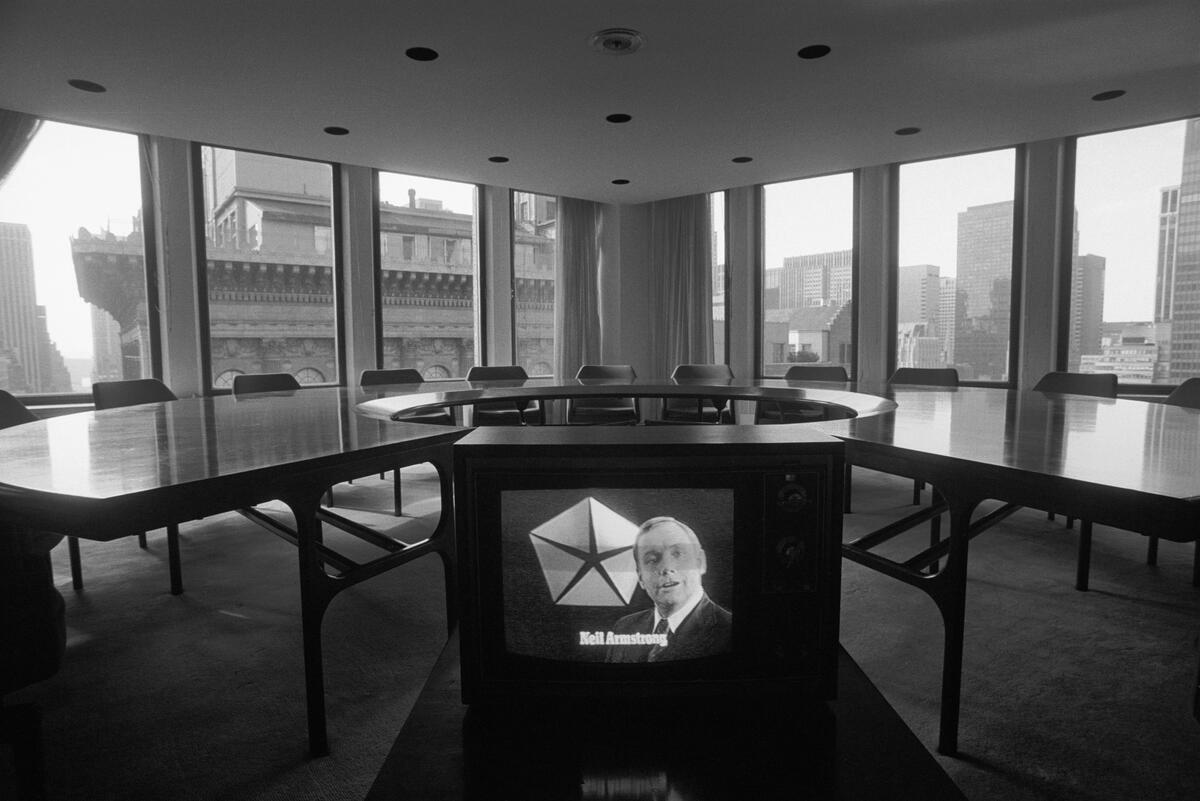
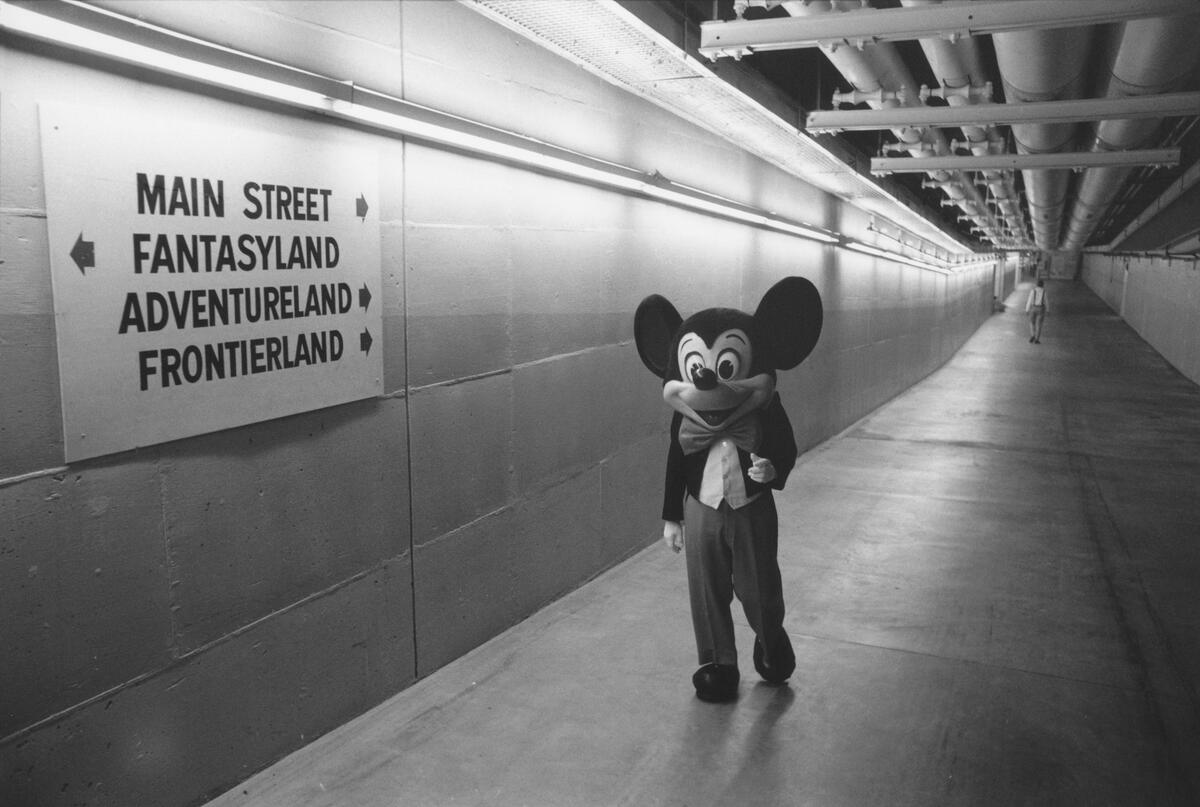
From Mickey Mouse on his way to “FantasyLand” in a dystopian tunnel to landline phones scattered on the ground, Burri observed similar moments to his now well-recognized Fort Lauderdale image, in which lightheartedness, starkness and underlying tensions meet in one carefully composed frame.
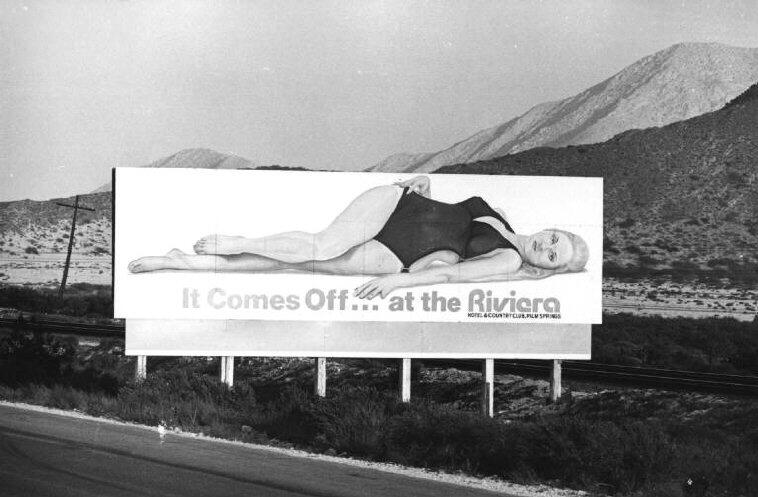
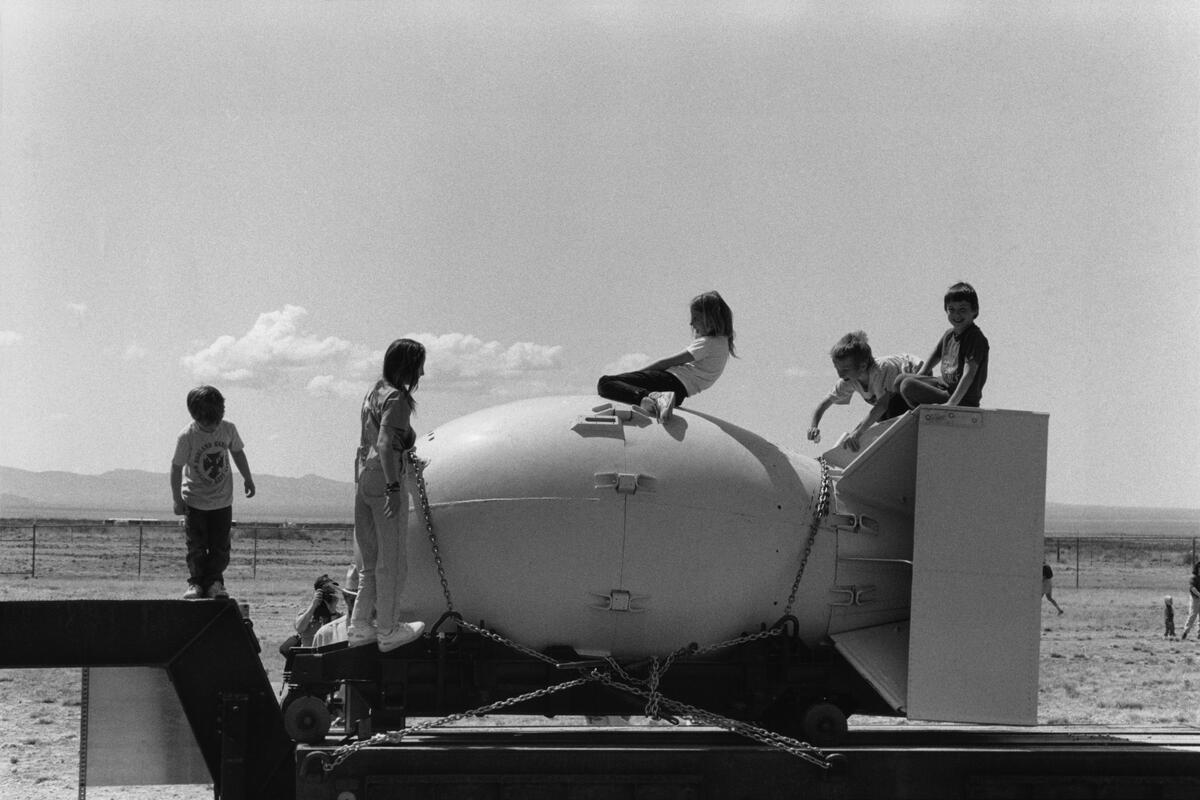
On the way to Palm Springs, he captured a coquettish advertisement in the middle of the desert, while in New Mexico, children play on a replica of “Fat Man,” the atomic bomb dropped on Nagasaki.
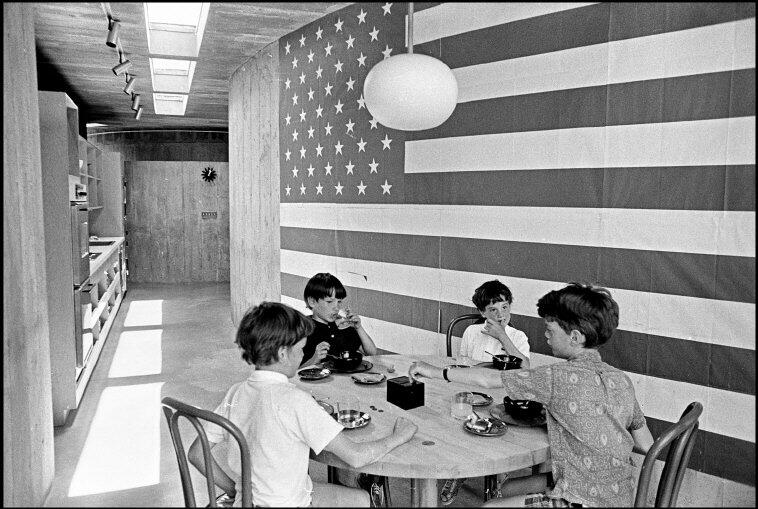
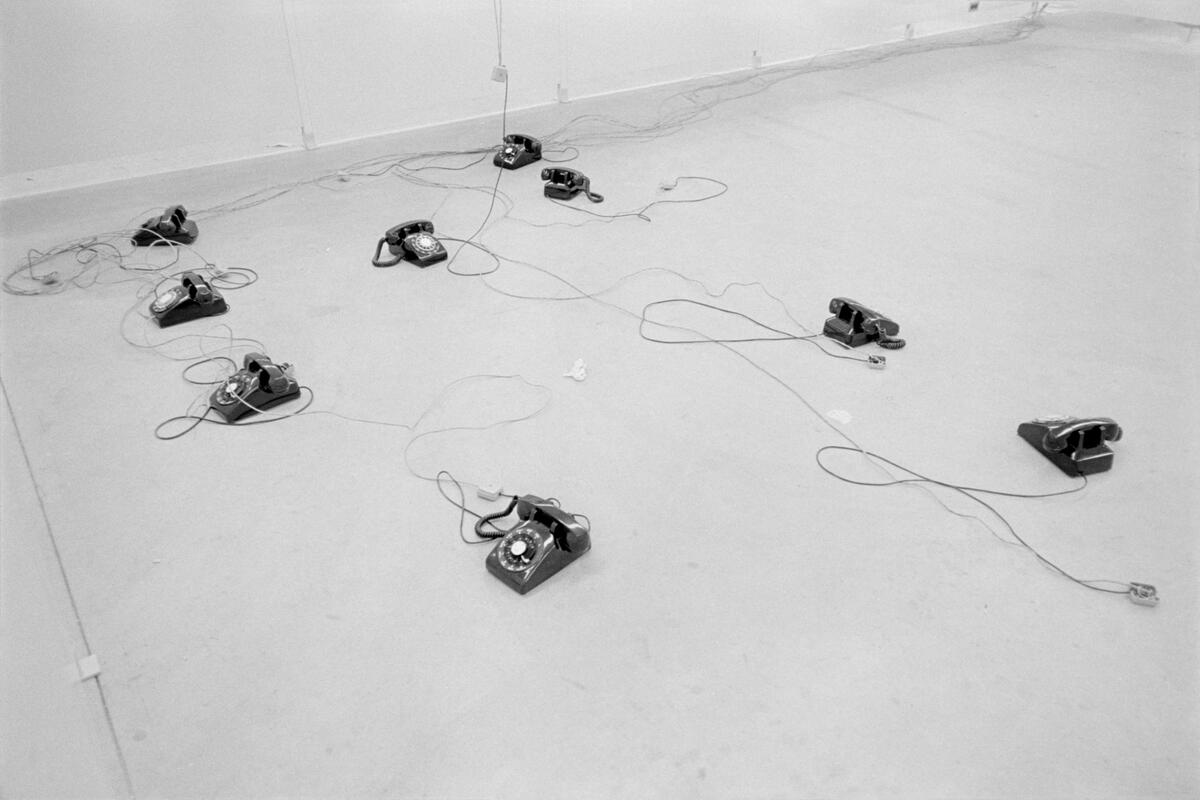
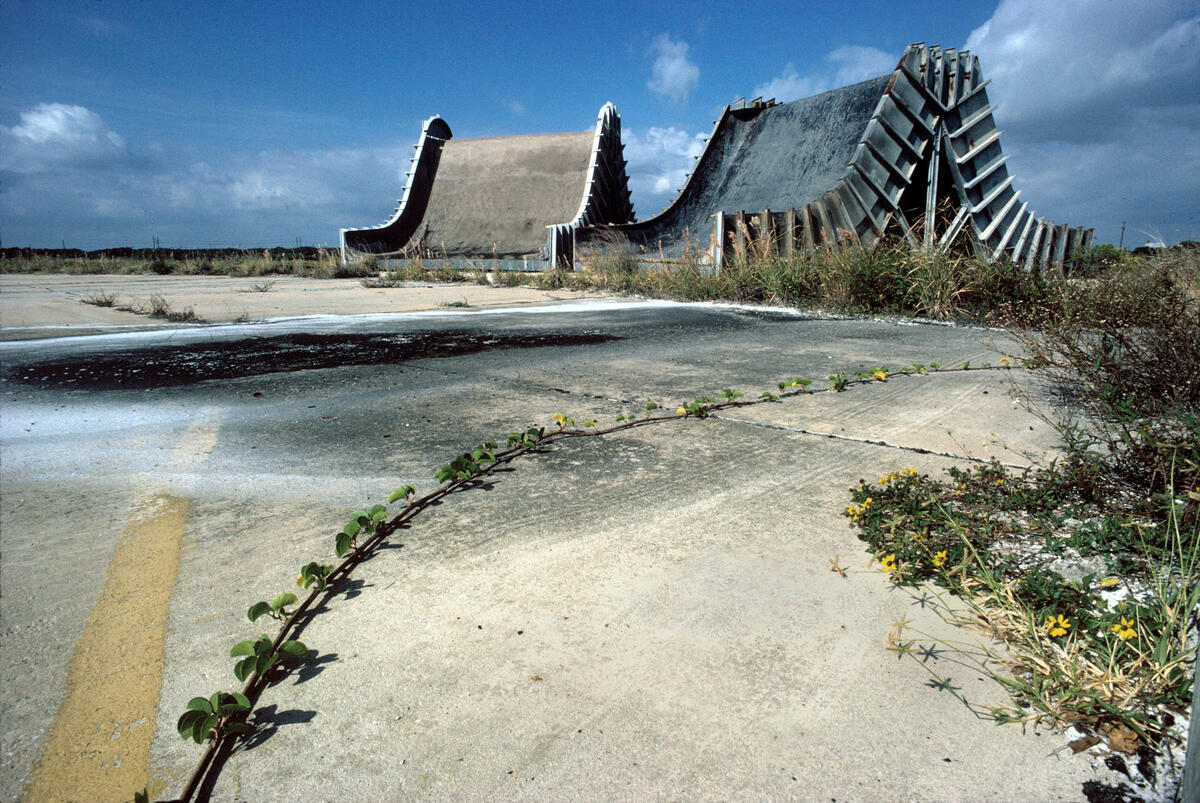
In Burri’s 1986 book “An American Dream: Photography from the Worlds of NASA and the Pentagon,” his images of an abandoned launching zone suggest both America’s eagerness to win the space race and the ruins of an empire, as nature attempts to take over.
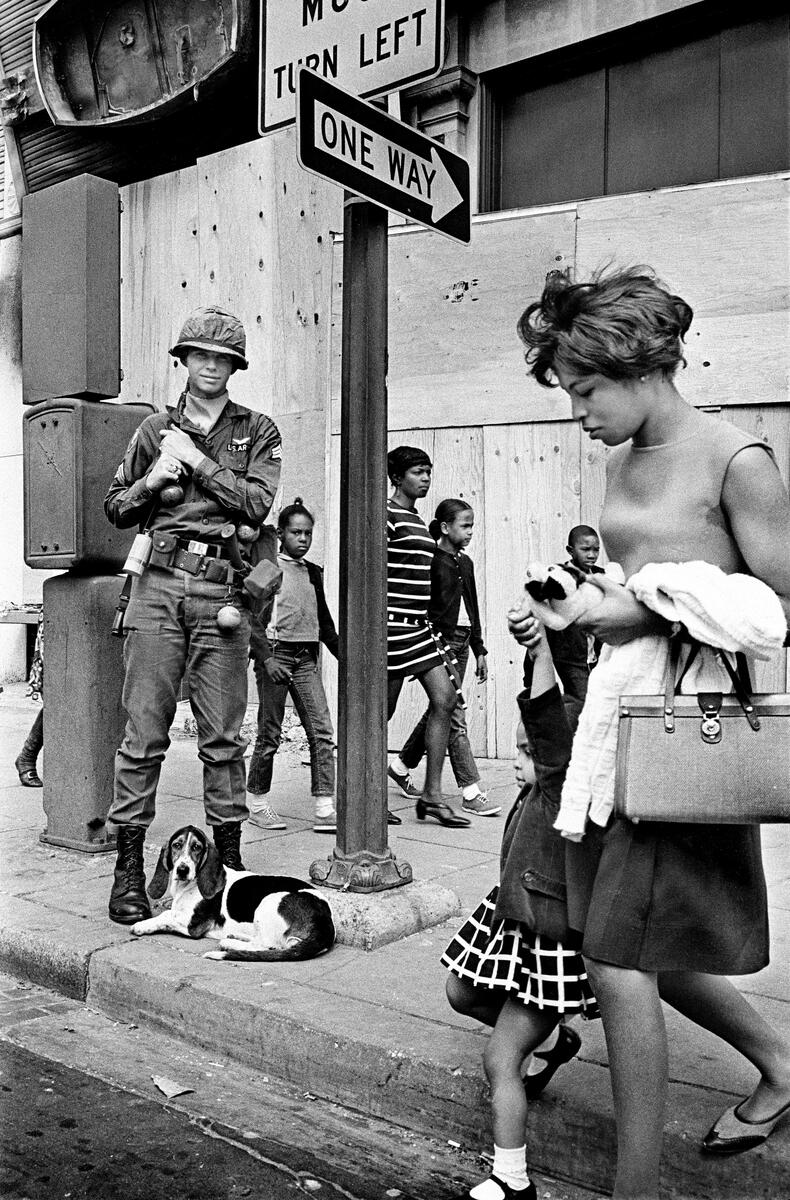
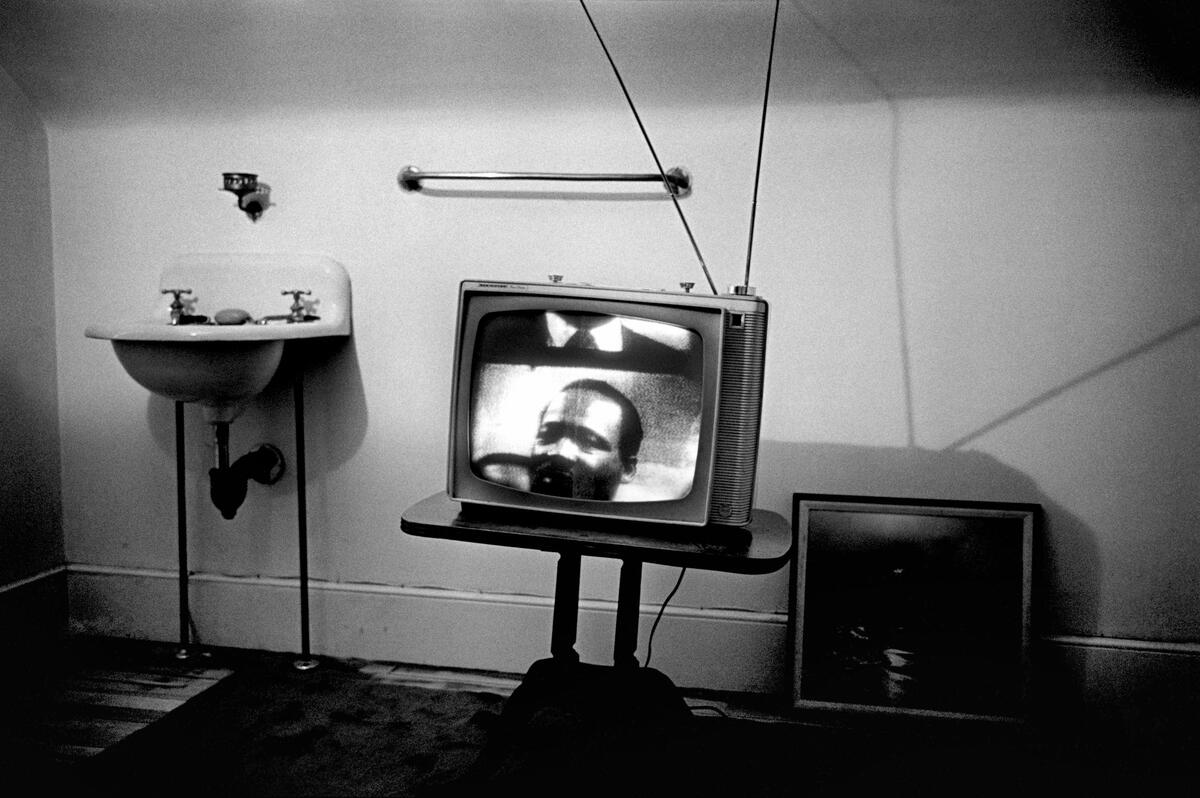
Two years after photographing Fort Lauderdale, Burri captured the civil rights movement from his own perspective, offering surprising depictions of the country’s unease: the casual smile of a young soldier in Washington, D.C. and Martin Luther King Jr. speaking on television the year he was assassinated. In the latter photograph, the room is lifeless, with King’s image split on the screen, evoking both a literal and social disconnect.
Burri’s Fort Lauderdale image and his study of America reminds us not only of his mastery of precision and form, but his ability to guide viewers towards the latent ideas and contradictions that exist beyond the frame.
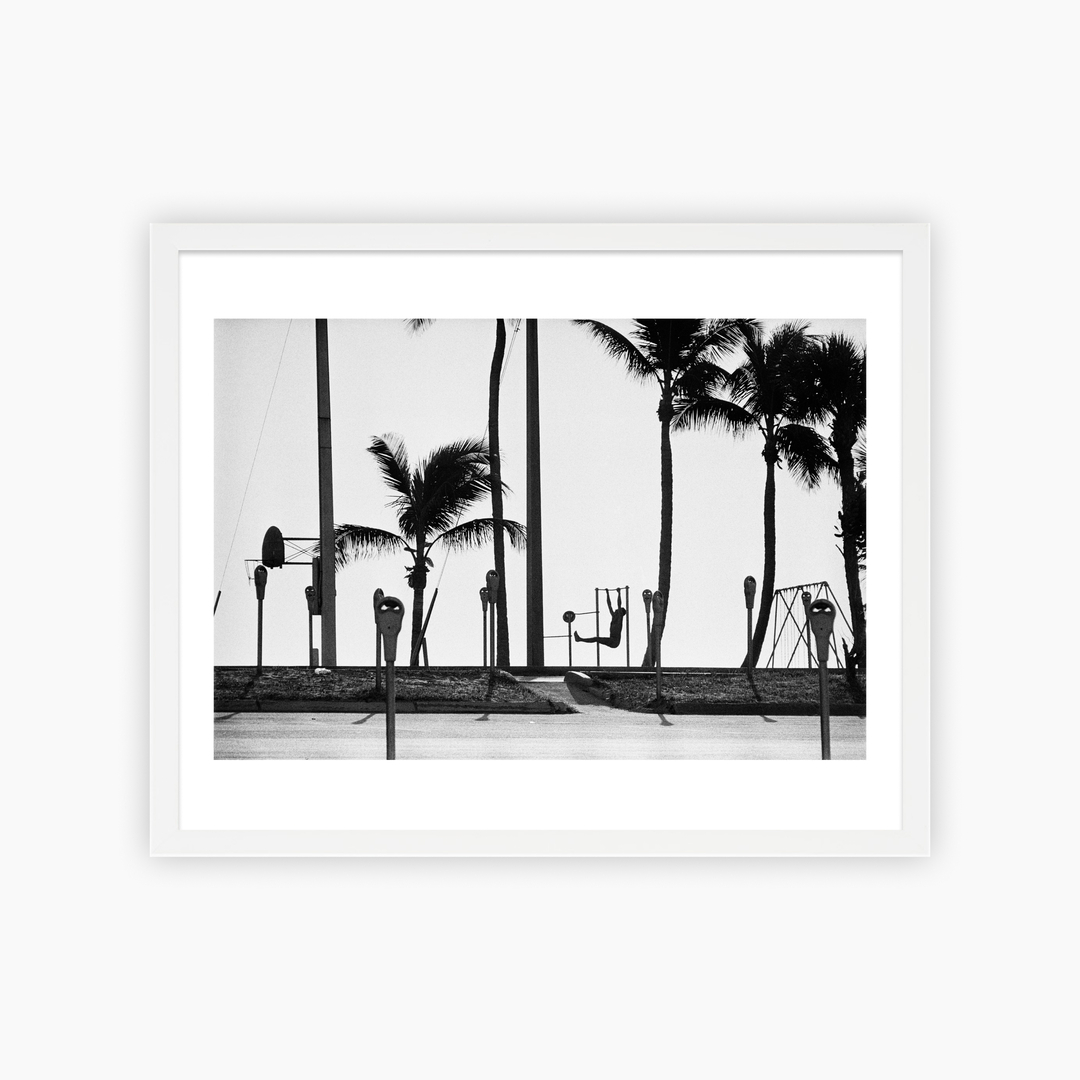
Shop this limited-edition 8×10 print by René Burri at the Magnum Store.
Explore René Burri’s collection here.