44 Irving Street, 1970–71
A rediscovered series by Susan Meiselas from her time at the Harvard Graduate School of Education explores her early dedication to immersive storytelling and her thoughts on the interaction between subject, photographer and viewer
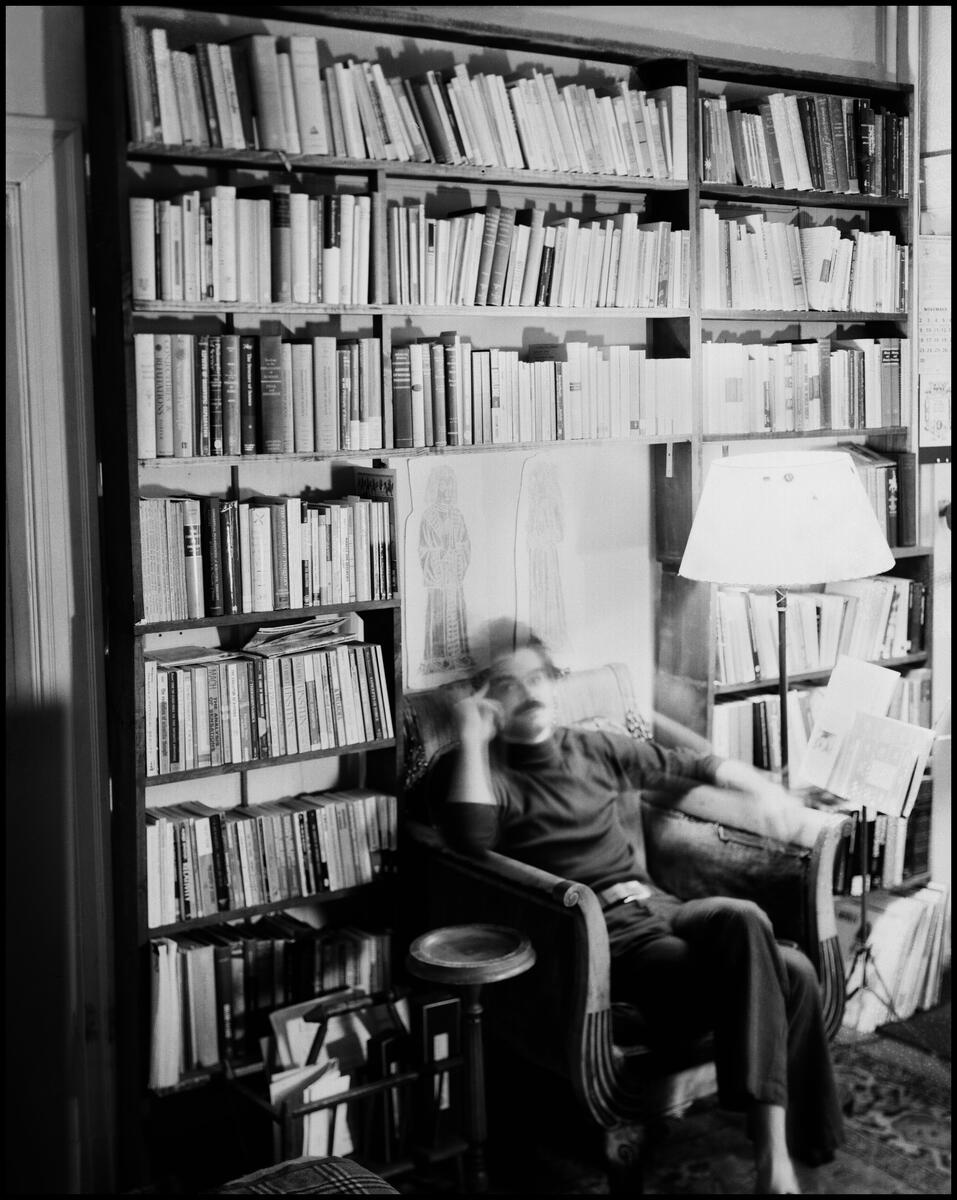
In 1970, while studying visual education at the Harvard Graduate School of Education, Susan Meiselas enrolled in a photography course. As part of a class assignment, she began to make posed portraits of the other residents in the boarding house where she lived at 44 Irving Street in Cambridge, Massachusetts. Equipped with a 4×5 camera, she knocked on her neighbors’ doors and asked to photograph them in their rooms.
“I was hesitantly let in,” she wrote in her accompanying essay, The Human Process. “Rapport was difficult, humor a necessity. I had not expected to feel a divided, duplicate self.” It was one of her very first experiences as a photographer, and the series, rediscovered and now published as a photobook by TBW Books in 2025, serves as a unique insight into her early practice.
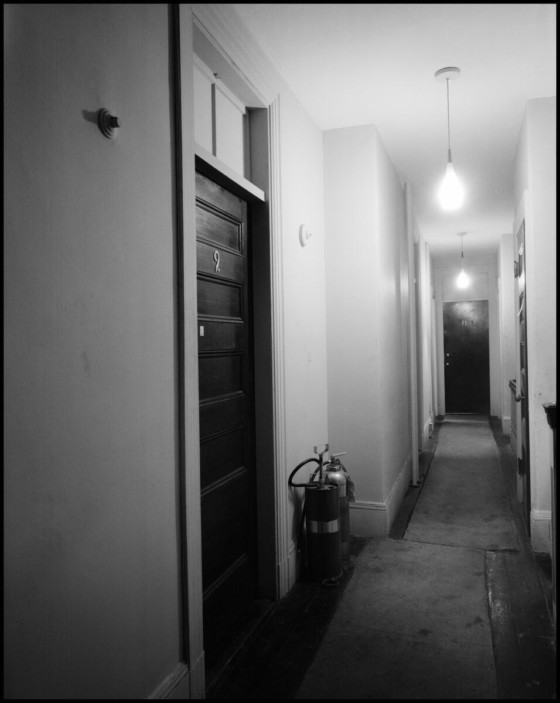
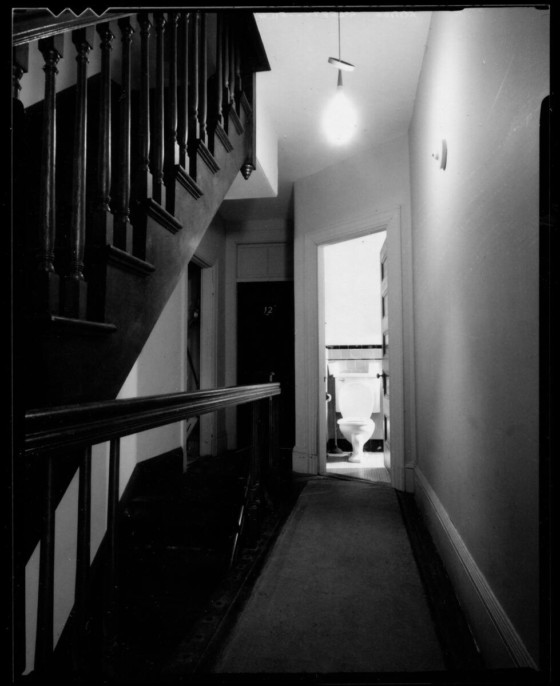
“Originally I was interested in simply seeing to what extent a person was reflected in their surroundings,” she wrote, drawn to the private bedrooms, seeped in personality, in contrast with the austere shared halls, bathrooms, and kitchens. “I wanted to begin to understand the texture of their lives, through their created environments.”
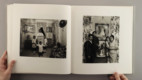
“The camera was this way to connect,” she said recently in a gallery talk at Harvard Art Museums. “I knew no one.” When she gave her subjects a print, she asked them to write about their experience living in the house and how they saw themselves in the portrait. Her final project showed the images and handwritten letters, side by side.
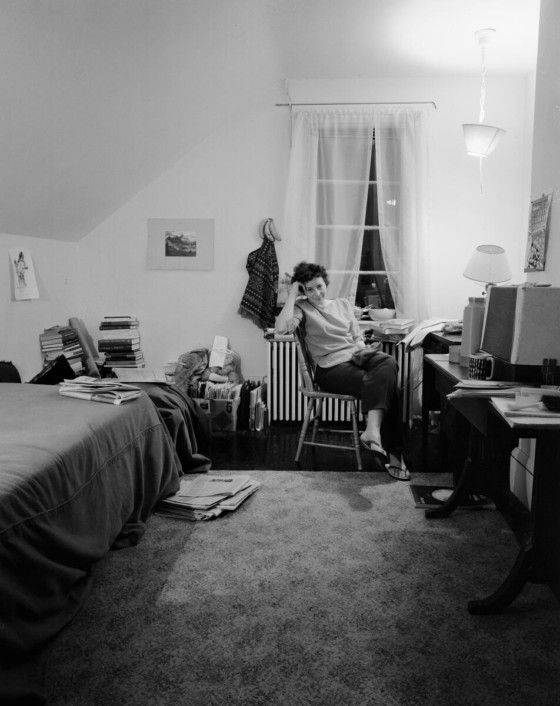
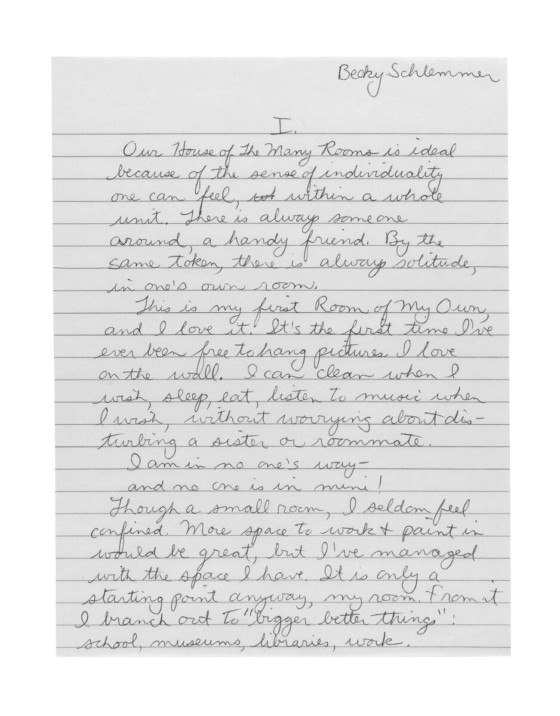
“This is my first Room of my Own and I love it!” writes one inhabitant, Becky. Her excitement at her newfound freedom radiates in both text and image — “I am in no one’s way and no one is in mine!” Her neighbor Cromwell, however, comments only on the stress he senses upon seeing himself reflected back through Meiselas’ lens: “The calm expression conceals the tensions brought on by Harvard Graduate School. The work on the desk is the first draft of a paper eight months overdue.”


While the images alone leave us to imagine, the commentary adds a layer of interpretation, guiding us decades later to tread closer to an understanding of the individuals through their self-reflections. “I don’t think the photo of me really gives the essence of me,” writes Joan. “In it I look very serious, quiet and contemplative. It looks more like me when I was 12 and I daydreamed a lot. Now I’m more energetic and restless.”
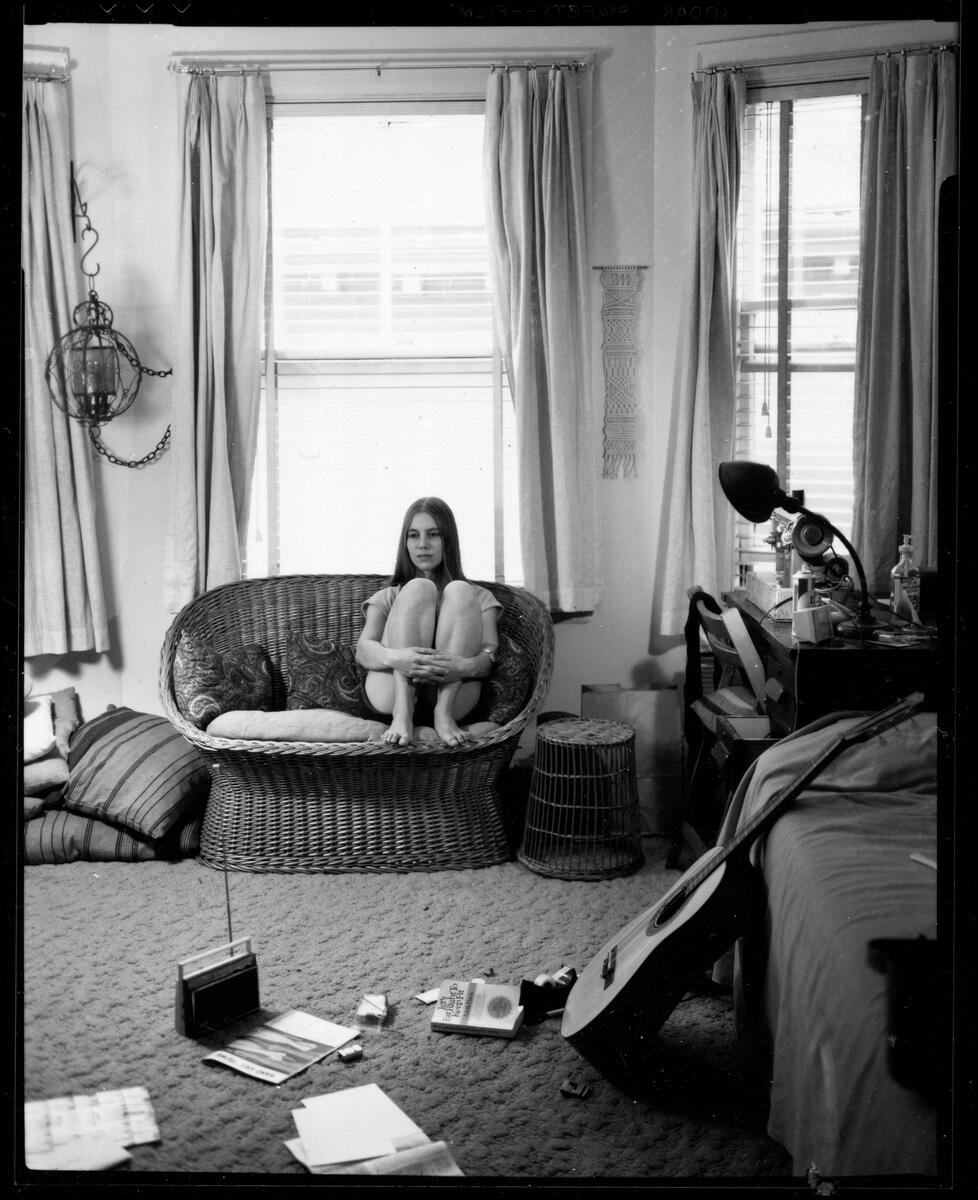
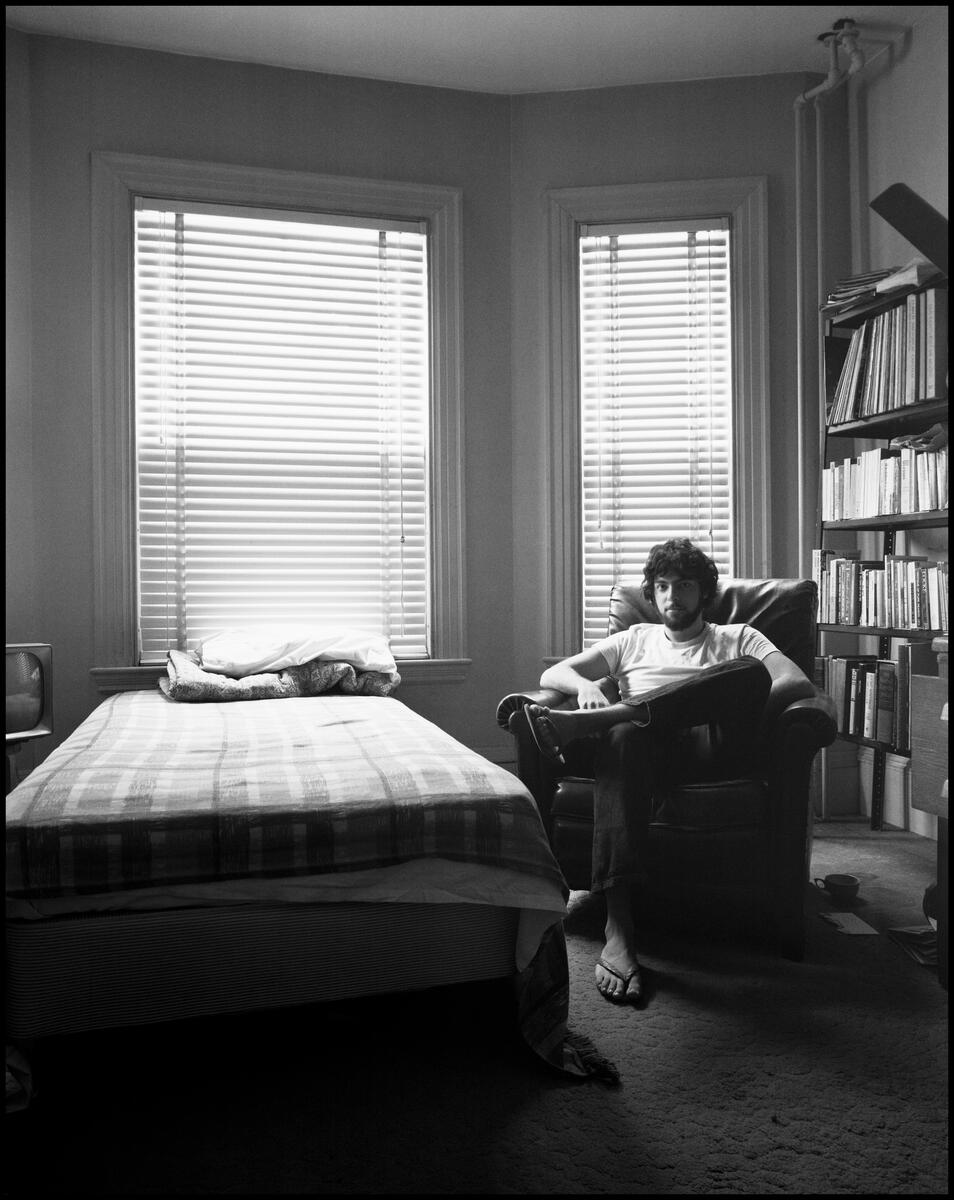
This discrepancy is noted by Meiselas in her essay: “It was quite evident with the integration of several of the words and images, that there was an inconsistency. This is perhaps attributed to conflicted self-images, but also the distinction between internal and external perceptions.” Eddie, another resident, quotes Anaïs Nin’s Winter of Artifice in his letter: “Inside of the being there is a defective mirror, a mirror distorted by the fog of solitude, of shyness, by the climate inside of this particular being. It is a personal mirror, lodged in every subjective interiorized form of life.”
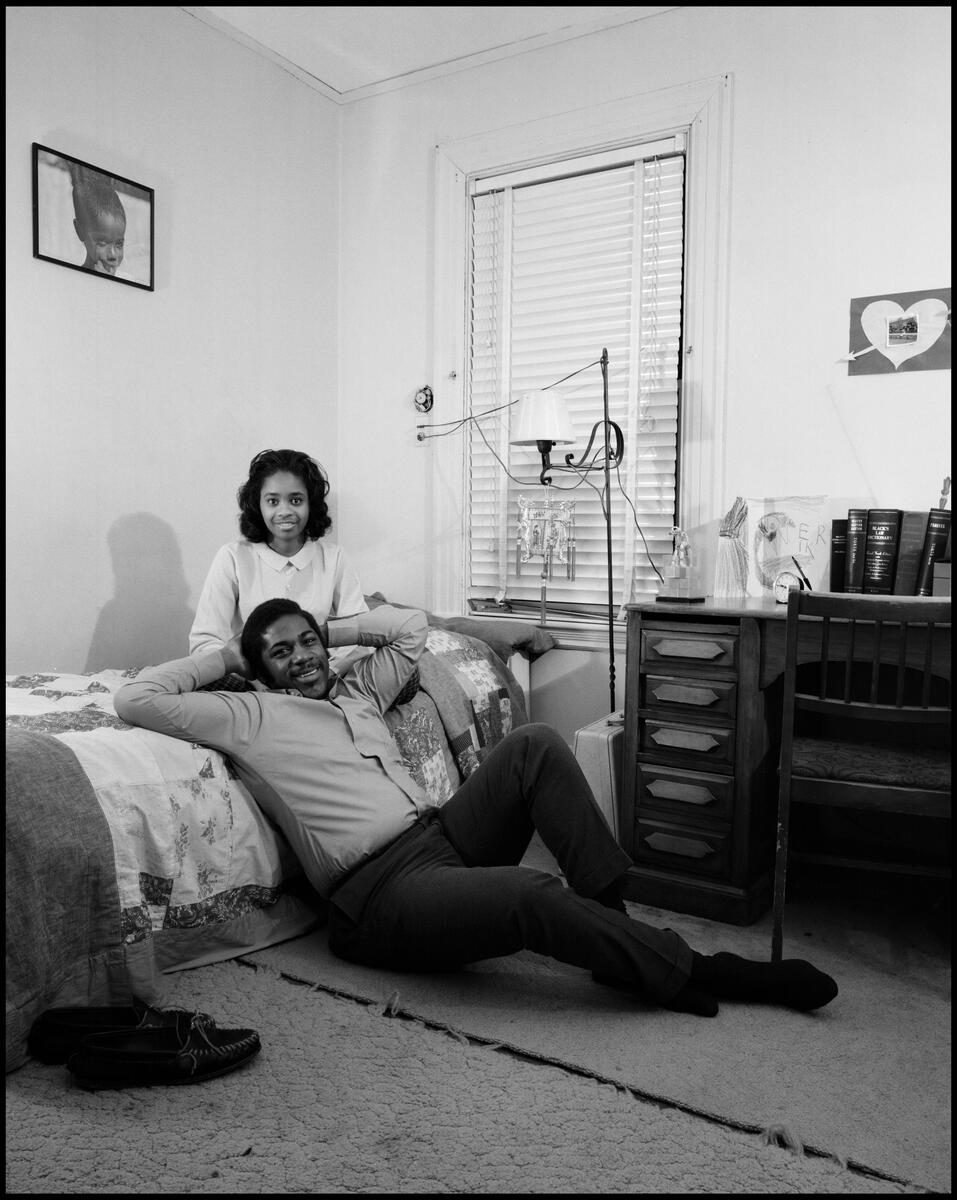
44 Irving Street 1970–71 also encapsulates the familiar highs and lows of cohabitation. A series of images made in the kitchen shows residents eating together. “The residents of the house are generally very friendly. Conversations in our communal kitchen are gay,” writes one cheery couple, Michael and Alease.
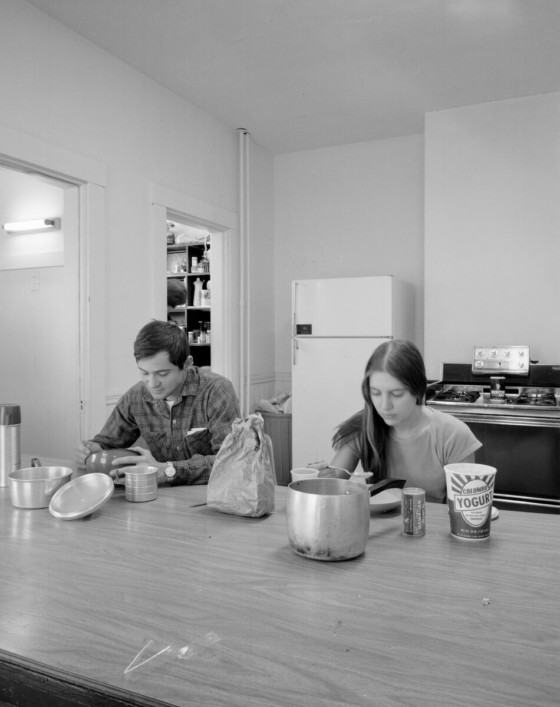
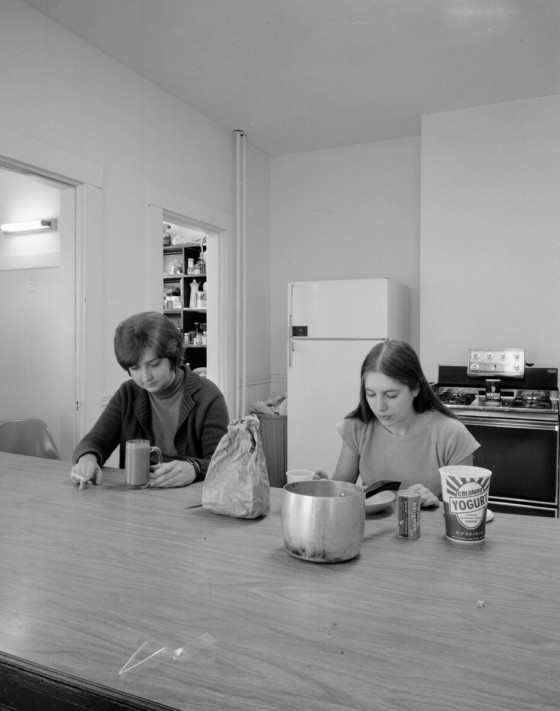
But for Joan, it is a different story: “I would like my room a lot better if it weren’t squeezed in between Ellen + Jean…At 8:00 AM the doors start slamming, then Jean starts yelling ‘Hey Ellen!’ Ellen may be on the 1st floor but Jean keeps yelling until Ellen answers. Then I’m wide awake and I get dressed. I open my door and get my first whiff of cigarette…”
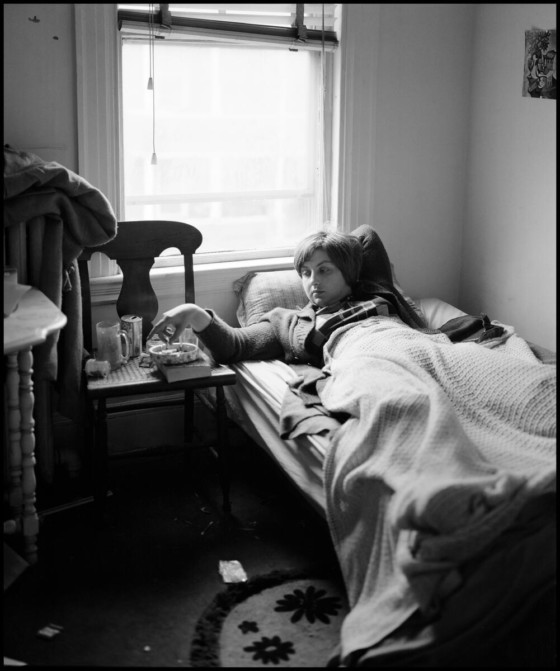
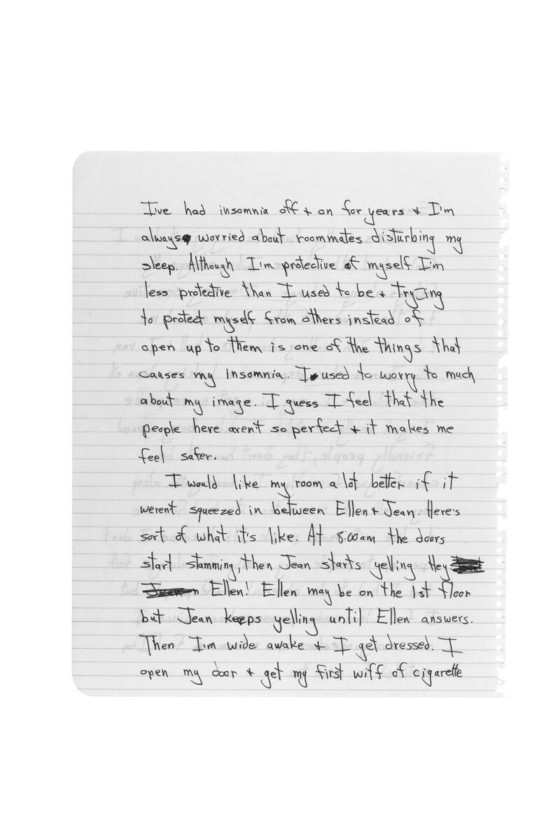
“The completion of ‘the project’ has led me to wonder more about that three-fold process of interaction: subject-photographer-viewer,” writes 22-year-old Meiselas in her conclusion. Perhaps the most revealing image with regard to her role as photographer is her own self-portrait in which she presents herself as a faded, ghost-like presence, an omniscient narrator.
“I wanted to place myself in the boarding house because I lived there and was present. At the same time, I felt invisible,” she wrote in an interview with Magnum decades later. “That invisibility creates a tension throughout my work. I am present, but I want to avoid the focus on myself. I am not a ‘fly on the wall’: I don’t pretend not to be there, but I am not the ‘story.’ I might be the bridge, the guide, and in some sense the collaborator with the subject”.
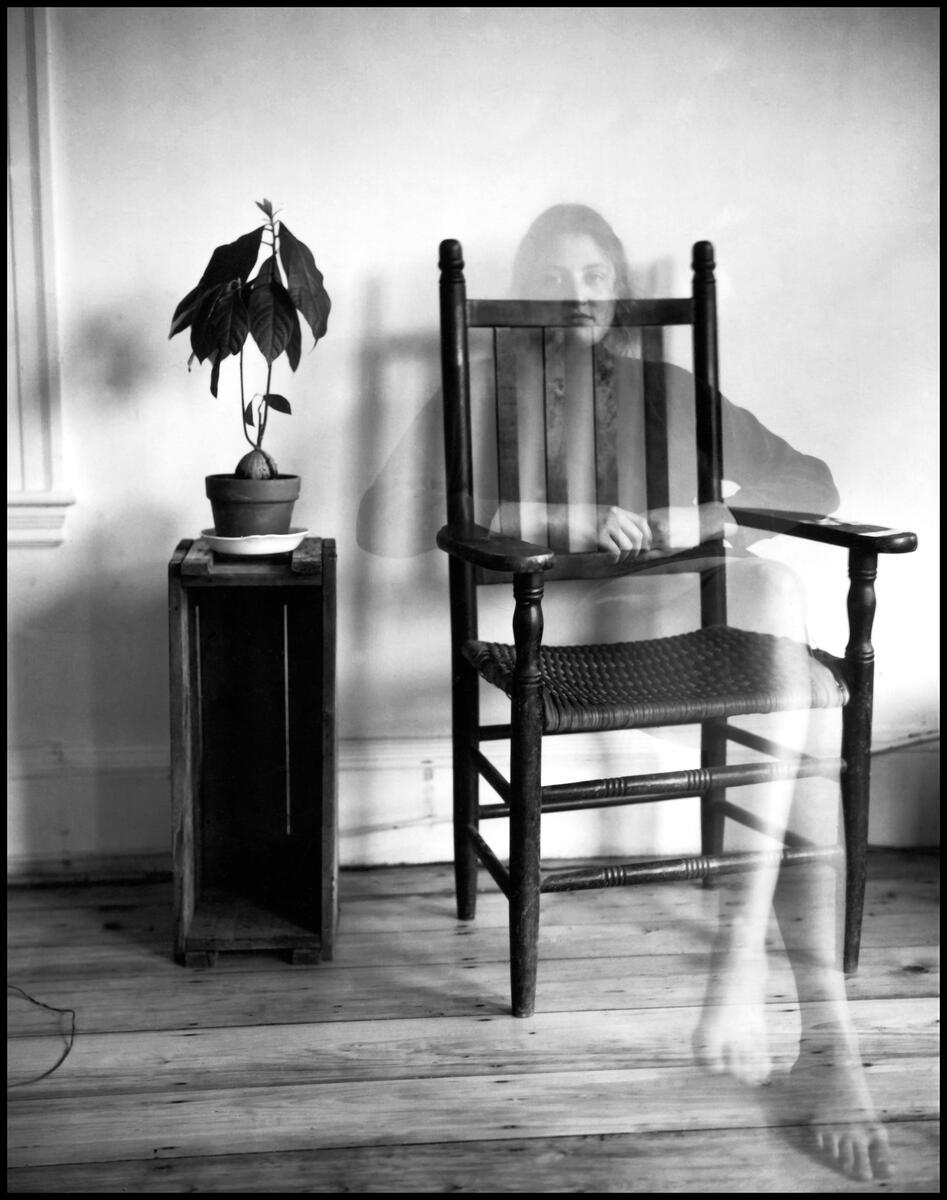
Retrospectively, the combination of intimate portraits and personal accounts that we see in 44 Irving Street foreshadows Meiselas’ evolution as a documentary photographer. We recognize her need for deeper layers of narrative in later projects such as Carnival Strippers, where she shares audio recordings of the interviews she conducted with the women she photographed, allowing us to connect with their voices, thoughts, and the sounds of their surroundings. Or with her work in Nicaragua, where she returned a decade after documenting the Sandinista revolution to speak with people who appear in her photographs, shown in the documentary Pictures From a Revolution.
Over four decades after 44 Irving Street, Meiselas produced a striking echo — A Room of Their Own features photographs of inhabitants’ rooms in a women’s refuge shelter in Black County, England, alongside collages and notes that the women made in response. Though they are not present, we see glimpses of their character through both their belongings and their thoughts, emphasizing the need for the three-fold process of interaction between subject, photographer, and viewer that she first wrote about in 1971.
Add a copy of 44 Irving Street, 1970–71 and more work by Meiselas to your collection at the Magnum Store.